India’s energy ministry has asked the power regulator to favour solar generation over thermal power in response to curtailment in the state of Tamil Nadu.
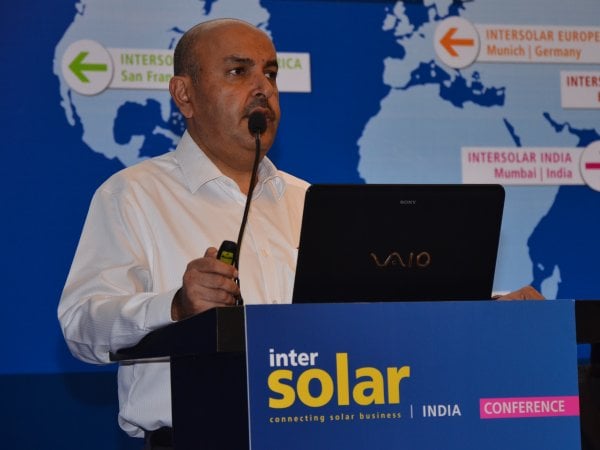
Tarun Kapoor, joint secretary of Ministry of New and Renewable Energy (MNRE), told PV Tech that curtailment of solar power has only been occurring in Tamil Nadu and it is expected to be a short-term issue.
Try Premium for just $1
- Full premium access for the first month at only $1
- Converts to an annual rate after 30 days unless cancelled
- Cancel anytime during the trial period
Premium Benefits
- Expert industry analysis and interviews
- Digital access to PV Tech Power journal
- Exclusive event discounts
Or get the full Premium subscription right away
Or continue reading this article for free
Nevertheless, in a letter to the Central Electricity Regulatory Commission (CERC), which advises on regional transmission, Kapoor wrote that some solar PV project developers have been asked to back down by various load dispatch centres.
Kapoor stated: “Solar power projects have must run status as there is no fuel cost and if any backing down is to be done, thermal projects should be asked to back down so that some fuel is saved.”
At present, thermal projects in India are given two-part tariffs. One fixed tariff is paid even if the thermal plant is not generating energy. However, when the thermal plant is generating power, it is paid a variable tariff on top of the fixed tariff.
Kapoor pointed out that solar projects only have a single tariff and they do not get the benefit of a fixed tariff to fall back on if their energy production is curtailed.
He wrote: “This can make solar power unattractive particularly when projects are being allotted through competitive bidding and tariffs have come down drastically.”
When asked if such curtailments might affect the credit rating of affected solar projects, Kapoor said: “If it continues for a long time then it might. Right now, it’s just a short kind of a thing.”
Furthermore, some PV developers have now started lobbying for a two-part tariff, but Kapoor said this would be difficult as much of the cost of solar is fixed cost and is not subject to fuel price fluctuations.
Finally Kapoor wrote: “There is a need for clear regulations by appropriate commissions to enforce must run status for solar project. They should be paid full tariff if they are asked to back down in rare cases.”
He asked CERC to raise the issue with the Forum of Regulators to reach “some consensus” on the problem.
Kapoor also told PV Tech that the ministry is talking to other Indian states to ensure that curtailment of solar does not happen in the future, despite concern from various industry commentators about grid capacity in years to come.
Tamil Nadu chief minister Jayaraman Jayalalithaa recently wrote a letter to Indian prime minister Narendra Modi calling for a hasty build of the green energy corridor trasnmission systems to help the state deal with curtailment of wind energy.