The Netherlands has launched the latest round of its renewable energy subsidy programme SDE+ this week, with a budget to the tune of €5 billion (~US$5.6 billion).
Stakeholders can now apply for the Autumn support packages for technologies related to five categories: biomass, geothermal, water, wind and sun.
Try Premium for just $1
- Full premium access for the first month at only $1
- Converts to an annual rate after 30 days unless cancelled
- Cancel anytime during the trial period
Premium Benefits
- Expert industry analysis and interviews
- Digital access to PV Tech Power journal
- Exclusive event discounts
Or get the full Premium subscription right away
Or continue reading this article for free
Running from 29 October to 14 November, the €5 billion will be dished out in three stages, with subsidies increasing in each phase, according to the Netherland’s Enterprise Agency (RVO) website.
The Ministry of Economic Affairs and Climate is using the support scheme to boost clean energy in the Netherlands, with an eye on its target to reach 16% renewable energy in its mix in 2023.
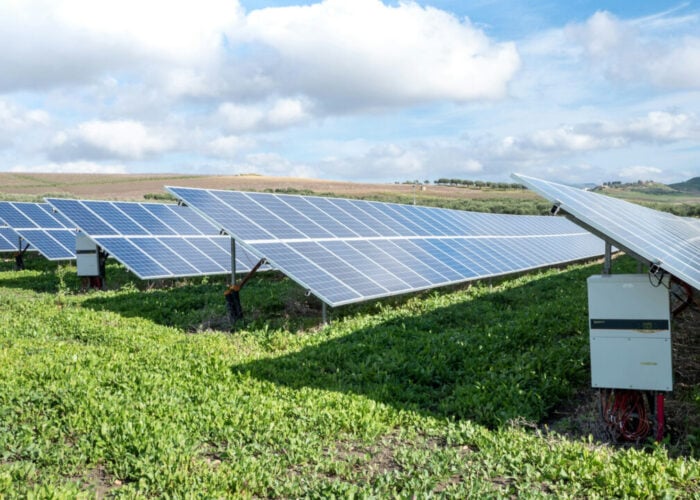
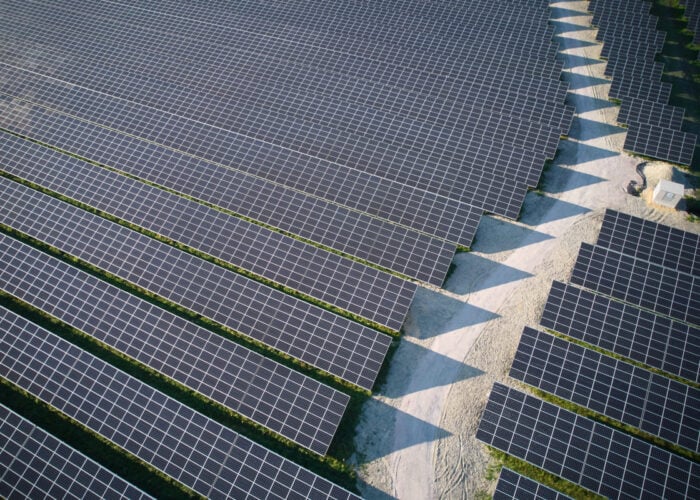
Participants are eligible to apply for PV projects with a peak capacity of ≥ 15 kWp that have a utility-scale grid connection. There are four categories of solar as follows:
The PV investments must be made within the following time periods:
- <1 MWp: 1.5 years
- ≥ 1 MWp building-related systems: 3 years
- ≥ 1 MWp non-building systems: 4 years
Subsidies are allocated for periods of 12 or 15 years.
Dutch PV dominated the SDE+ rounds in Autumn 2018, taking €3.2 billion of the €6 billion available to subsidise a 2.9GW PV pipeline.
Later on, more than 5,170 of all 5,376 renewable schemes applying for funding between 12 March and 4 April 2019 in the spring round were PV projects.
Grid bottlenecks have resulted in the government flagging solar’s “poorly designed” applications and making a push back in July to force projects to get an indicative go-ahead from the grid operator before subsidies are awarded. This month, news also emerged that PV operators would indeed be facing connection delays in under-pressure areas.
Details on the ‘Sun’ category of the new SDE+ round can be found here.
The prospects and challenges of solar's new era in Europe and beyond will take centre stage at Solar Media's Solar Finance & Investment Europe (London, 5-6 February) and Large Scale Solar Europe 2020 (Lisbon, on 31 March-1 April 2020).