REC Group hits back at Q CELLS with own patent infringement lawsuit

May 14, 2020
Facebook
Twitter
LinkedIn
Reddit
Email
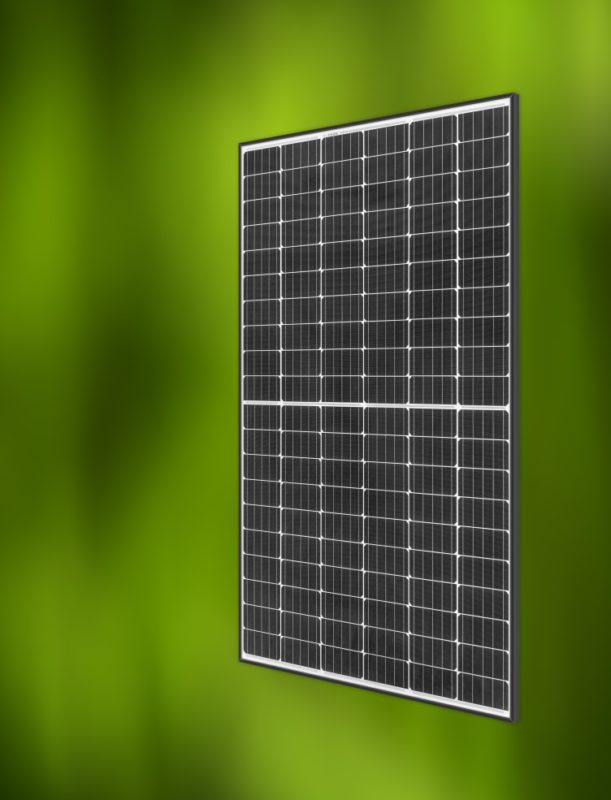
REC Group has filed a patent infringement lawsuit against Q CELLS regarding its split cell and junction box technology. Image: REC Group

High-efficiency PV module manufacturer REC Group has filed a patent infringement lawsuit against Q CELLS regarding its split cell and junction box technology. Q CELLS had previously opened patent infringement lawsuits regarding a PERC cell process against REC Group, JinkoSolar and LONGi Solar.

REC Group said that it had filed against Hanwha Q Cells (Qidong) Co. – part of Hanwha Q Cells – in the People’s Republic of China on 18 February 2020, with the lawsuit accepted by the Suzhou IP Tribunal on 8 April 2020 and served on 20 April 2020.

This article requires Premium SubscriptionBasic (FREE) Subscription

Try Premium for just $1

  • Full premium access for the first month at only $1
  • Converts to an annual rate after 30 days unless cancelled
  • Cancel anytime during the trial period

Premium Benefits

  • Expert industry analysis and interviews
  • Digital access to PV Tech Power journal
  • Exclusive event discounts

Or get the full Premium subscription right away

Or continue reading this article for free

Dr. Shankar G. Sridhara, Chief Technology Officer of REC Group said: “REC Group filed this action to protect its intellectual property, investments and reputation, as well as to encourage more innovation in the industry. The more solar companies invest in developing groundbreaking innovation, the more improvement we will see in efficiencies and costs per kWh and achieving full access to renewable energy generation and consumption for communities. As a global, pioneering solar energy company, we champion intellectual property rights and fair competition. This also means that we will rigorously defend our rights when they are being violated.”

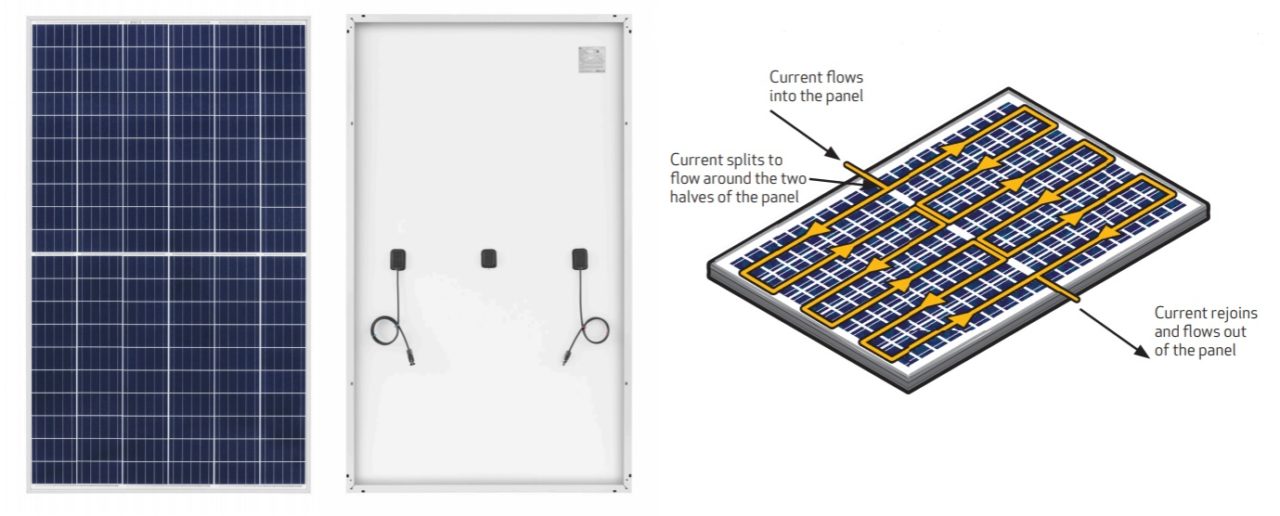
REC first used the internally developed split junction box technology with its TwinPeak PERC modules, which replaces the traditional single bulky junction box with three smaller boxes that incorporate one bypass diode each and one box per internal string. 

The company had claimed the split junction box technology used less metallisation and boasted reduced resistance and a much smaller form factor. This, the firm had said, enabled wider spacing between cells, increasing reflected light to the cell surface and boosting performance, amongst other benefits.

REC Group said that this specific technology was a key feature of its advanced modules.

Update: May 15, 2020

‘Solar Module Super League’ (SMSL) member, Q CELLS has responded to REC Group, suggesting its patent(s) in the case lack validity.

In a short response, Q CELLS claimed REC Groups split cell and junction box technology, patented in countries such as China had been rejected in Japan in 2019.  

As a result, Q CELLS would be petitioning for the invalidity of REC’s alleged patent in China. The SMSL also noted that it was considering other “legal avenues”. 
REC Group said that this specific technology was a key feature of its advanced modules.
16 June 2026
Napa, USA
PV Tech has been running PV ModuleTech Conferences since 2017. PV ModuleTech USA, on 16-17 June 2026, will be our fifth PV ModulelTech conference dedicated to the U.S. utility scale solar sector. The event will gather the key stakeholders from solar developers, solar asset owners and investors, PV manufacturing, policy-making and and all interested downstream channels and third-party entities. The goal is simple: to map out the PV module supply channels to the U.S. out to 2028 and beyond.
13 October 2026
San Francisco Bay Area, USA
PV Tech has been running an annual PV CellTech Conference since 2016. PV CellTech USA, on 13-14 October 2026 is our third PV CellTech conference dedicated to the U.S. manufacturing sector. The events in 2023, 2024 and 2025 were a sell out success and 2026 will once again gather the key stakeholders from PV manufacturing, equipment/materials, policy-making and strategy, capital equipment investment and all interested downstream channels and third-party entities. The goal is simple: to map out PV manufacturing in the U.S. out to 2030 and beyond.

Read Next

April 10, 2026
India has become the third-largest country by installed renewable energy capacity, reaching 274.68, with over 150GW of solar PV capacity, according to statistics from the Ministry of New and Renewable Energy (MNRE).
April 8, 2026
PV manufacturing capital expenditure is expected to rebound this year, following two years in the doldrums as the industry weathered a global oversupply of modules, new figures show.
Premium
April 8, 2026
After a sharp decline in 2023, PV manufacturing capital expenditure is set to bounce back this year, and not just in China, writes Moustafa Ramadan.
April 7, 2026
Sangam Solar One, a subsidiary of Indian solar PV manufacturer Waaree Energies, has commissioned a 3GW PV module manufacturing facility in Samakhiali, Kutch, Gujarat.
Premium
April 2, 2026
Analysis: Some in the US solar industry are positioning tariffs as a silver bullet for manufacturers, but it may not be as straightforward as that.
April 1, 2026
Toyo Solar shipped 4.5GW of cells in FY2025, surpassing its full-year target, while module shipments reached 249MW.

Upcoming Events

Solar Media Events
April 15, 2026
Milan, Italy
Solar Media Events
June 16, 2026
Napa, USA
Solar Media Events
October 13, 2026
San Francisco Bay Area, USA
Solar Media Events
November 3, 2026
Málaga, Spain
Solar Media Events
November 24, 2026
Warsaw, Poland