Poland’s ‘dynamic’ solar sector on track to beat new deployment targets, say trade bodies

Facebook
Twitter
LinkedIn
Reddit
Email


This article requires Premium SubscriptionBasic (FREE) Subscription

Try Premium for just $1

  • Full premium access for the first month at only $1
  • Converts to an annual rate after 30 days unless cancelled
  • Cancel anytime during the trial period

Premium Benefits

  • Expert industry analysis and interviews
  • Digital access to PV Tech Power journal
  • Exclusive event discounts

Or get the full Premium subscription right away

Or continue reading this article for free

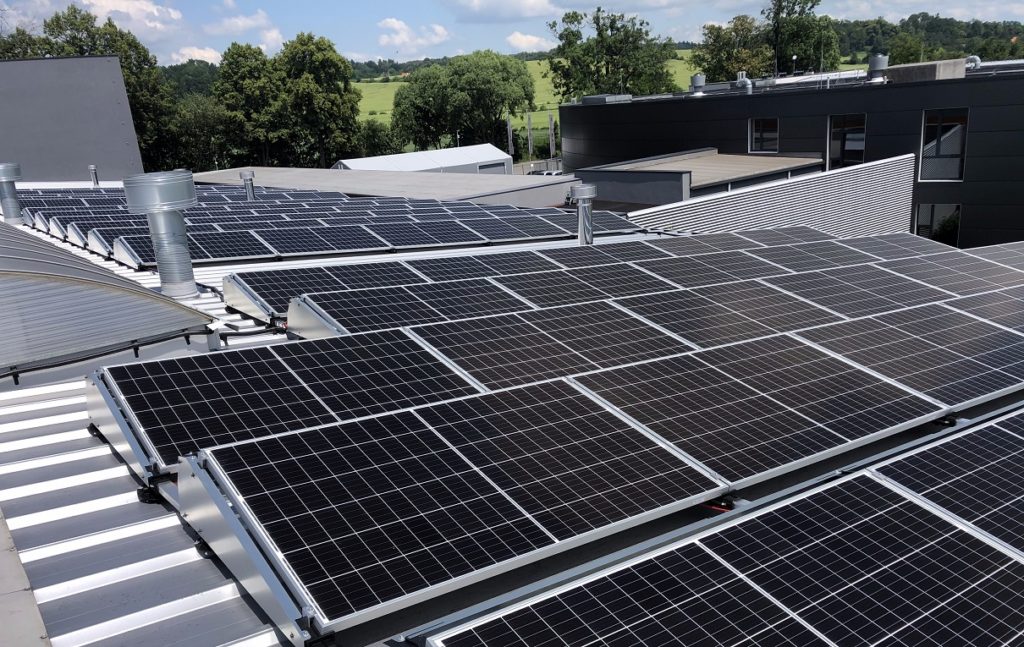
A Polish rooftop solar project developed by Solgen. Image: Polish Photovoltaic Industry Association.

A new energy strategy in Poland that aims to transition the country to a low-carbon economy by 2040 underestimates the growth potential of solar generation, PV trade associations have suggested.

Approved earlier this month, the Polish energy policy to 2040 (PEP2040) calls for a reduction in coal use and a “significant increase” in installed PV capacity to 5-7GW by 2030, by which time the share of renewable energy in final energy consumption will rise to at least 23%. By 2040, the roadmap targets 10-16GW of installed PV. 

Figures from transmission system operator PSE SA cited by the Polish Photovoltaic Industry Association (SBF) reveal that as of December 2020, the country had around 3,662MW of installed PV, with more than 2,362MW coming online last year.

“Taking into account this data, one may come to the conclusion that with the continuation of a growth trend, Poland may achieve the goal of 5-7GW in the next few years,” said SBF president Bogdan Szymański. “This scenario is very realistic, and still, noteworthy, the scale in which the PV market in Poland developed in 2020 exceeded the expectations of the authors of PEP2040… The SBF estimates the goal set in the EPP2040 could be even more ambitious.”

According to Ewa Magiera, CEO of the Polish Photovoltaics Association, the country’s PV sector “is developing very dynamically and all forecasts were underestimated so far”. However, while the PEP2040 roadmap calls for a power system “largely based on zero-emission sources”, Magiera said too much emphasis is placed on offshore wind and nuclear “which are not only extremely expensive, but also have a very long investment process”.

She added: “Examples of such projects in other countries in recent years show that they always exceed the planned budget and schedule. Meanwhile, photovoltaics means decreasing costs and energy here and now.”

“Taking into account the results from 2020, the SBF estimates the goal set in the PEP2040 could be even more ambitious.”
Bogdan Szymański
President, Polish Photovoltaic Industry Association (SBF)

Poland’s was the country with the fourth highest solar capacity additions in the EU last year, according to SolarPower Europe, which labelled the country as “the biggest surprise on the EU’s solar map”. The trade association said the backbone for the sector’s growth is self-consumption founded on a favourable policy of net-metering/feed-in framework for prosumers.

PEP2040 assumes a five-fold increase in the number of prosumers by 2030. This increase, Szymański said, will be possible thanks to the modernisation of the power grid and support for PV installations equipped with energy storage systems, but he warned that grids “must be prepared for the rapid increase” in the number of prosumers.

Strategies to maintain growth in 2021

As well as looking to address bureaucratic hurdles facing small-scale solar projects, SBF’s policy efforts for this year are focused on defining a common position in the PV industry on the country’s Mój Prąd programme, which provides subsidies for building photovoltaic micro installations (with a capacity of 2kW to 10kW).

The government recently announced the next call for projects for Mój Prąd, in which support will be provided for solutions that help boost self-consumption, such as electric chargers and energy storage. “As an association, we believe that the best subsidy system would be the one that supports installations that increase self-consumption without indicating a specific solution and would regard the limitation of the amount of energy transferred to the grid,” said Szymański.

Poland’s micro generation segment is complemented by annual renewable energy auctions – the last of which resulted in solar developers securing all 700MW of offered capacity – as well as a nascent power purchase agreement (PPA) market segment, which has seen BayWa r.e. claim the country’s first corporate PPA under a ten-year agreement with construction group HiedelbergCement for a 65MWp park.

Ewa Magiera said one of the “urgent solutions” to maintain the pace of solar growth in Poland is the development of corporate PPAs. She said it is is necessary to to adapt Polish law to the possibility of direct sale of electricity between renewable energy sources (RES) and end users.

She added: “Business wants to buy energy from renewable energy for many reasons, including due to the need to guarantee a stable supply of electricity, guarantees of stable (predictable) energy costs, but also because they participate in the supply chain, in which their main contractors expect to use an appropriate amount of energy from RES.”

Read Next

May 11, 2026
Yindjibarndi Energy Corporation (YEC) has reached financial close on the 150MW Jinbi solar PV power plant in Western Australia's Pilbara region and signed a 30-year power purchase agreement (PPA) with mining giant Rio Tinto.
Premium
May 7, 2026
The Irish renewable energy market is 'stable, with a regular cadence of activity,' according to the BNRG Group's David Maguire.
April 23, 2026
The 204MW Zwartowo solar power plant has entered the Polish balancing energy market, a first in the country, according to German PV developer Goldbeck Solar.
April 22, 2026
Work has begun on the 500MW Maun solar-plus-storage project in Botswana, which will be a cornerstone of the country's plan to reach 1.5GW of operational renewable energy capacity by the end of the decade.
Premium
April 17, 2026
France remains an 'attractive' solar market, and a 'stable environment' for potential investors, according to Ksenia Dray.
April 16, 2026
Tech giant Amazon has announced nine new renewable energy power purchase agreements (PPAs) in Australia totalling 430MW, with eight projects featuring solar generation co-located with BESS.

Upcoming Events

Solar Media Events
May 20, 2026
Porto, Portugal
Upcoming Webinars
May 27, 2026
9am BST / 10am CEST
Upcoming Webinars
May 27, 2026
9am BST / 10am CEST
Media Partners, Solar Media Events
June 3, 2026
National Exhibition and Convention Center (Shanghai)
Solar Media Events
June 16, 2026
Napa, USA