PV inverter manufacturers reshape strategies as policy shifts drive regional production

May 5, 2026
Facebook
Twitter
LinkedIn
Reddit
Email
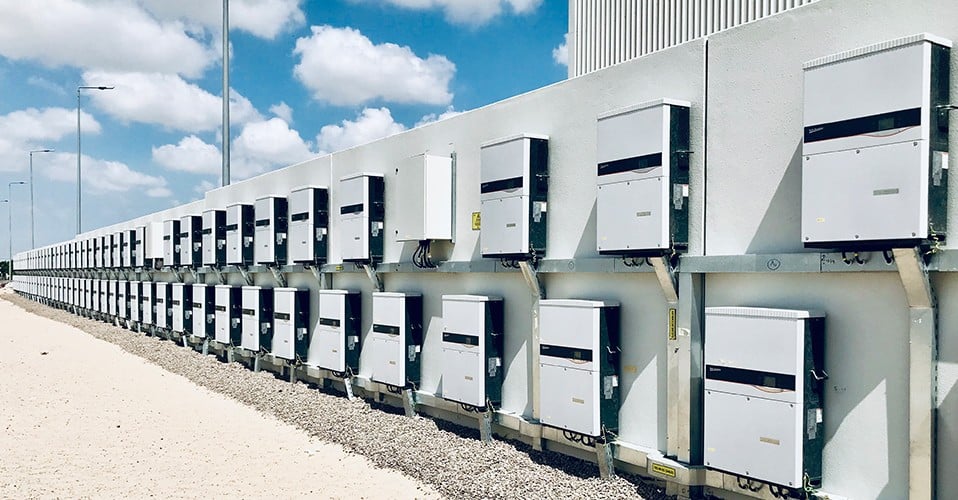
Sungrow inverters.
Tariffs and local production incentives are forcing PV inverter manufacturers to adapt their strategies. Image: Sungrow.

PV inverter producers are adapting their manufacturing strategies to navigate changing policy and regulatory conditions in key solar markets, according to analysis from PV Tech Research.

A combination of trade tariffs and legislative measures is driving a significant shift toward localised production in key markets

This article requires Premium SubscriptionBasic (FREE) Subscription

Try Premium for just $1

  • Full premium access for the first month at only $1
  • Converts to an annual rate after 30 days unless cancelled
  • Cancel anytime during the trial period

Premium Benefits

  • Expert industry analysis and interviews
  • Digital access to PV Tech Power journal
  • Exclusive event discounts

Or get the full Premium subscription right away

Or continue reading this article for free

The changing landscape for PV inverter manufacturing is explored in a blog post today by our colleagues from PV Tech Research, based on the latest findings from their PV InverterTech Bankability Ratings Report. The post analyses 26 of the leading producers in the utility-scale PV inverter market.

In the US, a combination of tariffs on Chinese-manufactured inverters and Foreign Entity of Concern (FEOC) rules effective January 2026 is creating strong incentives for domestic manufacturing. The Inflation Reduction Act (IRA) offers a 30% Investment Tax Credit (ITC) with an additional 10% domestic content bonus, pushing developers toward non-Chinese supply chains.

While China still dominates global inverter manufacturing capacity among the top 26 producers, the US share is expected to exceed 3% (nearly 40GW) by the end of 2026. European manufacturers including Power Electronics and SMA Solar are establishing American facilities, with Power Electronics planning a 20GW factory.

Europe is similarly pursuing regional manufacturing, targeting 40% domestic production of net-zero technologies by 2030 under the Net-Zero Industry Act (NZIA). Europe’s share of the manufacturing capacity of leading inverter manufacturers is projected to reach 9% (over 100GW) by the end of 2026.

India has emerged as a key growth market, with shipments steadily increasing year-on-year, driven by Production Linked Incentive (PLI) schemes.

However, challenges persist. Average inverter revenues declined in 2024, with shipment growth limited to 10% due to elevated inventory levels and intense price competition from Chinese manufacturers, particularly affecting Western companies like SolarEdge and SMA Solar.

Looking ahead, the blog post by PV Tech Research analyst Mollie McCorkindale concludes that inverter producers will need to continue to adapt in order to survive, with a strategic shift to supplying the burgeoning energy storage market offering a promising path to future growth.

To read the post in full, click here (subscription required). Full details on how to subscribe to our PV InverterTech Bankability Ratings Report can be found here.

16 June 2026
Napa, USA
PV Tech has been running PV ModuleTech Conferences since 2017. PV ModuleTech USA, on 16-17 June 2026, will be our fifth PV ModulelTech conference dedicated to the U.S. utility scale solar sector. The event will gather the key stakeholders from solar developers, solar asset owners and investors, PV manufacturing, policy-making and and all interested downstream channels and third-party entities. The goal is simple: to map out the PV module supply channels to the U.S. out to 2028 and beyond.
13 October 2026
San Francisco Bay Area, USA
PV Tech has been running an annual PV CellTech Conference since 2016. PV CellTech USA, on 13-14 October 2026 is our third PV CellTech conference dedicated to the U.S. manufacturing sector. The events in 2023, 2024 and 2025 were a sell out success and 2026 will once again gather the key stakeholders from PV manufacturing, equipment/materials, policy-making and strategy, capital equipment investment and all interested downstream channels and third-party entities. The goal is simple: to map out PV manufacturing in the U.S. out to 2030 and beyond.
3 November 2026
Málaga, Spain
Understanding PV module supply to the European market in 2027. PV ModuleTech Europe 2026 is a two-day conference that tackles these challenges directly, with an agenda that addresses all aspects of module supplier selection; product availability, technology offerings, traceability of supply-chain, factory auditing, module testing and reliability, and company bankability.

Read Next

May 5, 2026
The Dutch government is planning to introduce a feed-in-tariff that will require large electricity producers to pay towards the cost of the electricity grid.
Premium
May 5, 2026
PV inverter producers are adapting their manufacturing strategies to changing policy and regulatory conditions in key solar markets, writes PV Tech Research analyst Mollie McCorkindale.
May 5, 2026
Solex Energy has signed an MoU with the Government of Gujarat to establish a 5GW solar cell manufacturing facility alongside a 10GW energy storage plant in the state.  
Premium
May 5, 2026
April 2026 delivered a continuation of Australia's seasonal solar contraction as the NEM moved deeper into autumn.
May 1, 2026
TPREL has proposed investment of up to INR65 billion (US$685 million) to establish a 10GW solar PV ingot and wafer manufacturing plant. 
May 1, 2026
CIP has acquired Orsted’s European onshore portfolio with 826MW of operational and under-construction capacity. 

Upcoming Events

Upcoming Webinars
May 27, 2026
9am BST / 10am CEST
Media Partners, Solar Media Events
June 3, 2026
National Exhibition and Convention Center (Shanghai)
Solar Media Events
June 16, 2026
Napa, USA
Media Partners, Solar Media Events
August 25, 2026
São Paulo, Brazil
Solar Media Events
October 13, 2026
San Francisco Bay Area, USA