The Solar Energy Industries Association (SEIA), the trade body representing the US solar industry, has published research concluding that solar and storage companies have added over US$100 billion to the US economy following last year’s implementation of the Inflation Reduction Act (IRA).
The landmark legislation introduced new incentives for renewable power companies to source their manufacturing work in the US, in order to create a resilient domestic supply chain for the renewable sector.
Try Premium for just $1
- Full premium access for the first month at only $1
- Converts to an annual rate after 30 days unless cancelled
- Cancel anytime during the trial period
Premium Benefits
- Expert industry analysis and interviews
- Digital access to PV Tech Power journal
- Exclusive event discounts
Or get the full Premium subscription right away
Or continue reading this article for free
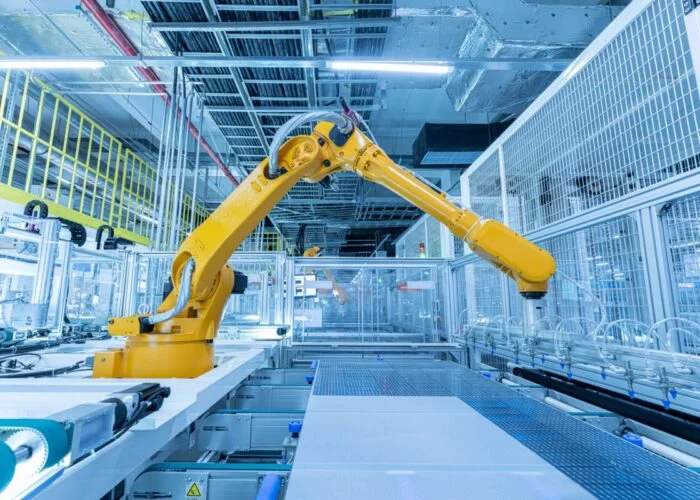
This has already had a profound impact on the US solar sector, with industry leaders Maxeon and First Solar announcing new manufacturing facilities in the US last week, and the SEIA reports that a total of 51 new facilities have been announced or expanded in the last year.
Critically, the latest SEIA research suggests this trend will continue in the future. The association expects the announced facilities to add 155GW of new production capacity to the US solar sector, with 85GW of new solar module capacity, 43GW of new solar cells, 20GW of new silicon ingots and wafers and 7GW of new inverter capacity.
The SEIA expects this new capacity to increase the US’s total manufacturing capacity by 17 times by 2026, a dramatic increase that could help deliver many of the IRA’s goals for the US renewable sector.
“The unprecedented surge in demand for American-made clean energy is a clear sign that the clean energy incentives enacted last year by Congress are working,” said SEIA president and CEO Abigail Ross Hopper. “This law is a shining example of how good federal policy can help spur innovation and private investment in communities that need it most.”
International questions
While the SEIA’s forecasts are encouraging, questions remain as to how quickly domestic US manufacturing can replace imports of foreign goods, particularly those from China. According to the US Energy Information Administration, between 2021 and 2023, the US imported enough solar panels to meet 93% of annual domestic energy demand, and reducing this reliance will not happen overnight.
Indeed, the shift from a well-established solar module provider, such as those in China, to relatively newer producers, such as those in the US, has sowed some uncertainty in the US solar sector.
Analyst firm Lazard reported that, while the levelised cost of energy has fallen dramatically in the US solar sector in the last few decades, the cost of producing power increased from US$36/MWh to US$60/MWh, the first increase in history, as uncertainty regarding the future of the US solar supply chain has discouraged investment.
Yet the SEIA remains optimistic that this recent increase is a short-term consequence, and that in the long-term, the US solar sector continues to grow. By 2033, the association expects US solar capacity to increase to 668GW, and the sector to add half a million new jobs.