Research has uncovered “alarming” evidence that solar trackers are not performing as claimed.
A study published by Brussels-based 3E and Statkraft found that the availability of single-axis trackers deployed on multiple sites appears to fall substantially short of typical industry claims.
Try Premium for just $1
- Full premium access for the first month at only $1
- Converts to an annual rate after 30 days unless cancelled
- Cancel anytime during the trial period
Premium Benefits
- Expert industry analysis and interviews
- Digital access to PV Tech Power journal
- Exclusive event discounts
Or get the full Premium subscription right away
Or continue reading this article for free
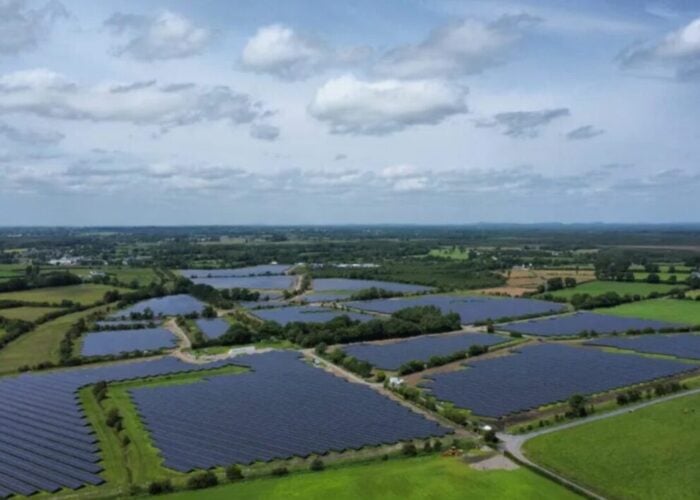
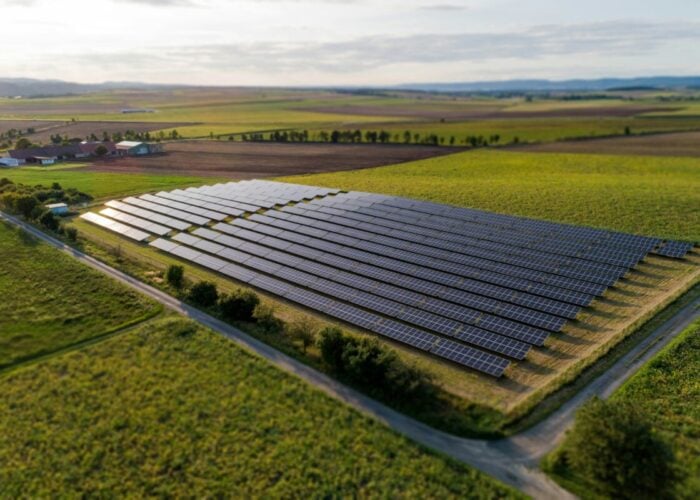
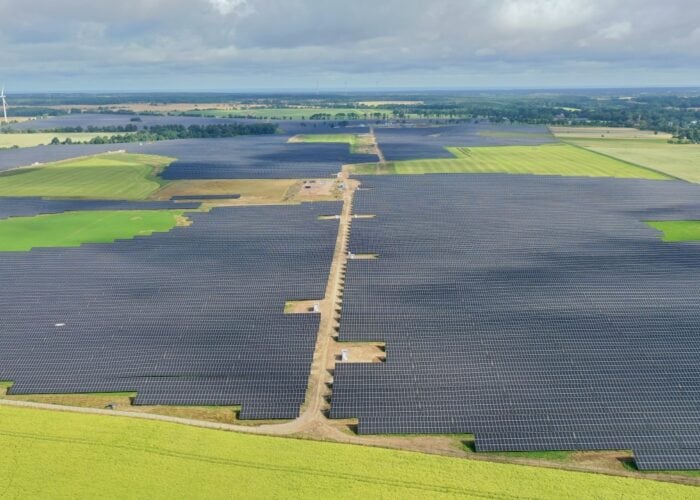
The study, said to be the first large-scale investigation of tracker performance, analysed real-world data from 2GW of operational PV across over 50 utility-scale sites in mostly temperate climate zones in Europe.
It found that, by the operational availability (uptime) metric commonly used as a key performance indicator (KPI) in PV performance, trackers operate in a median range of 66-88%, depending on the data-filtering methods used. This is compared to the 99% availability often claimed by industry, although, as the study pointed out, the detailed methodologies for arriving at such figures are not openly disclosed.
“These results are substantial and alarming,” the researchers said. “[The] industry claims sometimes even as high as 99% availability, while the assessment of more than 2GWp PV power plants tells us a different story.”
Single-axis trackers have become a common feature of PV power plants, boosting a project’s power output by as much as 35% in some environments. But as the study highlighted, there has been a persistent research gap regarding the reliability and operation of utility-scale trackers and no clear KPI to assess tracker performance for contractual purposes.
“Tracker systems play a substantial role in PV plant performance, directly affecting contractual guarantees and generating liabilities for stakeholders who lack control and expertise over tracker algorithms and on-site troubleshooting capabilities. Therefore, it is crucial that equipment on site can be decoupled from overall site performance and evaluated individually,” the study said.
A new performance indicator for trackers
The paper outlines a new KPI that distinguishes trackers from other PV power plant performance indicators, enabling faults in trackers to be more easily evaluated. “The industry requires such a KPI for future contractually binding agreements,” the researchers said.
Such a KPI, they said, has the potential to provide a better understanding of actual tracker losses, helping asset managers, O&M teams and developers evaluate tracker uptime more transparently.
The KPI is defined as “tracker availability” and aims to evaluate the time-based operation of the tracker, “without any relation to its impact on energy generation”. “Analogous to inverter time-based availability, the reasoning is that the equipment must be fully functional as much as possible, to facilitate energy production regardless of sky conditions,” the researchers said.
Applying the KPI to data from the most recent operational year of the 2GW of PV analysed, the research found a significant gap between industry claims and what appears to be the case in reality.
They also noted shortcomings in the quality of tracker data, especially with tracker angle measurements and missing data.
“As the industry becomes more competitive, and a key contributor to the energy mix in many countries, its players require accurate information on equipment availability to feed into simulation models and contractual guarantees,” the paper concluded.
‘Assessing tracker availability in 2 GW solar power plants’ is available here.