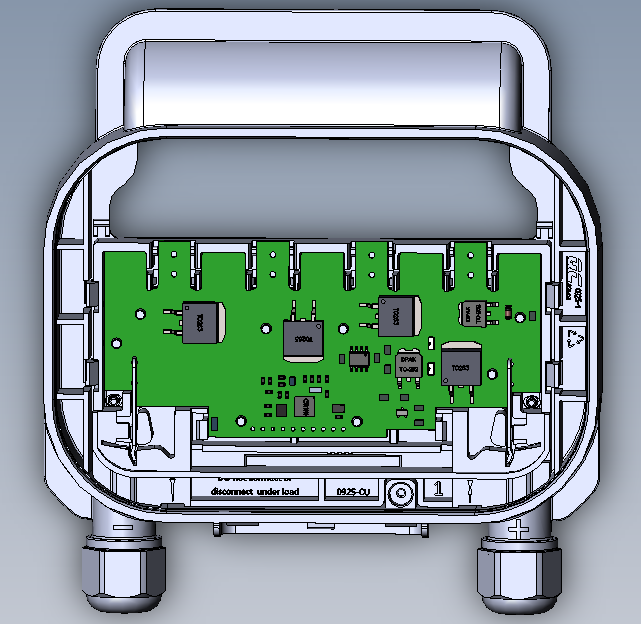
SunSniffer is to launch its first junction boxes with the special monitoring sensor and a rapid shutdown function for solar modules.
Problem
Try Premium for just $1
- Full premium access for the first month at only $1
- Converts to an annual rate after 30 days unless cancelled
- Cancel anytime during the trial period
Premium Benefits
- Expert industry analysis and interviews
- Digital access to PV Tech Power journal
- Exclusive event discounts
Or get the full Premium subscription right away
Or continue reading this article for free
In 2017, a revised version of the US National Electrical Code (“NEC 2017”) comes into effect, which then requires module-level rapid shutdown. SunSpec Alliance reacted on that and drafted specifications for the communication signal supporting module-level rapid shutdown (Communication Signal for Rapid Shutdown, SunSpec Interoperability Specification).
Solution
SunSniffer developed a sensor that not only provides a unique module-level monitoring system, including module-level temperature measurement, analysis via artificial intelligence and a simulation engine, but additionally is able to rapidly shut the system down according to the requirements of NEC 2017. LEONI and QC Solar together with SunSniffer developed the respective junction boxes with the embedded sensor.
Applications
PV module junction box sensor for US rapid shutdown.
Platform
The SunSniffer sensor measures voltage and temperature at each single module, and the simulation engine in combination with artificial intelligence allowsthe system to detect even the smallest error – with accuracy of under 1%, according to the company. The SunSniffer system not only detects errors, it analyses and identifies them, provides detailed instructions to operators in what, where and how to be repaired or swapped, and ensures complete documentation.
Availability
Market release will be December, 2016.