While much attention in US PV manufacturing is trained on the headline-grabbing buildout of cell and module capacity, T1 Energy CEO Daniel Barcelo has a different perspective on what it takes to truly establish a domestic supply chain.
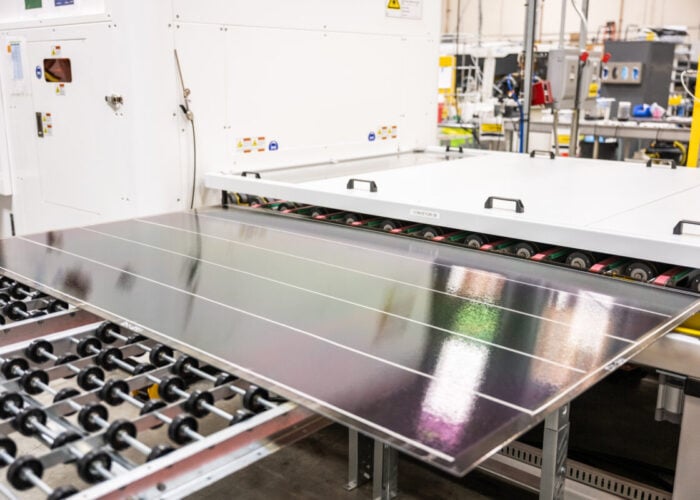
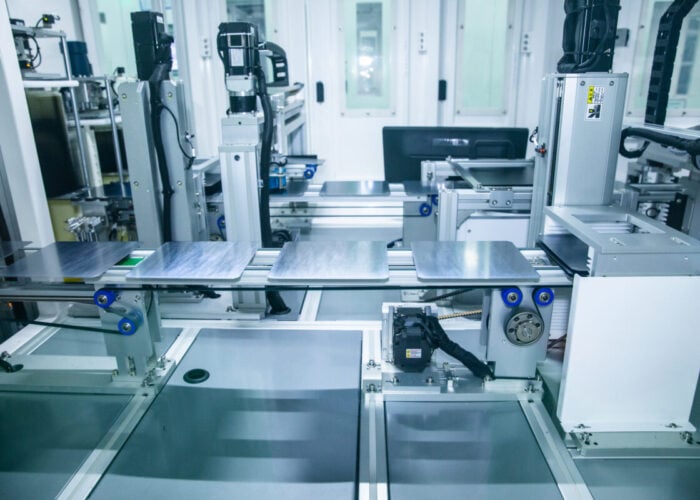
“Sometimes when you look at our 5GW [module] plant, you feel like you’re running a glass moving company,” Barcelo told PV Tech in an interview at a recent conference hosted by investment bank Roth Capital Partners “You just bring in a lot of glass, you’re sandwiching it together, and then you’re sending a lot of glass out.”
Try Premium for just $1
- Full premium access for the first month at only $1
- Converts to an annual rate after 30 days unless cancelled
- Cancel anytime during the trial period
Premium Benefits
- Expert industry analysis and interviews
- Digital access to PV Tech Power journal
- Exclusive event discounts
Or get the full Premium subscription right away
Or continue reading this article for free
It’s a comment that encapsulates an often-overlooked reality: establishing a genuine domestic solar supply chain in the US extends well beyond the silicon-based components that dominate policy discussions and industry headlines.
The components that policy forgot
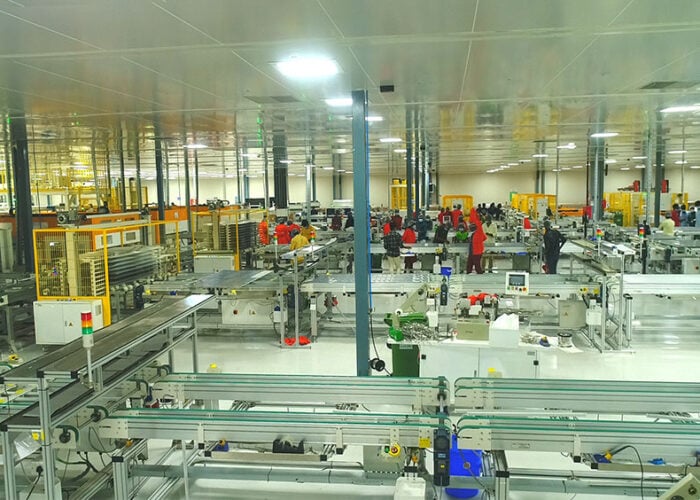
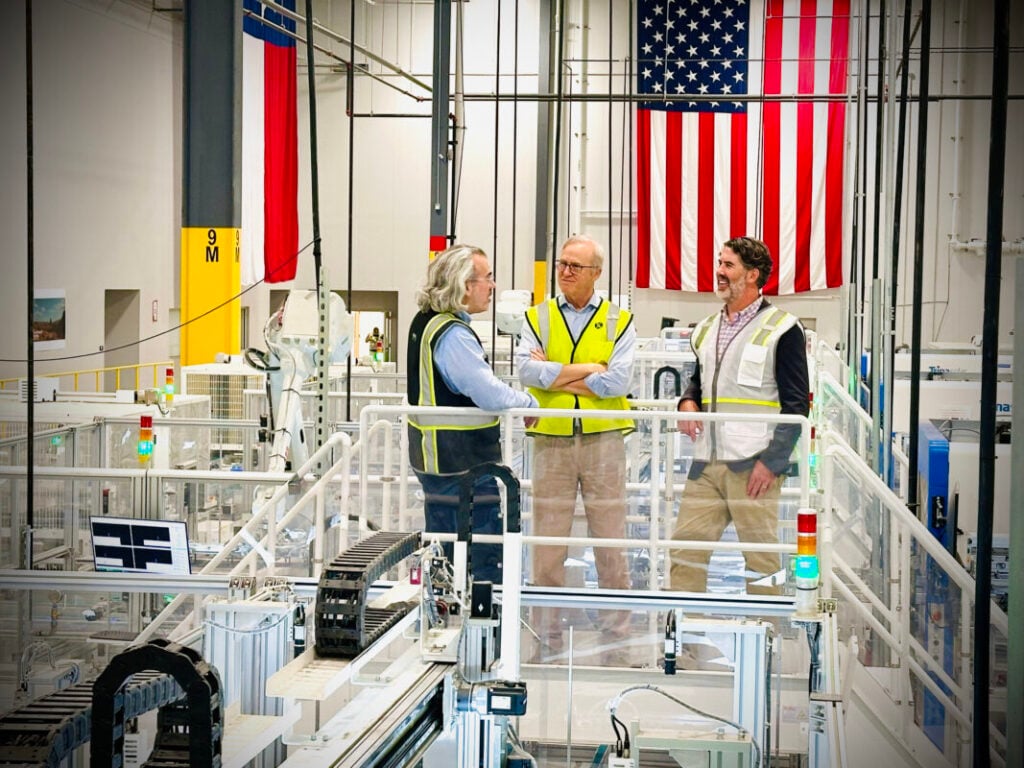
T1 Energy, which operates a 5GW module facility in Dallas and is bringing a 2.1GW TOPCon cell plant online in Austin by year-end, has been actively working to build relationships across the broader supply chain ecosystem.
The company has already secured a partnership with Origami Solar’s parent company Nextpower for steel module frames—a move Barcelo said offers an attractive domestic content bonus on top of the performance advantages of the Origami frames. But frames are just the beginning.
“We’ve been very active last year throughout the chain from encapsulants to diodes, junction boxes, the whole aspect,” Barcelo explained. The company’s approach is proactive: identifying potential suppliers, including those in adjacent industries, and offering them a path into solar manufacturing.
“We’re talking to players that currently supply us, finding companies that are near adjacent to it, saying, ‘Hey, you could also make this,'” he said. “If you made this, we could offer a contract, and that contract then could help you finance that.”
It’s a strategy that positions T1 as a demand signal—using its purchasing power and long-term contract commitments to incentivise US manufacturers to enter the solar component space.
Cost first
Glass represents perhaps the most significant opportunity and challenge. As a globally low-margin business, glass manufacturing has remained concentrated in Asia, where economies of scale and established supply chains create formidable competitive advantages.
“To the degree there are US solar manufacturers making glass, [we] want to talk to them, love to do that from a logistics standpoint,” Barcelo said. But he acknowledged the fundamental tension: “Making glass cost competitive in America versus Southeast Asia, it’s always there, but we have to answer the first question: cost structure to serve our customers.”
The company’s approach reflects a pragmatic hierarchy: cost and quality come first, but domestic content considerations follow closely behind, particularly where Inflation Reduction Act incentives create economic pathways for reshoring. “There’ll be tax incentives that … will incentivise that,” Barcelo noted, pointing to how policy can help bridge cost gaps for components like frames and glass.
Even the pallets matter
Barcelo’s attention to detail extends to components most wouldn’t consider part of the solar supply chain at all. He mentioned reusable pallets as an area of interest—not just for cost reasons, but for sustainability.
“If all the glass comes from Asia on a palette, the palette has to go somewhere,” he said. “Even reusable pallets are a nice thing, in terms of the amount of paper to wrap and cardboard for these projects, to reduce that waste.” Currently, most of these ancillary “bits and pieces” that go into a module come from “various places, but primarily Southeast Asia”, according to Barcelo. But in time, he hopes that a vibrant PV manufacturing industry in the US can become an important source of business for a range of adjacent local enterprises.
Tapping tech talent for PV manufacturing
Beyond finding locally made materials and components, T1 faces another critical challenge: finding the skilled workforce to operate its expanding facilities. The company’s solution? Look to adjacent industries with transferable skills.
“For our cell manufacturing, we’ll have over 1,500 highly skilled jobs,” Barcelo said. “A lot of it is process engineers, equipment engineers — we’re trying to hire a lot from the semiconductor industry as well.”
The overlap makes sense. Solar cell manufacturing, particularly at the scale and sophistication T1 is pursuing, shares significant DNA with semiconductor fabrication. Both require expertise in chemical engineering, speciality gas handling and precision process control.
“There’s a lot of shared experience, a lot of chemical engineers, a lot of specialty gas engineers,” Barcelo explained. “America is going to need tens of thousands of these engineers and these roles, and it just hasn’t existed at the scale it has.”
The Austin advantage
T1’s decision to locate its cell facility north of Austin, Texas, was strategic. The region offers an established ecosystem of advanced manufacturing talent that the company can tap into.
“We’re based in Austin, there’s an ecosystem between Tesla and SpaceX of those types of jobs and those types of work,” Barcelo said. “We made a conscious decision to go there for that reason, and it has a legacy of semiconductor manufacturing, has a legacy of computer manufacturing, from the days of Dell to the days with Reagan, with space programmes.”
This talent pool represents a competitive advantage that extends beyond immediate hiring needs. It creates a sustainable pipeline of workers with the technical sophistication required for advanced solar manufacturing—skills that Barcelo believes will be increasingly valuable in an AI-driven economy.
“These are the types of jobs that should be more AI resistant,” he noted, pointing to the hands-on technical expertise that automation can’t easily replicate.
Building the full stack
T1’s dual focus on component supply chains and workforce development reflects a broader understanding: establishing genuine domestic solar manufacturing capacity requires attention to every link in the chain, not just the most visible ones.
As Barcelo put it, the company’s first priority remains “the quality and the cost structure” needed to serve customers. But increasingly, that calculation includes the full ecosystem of domestic content—from the silicon wafers at the core to the pallets they ship on.
For an industry racing to meet ambitious domestic manufacturing goals, T1’s approach offers a template: use scale as leverage to pull adjacent industries into solar, tap existing talent pools from related sectors and recognise that building a supply chain means building everything, not just the headline components.
“Don’t forget about the pallets,” Barcelo joked during the interview. But behind this lies a serious point: in solar manufacturing, every component counts.
‘Scaling every link in the US PV manufacturing value chain’ is the theme of our annual PV CellTech conference in San Francisco on 13-14 October 2026. For the full agenda and details on booking, click here.