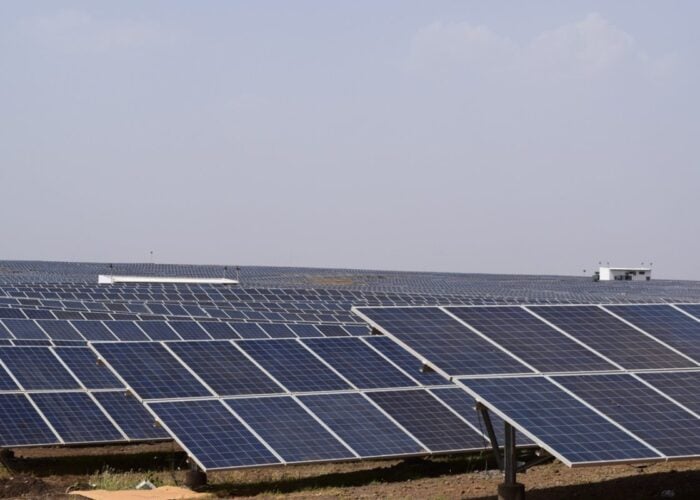
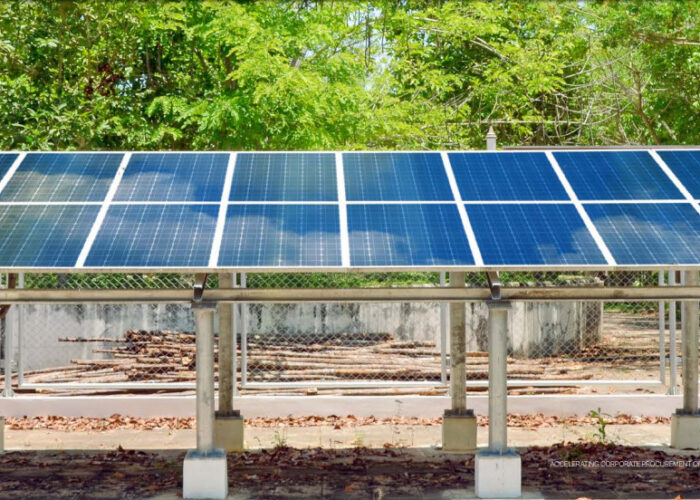
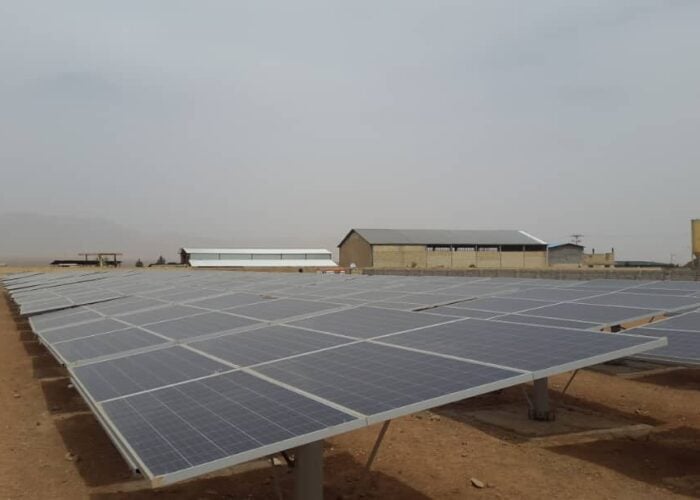
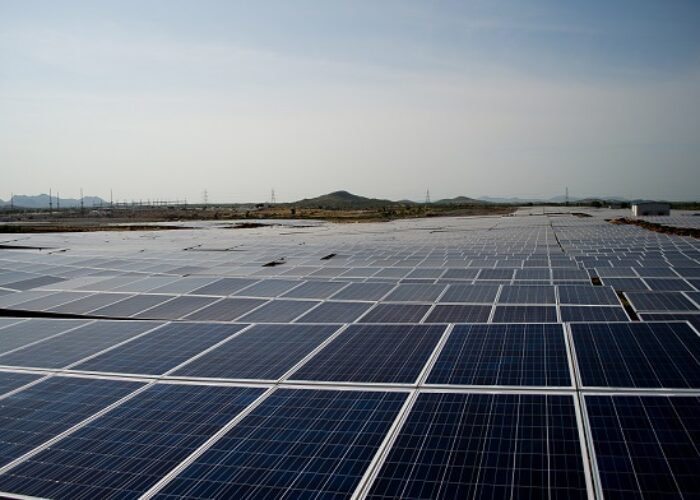
The recent announcement from India’s Ministry of New & Renewable Energy (MNRE) to approve a 12GW solar scheme for central public sector undertakings (CPSUs) – crucially mandating the use of domestically sourced solar cells and modules – represents the first key step towards India finally creating a route to stimulate multi-GW expansions for new cell and module facilities.
India's total solar PV deployment hit 25.21GW by the end of last year, according to figures supplied to parliament by the minister for new and renewable energy and power, R.K. Singh.
India has approved a 12GW solar scheme for central public sector undertakings (CPSUs), which are state-owned enterprises, and it includes a requirement to source cells and modules locally.
Solaria bags financing for 250MW of renewables in Spain, Tata Power Solar launches rooftop solution in Cochin and Chennai, FRV provides solar to schools in Sierra Leone.
India’s Ministry of New and Renewable Energy (MNRE) is planning two hybrid projects with a combined total of 14MW solar PV and 42MWh of battery energy storage in Leh and Kargil, in the state of Jammu and Kashmir.
The Indian state of Tamil Nadu is planning to be an international climate leader for emerging economies by 2023 through its new target of 9GW of solar PV by the same year.
India's Directorate General of Trade Remedies (DGTR) has recommended an anti-dumping duty of $US114.58/MT for a period of five years on imports of solar glass from Malaysia.
Indian module manufacturer, EPC and rooftop PV provider Vikram Solar has commissioned two 10MW solar projects for West Bengal State Electricity Distribution Company (WBSEDCL).
Indian state-run utility NTPC has issued a tender for 15MW of floating solar at its hydroelectric power station Koldam in the mountainous, northern state of Himachal Preadesh.