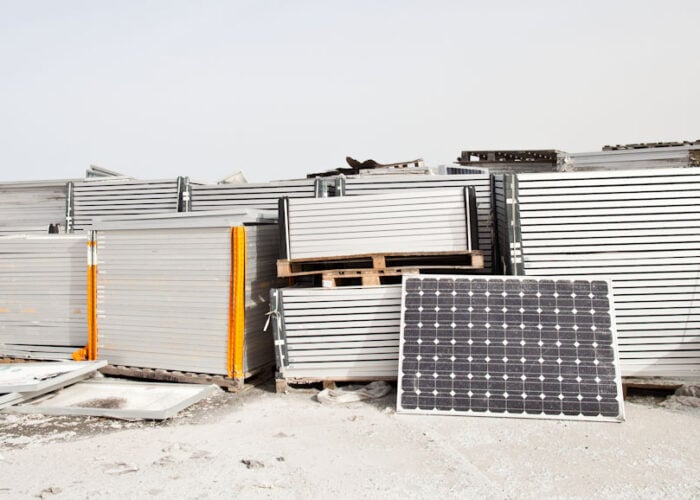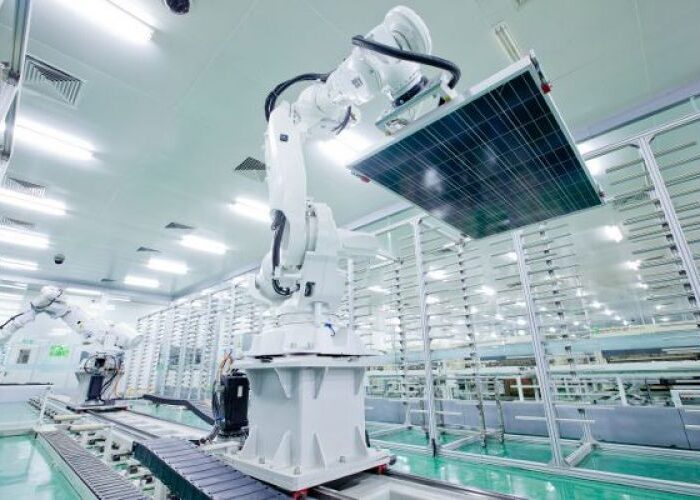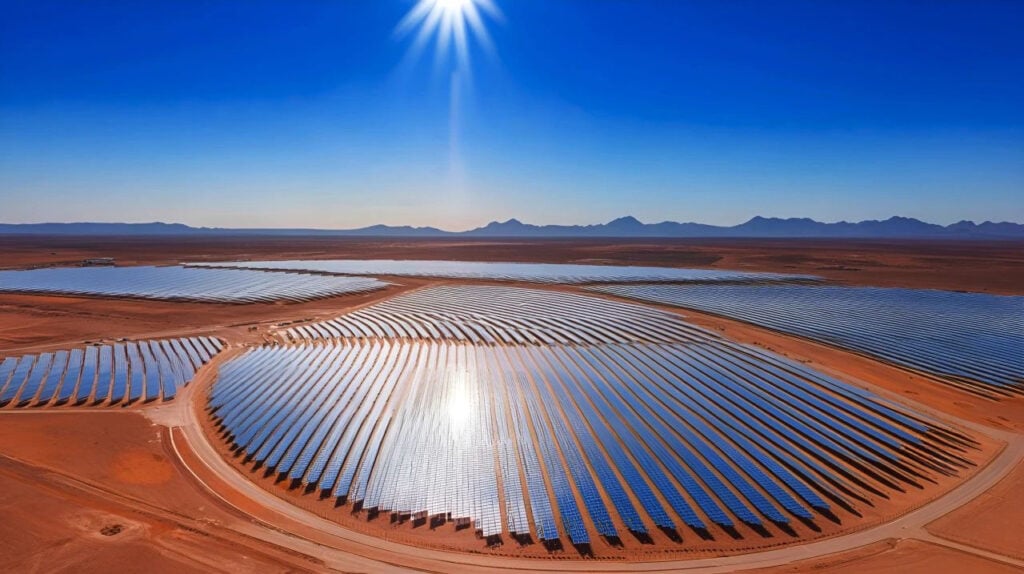
As 2025 comes to a close, PV Tech is looking at some of the trends that dominated headlines and drove discussions over the last 12 months. One of the most impactful trends has been the culmination of years of leading Chinese module manufacturers producing more modules than developers can install, causing module prices to collapse, and slashing these manufacturers’ profits.
In response, the Chinese government has sought to drive up the price of solar components, to encourage manufacturers to charge more for their products, and reverse the race to the bottom that has seen leading module manufacturers slash prices repeatedly in order to compete with one another. With early signs suggesting that this has helped stabilise module prices in the key overseas markets of the US and Europe, there is a cautious optimism among the manufacturing sector heading into 2026.
Try Premium for just $1
- Full premium access for the first month at only $1
- Converts to an annual rate after 30 days unless cancelled
- Cancel anytime during the trial period
Premium Benefits
- Expert industry analysis and interviews
- Digital access to PV Tech Power journal
- Exclusive event discounts
Or get the full Premium subscription right away
Or continue reading this article for free
Chinese losses following years of oversupply
The phenomenon of Chinese module oversupply, particularly to Europe and the US, is nothing new. In the first nine months of this year, China’s total module experts hit 206GW, up 10% from the same period in the previous year, as a combination of China leading the world in module manufacturing capacity, and increasing appetite for new solar deployments around the world, led to Chinese modules being installed across the globe at rapid pace.
However, this triggered a toxic competition among Chinese manufacturers, who slashed their sale prices to maintain competitiveness with one another. Earlier this year, Filip Kierzkowski, head of partnerships and trading at sun.store, wrote a blog for PV Tech in which he noted that module prices dropped as low as €0.085-0.095/W (US$0.098-0.109) in the latter stages of 2024 and the early part of 2025, which he called “one of the most intense oversupply cycles in history”.
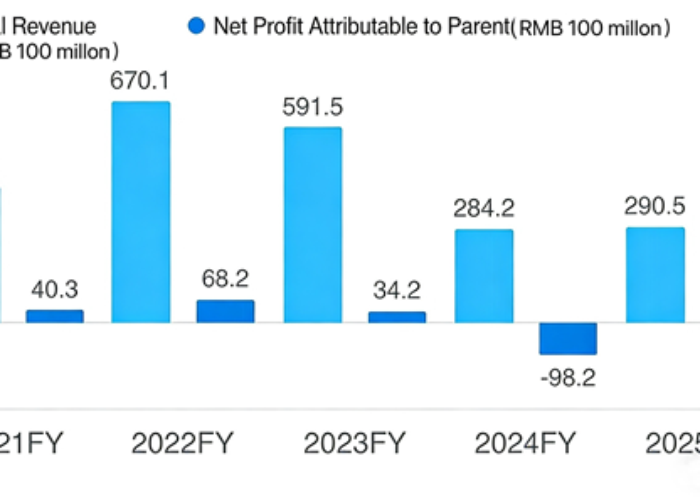
This sustained mismatch between volume of production and profits from that production was born out in the financial results in some of the leading Chinese suppliers this year. In the first half of the year, Jinko Solar, LONGi and JA Solar collectively shipped more than 100GW of modules, but suffered reductions in year-on-year revenues of 32.6%, 14.8% and 36%, respectively, as the country’s top four module manufacturers endured US$1.54 billion in losses.
Just two of the top ten Chinese-listed module manufacturers—DMEGC and Aiko—saw improvements in revenue from 2024 to 2025, but their module shipments in the first half of 2025 combined to just over 22GW, less than any of the top five manufacturers, suggesting that leading the world in module supply, and actually growing profits from that module supply, had become mutually exclusive in the first half of the year.
The same trend affected the polysilicon production sector too, with Daqo New Energy posting losses of US$81.5 million in the first half of the year and a gross margin of -65.8%. More broadly he average price of polysilicon collapsed from US$32.7/kg in February 2023 to US$4.4/kg in May 2024, and led to companies such as Daqo slashing production; the company’s polysilicon sales peaked in the third quarter of 2023, while polysilicon production peaked in the second quarter of 2024, and both metrics more than halved by the first quarter of this year.
Corrections from companies and the government
In response, both the Chinese government, and individual Chinese companies, sought to alter the industry. Wood Mackenzie identified three government policies that could help arrest this slide into untenably low module prices: the cutting of factory utilisation rates by as much as 70%, which triggered a 48% increase in prices between September and October; a reduction in manufacturing output that focused on passivated emitter rear contact (PERC) technology in particular; and the cancellation of a 13% rebate applied to VAT paid on exports of solar modules and storage systems.
The analyst pointed to the third component as a particularly impactful change, one that could trigger an increase in average module prices of as much as 9% by the fourth quarter of this year. Considering China’s dominance of the global solar supply chain, Yana Hryshko, senior research analyst and head of Global Solar Supply Chain at Wood Mackenzie, said at the time that “developers will have little choice but to absorb these higher costs”, putting more pressure on developers’ balance sheets, but helping manufacturers return to profitability.
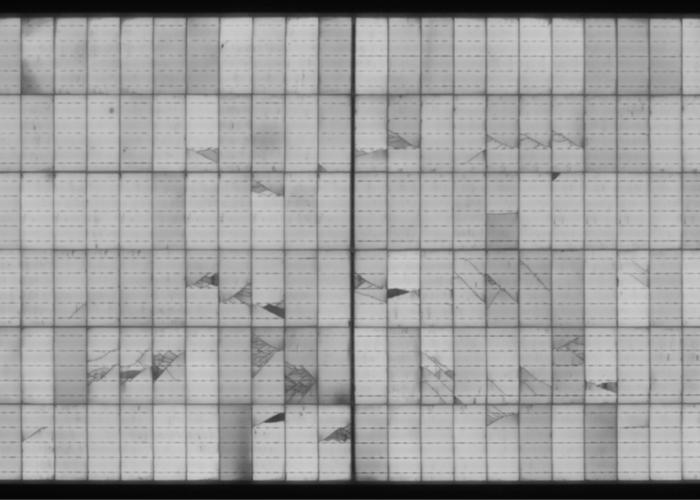
This shift could also help improve module reliability, as manufacturers are motivated by factors other than purely driving sale prices as low as possible. In October, Gaëtan Masson of the International Energy Agency’s Photovoltaic Power Systems (IEA PVPS) programme warned of an “epidemic” of module failures, as manufacturers look to produce modules on increasingly shoestring budgets, and cut corners on module testing and compliance.
“If you use glass which is too thin, and if you’re buying PV modules at six cents per watt, you shouldn’t expect too much,” Masson said at the time.
Again, these trends in the module manufacturing space were mirrored in the polysilicon sector. In August, GCL Technologies and Tongwei were named by Reuters as discussing the establishment of a US$7 billion fund to purchase and shut down one-third of China’s polysilicon production capacity, to drive up demand for polysilicon and improve the quality of the products.
Cautious optimism in Europe and the US
While it is still early days in the post-policy changes landscape, there is a note of cautious optimism in Europe and the US. The regions’ appetite for Chinese modules has not been abated by the financial disruption affecting manufacturers’ bottom lines, and average module prices have enjoyed a few months of stability in the last quarter of the year, suggesting that there is an element of stability and predictability to the global module supply chain, at least on the buyers’ side.
Figures from Anza, for instance, show that US heterojunction (HJT) module prices have remained stable at around US$0.39/W since June, after jumping from US$0.34/W in March to a peak of US$0.4/W in May. The prices of tunnel oxide passivate contact (TOPCon) and PERC modules have remained much lower, and varied more, but have not dropped to US$0.25/W since the first and second quarters of the year, respectively.
There is a similar story in Europe, with monofacial TOPCon and monofacial PERC posting largely unchanged average prices between September and November. While the average prices of bifacial TOPCon modules declined each month from a high of €0.105/W in April to a year low of €0.09/W in November, the price of full black modules rose between October and November, suggesting that, in Europe at least, each fall in prices has been matched by a price increase in another technology.
“November reinforces the narrative of a market that has matured after a turbulent correction cycle,” explained Kierzkowski “Prices remain stable, and buyer behaviour is disciplined as we approach year’s end.”
However, Anza noted that, for the US at least, this new status quo is likely to change in the new year, with the government expected to release its final guidance on Section 232 compliance, which covers imports of polysilicon and its derivatives into the US. The policy of the second Trump administration has leaned heavily on imposing tariffs on foreign goods, particularly those coming from China and surrounding territories, so the new year may bring a new wave of disruption for the global solar supply chain.