As 2022 comes to an end, PV Tech is reviewing the year in solar, reflecting on some of the biggest stories and trends of the last 12 months. Part one of our year in review can be read here and part two here. In today’s review, we look back on the industry’s third quarter, which saw the US sign the Inflation Reduction Act.
With the US solar sector hit by turbulence following an investigation into alleged circumvention of antidumping and countervailing duties by manufacturers in Southeast Asia, the industry was given a much-needed boost in Q3 2022 as President Joe Biden signed into law the Inflation Reduction Act (IRA), the country’s largest ever climate package.
Try Premium for just $1
- Full premium access for the first month at only $1
- Converts to an annual rate after 30 days unless cancelled
- Cancel anytime during the trial period
Premium Benefits
- Expert industry analysis and interviews
- Digital access to PV Tech Power journal
- Exclusive event discounts
Or get the full Premium subscription right away
Or continue reading this article for free
The legislation included US$369 billion in energy security and climate change programmes over the next decade, with Biden calling the act “the biggest step forward on climate ever”.
More than a year in the making, the bill was previously dubbed Build Back Better, which kept being stonewalled by US Senator Joe Manchin. However, he made a U-turn in late July and agreed on a deal that included solar manufacturing support north of US$30 billion that could spur domestic solar production and reduce the country’s dependence on importing Chinese modules.
As part of the IRA, investment tax credits will be provided to build clean technology manufacturing facilities, such as factories that make solar modules and other clean technologies. These provisions and others could help the US to potentially produce almost 21GW of polysilicon capacity in less than two years, reaching 10GW of module production by 2025 and exceeding 50GW of solar manufacturing capacity by 2030.
However, Wood Mac estimated at the time that the impact of the IRA would not be felt until 2024. Module supply shortages that affected the US earlier in the year are set to continue until 2023, primarily due to the implementation of the Uyghur Forced Labor Prevention Act, which has increased import restrictions and controls at the border.
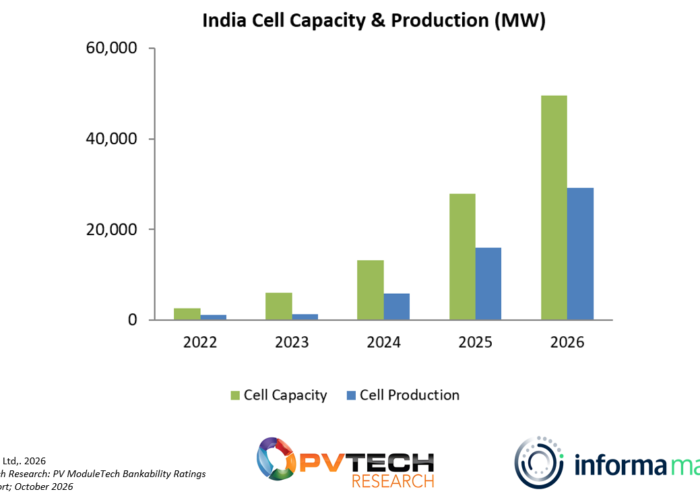
Outside of the US, another major regulation was approved in late September with India’s second round production-linked incentive (PLI) scheme that is expected to add 65GW of domestic solar manufacturing capacity and investments of nearly INR940 billion (US$11.36 billion) – according to India’s Ministry of New and Renewable Energy – and aims to reduce the country’s dependence on imports.
The second round comes months after the country applied a basic customs duty of 25% on solar PV cells and 40% on solar PV modules from April 2022, directly aimed to tax the import of modules from China, which supplied about 80% of India’s demand.

The first round of the PLI scheme which was launched in 2021 received an initial funding of INR45 billion before being increased more than four-fold to INR195 billion. In the second round, both the manufacturing capacity and funds to bolster Indian domestic solar manufacturing have been greatly increased, showing India’s commitment to slashing its reliance on imports and building a domestic solar manufacturing industry.
On a similar note, the Indian government published in August its Approved List of Models and Manufacturers – which was introduced in 2019-2020 to benchmark domestic manufactured solar cells and modules and to boost the development of the domestic manufacturing industry – and doubled its capacity from the previous list to more than 18GW and with 66 different entities registered.
Despite the new regulations that are set to boost both US and Indian solar manufacturing, the International Energy Agency released research in early July warning of China’s growing dominance of the solar PV supply chain – polysilicon, ingots, wafers, cells and modules – that exceeded 80%. The dominance could further be increased, with the country’s share of global polysilicon, ingot and wafer production expected to reach almost 95% by 2025.
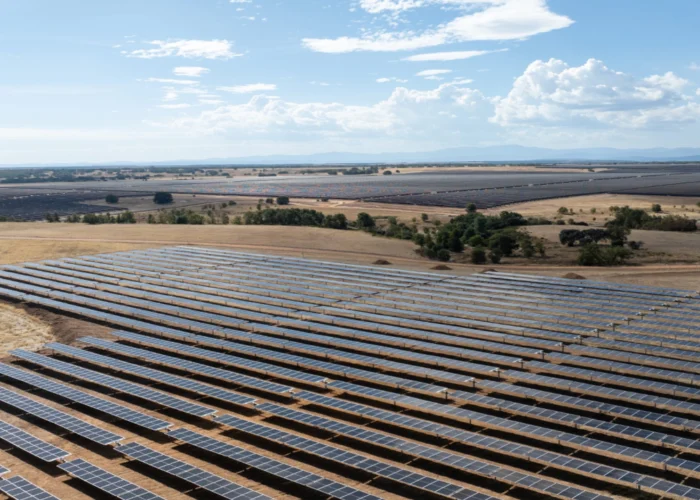
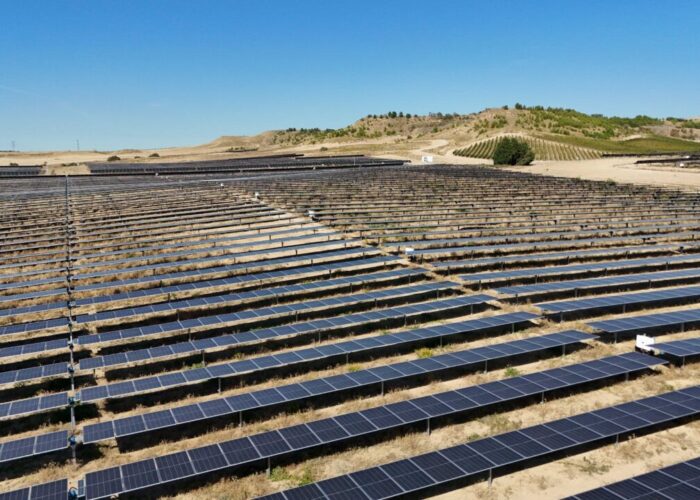
Project-wise, in August Iberdrola commissioned the largest solar plant in Europe with a capacity of 590MW, located in Extremadura, Spain. The plant has nearly 1.5 million modules installed and required an investment of €300 million (US$319 million). With such a high capacity, the Spanish utility secured several power purchase agreements with the likes of Danone, Bayer and PepsiCo that will provide stability to such a large project.
As the war in Ukraine continued, several European and Ukrainian trade bodies called in July for a renewables-led recovery for Ukraine and urged the country’s leaders to aim for a target of 50% of renewables in energy production by 2030.