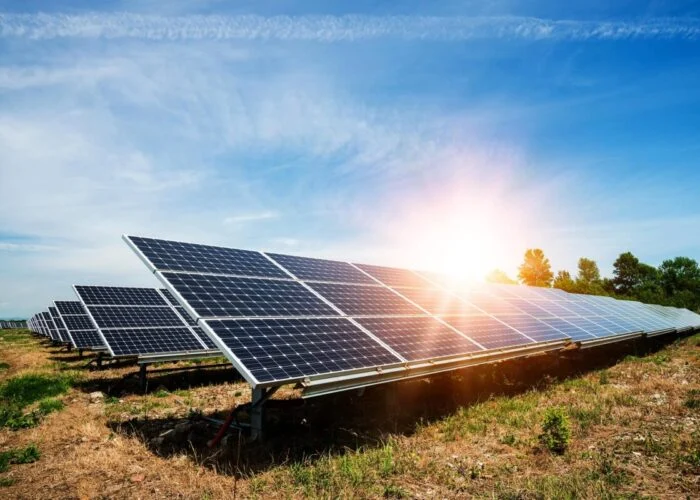
US president Donald Trump has rescinded a Biden-era executive order allowing the use of Defense Production Act (DPA) funds for domestic solar PV manufacturing.
In a flurry of rescindments of “harmful executive orders and actions”, Trump removed solar PV modules and module components, electrolysers, fuel cells and electric heat pumps from DPA eligibility. Other acts revoked included measures on minimum wage for federal employees and a number of international human rights and work policy initiatives.
Try Premium for just $1
- Full premium access for the first month at only $1
- Converts to an annual rate after 30 days unless cancelled
- Cancel anytime during the trial period
Premium Benefits
- Expert industry analysis and interviews
- Digital access to PV Tech Power journal
- Exclusive event discounts
Or get the full Premium subscription right away
Or continue reading this article for free
The president said the moves were “necessary to advance the policy of the United States to restore common sense to the Federal Government and unleash the potential of American citizens.”
Joe Biden invoked the DPA – a cold-war era law introduced to encourage domestic production of strategically important products or materials – to cover solar modules and module components in June 2022 in an executive order which said the technologies were “industrial resources, materials, or critical technology items essential to the national defense.”
The decision gave the Department of Energy (DOE) the authority to use the DPA to support domestic manufacturing and deployment of solar PV products.
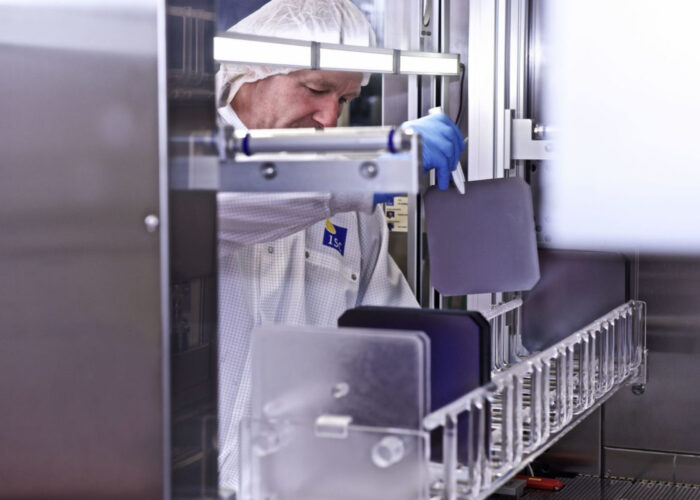
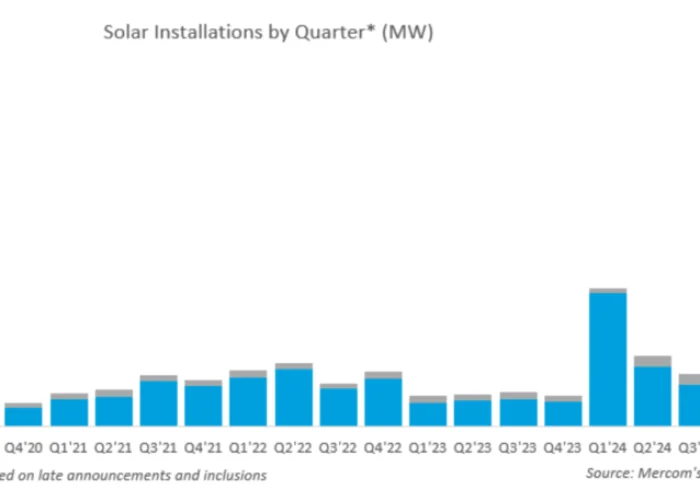
US solar module manufacturing has expanded significantly in the two-and-a-half years since Biden’s order. The Solar Energy Industries Association (SEIA) said that the US passed 50GW of annual nameplate module manufacturing capacity last year, roughly enough to cover US annual deployment demand in 2024.
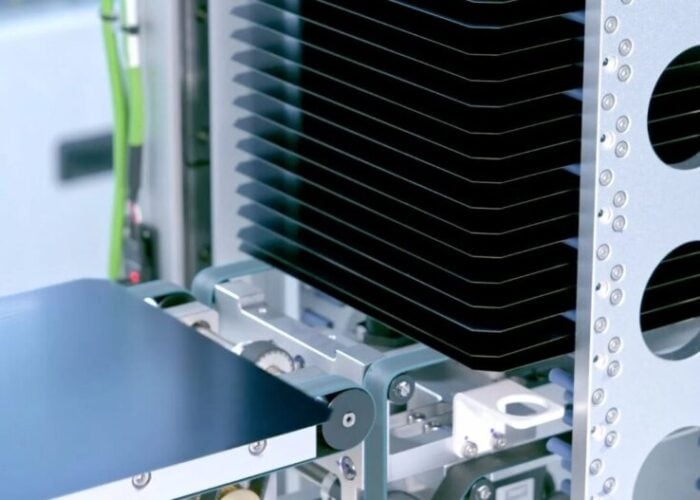
However, the success of module producers is yet to reverberate further upstream. US cell manufacturing capacity is far behind module assembly levels, leaving the majority of the country’s module assemblers dependent on imported cells.
Cells – and the wafers, ingots and polysilicon which go into their production – represent a more costly and strategically significant manufacturing operation than module assembly. Industry figures have called for greater support for domestic solar cell and wafer manufacturing to increase US energy independence and security, something which may be made more difficult by president Trump’s recent action.
PV Tech publisher Solar Media will be organising the fourth edition of Large Scale Solar USA in Dallas, Texas 29-30 April. After a record year for solar PV additions in the US, the event will dive into the ongoing uncertainties on tariffs, tax credits and trade policies as more domestic manufacturing becomes operational. Other challenges, such as the interconnection queues and permitting, will also be covered in Dallas. More information, including how to attend, can be read here.