Every year, the Photovoltaic Reliability Workshop (PVRW) brings together experts from across the solar industry to explore the latest developments in PV reliability, performance and quality assurance. As leaders in independent testing and technical advisory, Kiwa PVEL and Kiwa PI Berlin attended the event to engage with industry stakeholders on the emerging trends shaping quality.
If there was one sentiment that seemed to resound through the halls of PVRW 2026, it was this: quality issues are on the rise, and we can and must do better. Below, we share some of what we heard at the conference and highlight key insights that further underscore the critical role of quality in accelerating the solar industry’s growth.
Try Premium for just $1
- Full premium access for the first month at only $1
- Converts to an annual rate after 30 days unless cancelled
- Cancel anytime during the trial period
Premium Benefits
- Expert industry analysis and interviews
- Digital access to PV Tech Power journal
- Exclusive event discounts
Or get the full Premium subscription right away
Or continue reading this article for free
What’s impacting module quality in 2026?
Module breakage dominated many of the discussions at PVRW. An NLR presentation showed a study of a site following hail impacts, and in most cases, the front glass was not cracked, while the rear glass was fractured. Kiwa PVEL’s hail testing has documented the same phenomenon, showing that rear glass remains more vulnerable to breakage. In another presentation, Nextpower added its own striking visuals of spontaneous module breakage, showing modules snapped cleanly in half under what were described as “moderate winds.” Further, recent NRL research expanded on the multitude of causes for module breakage, including the potential loss of surface compression in 2.0mm/2.0mm glass-glass modules due to edge pinch, interconnect ribbon pressure and/or module shading.
Another recurring theme at the conference was the mismatch between optimistic expectations and the real world. One independent power producer (IPP) earned a laugh for declaring, “manufacturer PAN files are for entertainment purposes only”, a line that resonated with anyone who has ever tried to reconcile overstated performance parameters with actual site performance. However, the joke did reinforce the need for third-party PAN file verification.
Similarly, upon reporting module breakage rates of 1-5% in the field under normal conditions, DNV highlighted the near‑universal presence of disclaimers in module + tracker compatibility letters. These were referred to as the “emotional support letters” of the industry; documents that make everyone feel better but offer no enforceable warranty protections. In this case, increasing project-specific batch testing and improving factory bill-of-material (BOM) control are crucial in assuring module durability.
Cell reliability presented its own challenges. A presentation from the University of New South Wales highlighted how flux selection and encapsulant chemistry can dramatically impact the corrosion susceptibility of TOPCon cell metallisation. Likewise, Heliene’s data showed that certain POE+POE BOMs exhibited elevated PID prior to recovery. Both of these examples underpin that BOM-specific testing and control matter more than ever.
The research presented on power loss in the field was mixed. NLR and EPRI separately presented on consolidated PV system performance, showing average annual system degradation at ~0.7%, meaningfully worse than the assumptions baked into most pro forma models and current module warranties. On the other hand, Kiwa PVEL’s poster on the outdoor performance of modules with cell cracks offered a bit of good news: production losses for modules with cell cracks may be less than once feared.
Various presentations and posters discussed how manufacturing defects continue to remain a cause for concern. For example, Kiwa PI Berlin highlighted rising PV module quality risks, including creepage and clearance violations tied to cell alignment and lamination defects. These case studies showed how insufficient cell spacing or bubble‑related defects can lead to short circuits, arcing and even field fires. The industry needs to work towards stricter inspection criteria, stronger in-factory quality controls, more batch testing and better recognition that creepage distance control is a core safety requirement, not a cosmetic issue.
Another clear trend was that system-level issues continue to surface. Sandia reaffirmed that connectors remain a key source of system underperformance and can be one of most expensive. In one case, a system owner paid US$3 million to remedy faulty module-to-module connectors at a 350MW site. NRL, HelioVolta, VDE and others added more to the topic, making the need for improved connector standards and practices obvious.
Warranty management was also discussed. As highlighted in a presentation from Smith, Gambrell & Russell LLP, the recommended claim submission playbook emphasises the need for in‑person meetings with warranty providers, executing early module‑level sampling/testing, and focusing claims on one primary failure mode rather than a buffet of potential issues, where possible. New imaging technologies, particularly Lab360’s drone‑enabled daylight photoluminescence (PL), offer real promise, which leverage inverter switching points and photo image layering to capture true module performance in real operational conditions. If they scale as expected, they could meaningfully reshape both inspections and claims management.
Related to managing claims, during a panel of insurance providers, one participant commented that, “if we design for average weather, we’re going to continue pricing [insurance] for extreme weather”. His point: engineering standards must evolve to better capture the conditions that PV modules face in the field.
What’s next?
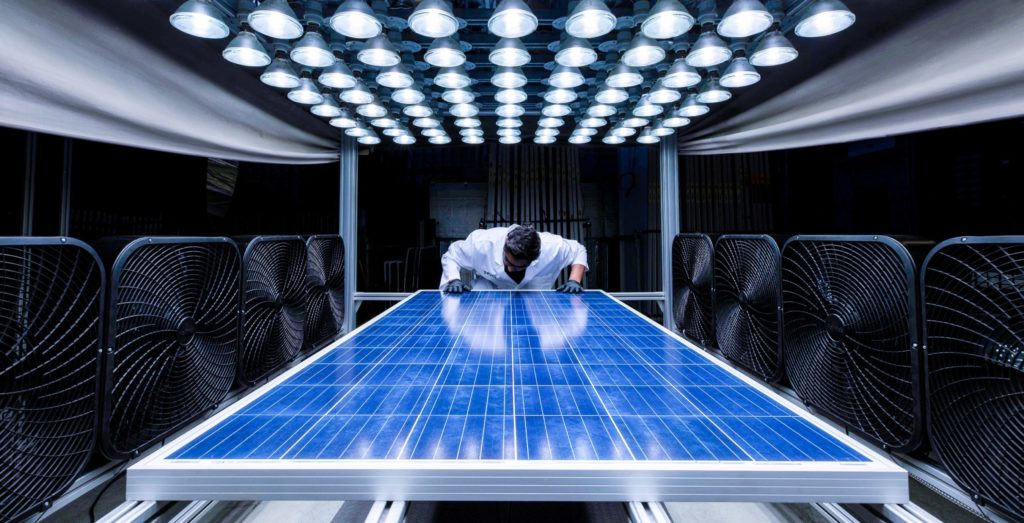
Looking ahead, the industry must shift toward increased reliability. Kiwa PVEL’s forthcoming updated PQP test plan will do just that, with an enhanced test‑to‑failure approach for load testing and hail testing that acknowledges that the industry’s previous testing no longer captures the complexity of modern module behaviour. Asymmetric load testing was also highlighted as an area of focus for future module testing.
Meanwhile, the independent engineering (IE) community is increasingly vocal about the need to incorporate quality‑related risk into financial models. Without clear guidance and consensus on the cost of reliability, procurement managers may be purchasing based on capex alone, underestimating exposure for underperformance, equipment replacement and O&M costs. Following this panel discussion at PVRW, an industry working group is being formed to develop guidance on how reliability should be evaluated and priced into financial models.
The 16th edition of PVRW once again highlighted the critical work being done across the industry to identify challenges and drive improvements in PV quality. As the sector has expanded significantly over the past two decades, investing in these efforts is more important than ever. Watch for the eventual publication of the full conference proceedings at pvrw.nlr.gov/past-proceedings, and we encourage industry stakeholders to actively apply the research and insights shared to strengthen their own operations, procurement strategies and PV project planning.
Tristan Erion-Lorico is VP sales and marketing at Kiwa PVEL and Don Cowan is VP sales North America at Kiwa PI Berlin