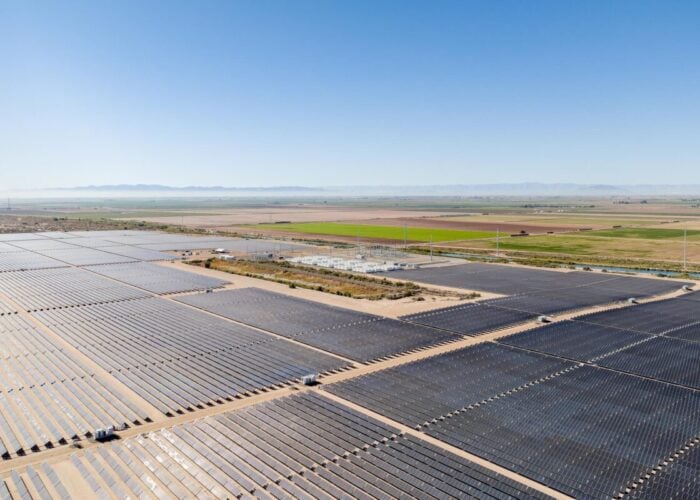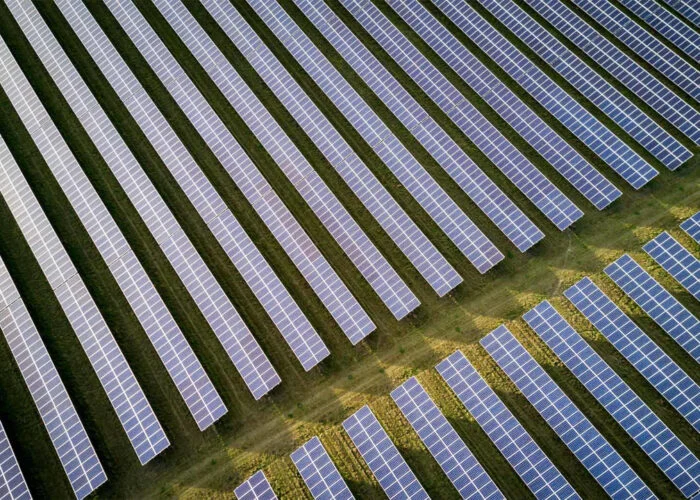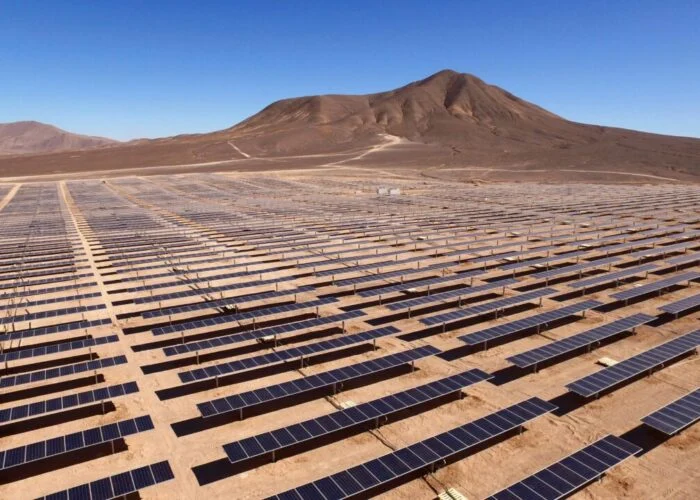
The US Department of Energy (DOE) has invested up to US$22 million to the improve planning, siting and permitting of large-scale renewable projects.
Part of the investment will go through the Renewable Energy Siting through Technical Engagement and Planning (R-STEP) programme, with US$10 million provided to six state-based projects in Indiana, Iowa, Michigan, Mississippi, North and South Carolina and Wisconsin. The DOE aims to run a second round of the programme, with up to US$12 million in funding from the Inflation Reduction Act (IRA).
Try Premium for just $1
- Full premium access for the first month at only $1
- Converts to an annual rate after 30 days unless cancelled
- Cancel anytime during the trial period
Premium Benefits
- Expert industry analysis and interviews
- Digital access to PV Tech Power journal
- Exclusive event discounts
Or get the full Premium subscription right away
Or continue reading this article for free
The R-STEP programme aims to help communities better plan and engage in the development of utility-scale renewable energy and energy storage projects.
US Secretary of Energy, Jennifer Granholm, said: “Often, the biggest barrier to deploying that clean generation is siting and permitting. The Biden-Harris administration is helping provide local leaders with the resources needed to deploy more clean energy to their residents in a way that is tailored to their unique needs.”
DOE renewables funding round-up
This is the latest of a series of funding announcements from the DOE in the past few weeks, which includes US$475 million for five clean energy projects – including three solar PV plants – at current or former mine sites across the US.
Two of the projects are located in the Appalachian region, which has historically relied on coal production for its local economy. Last year, PV Tech Premium looked at how the IRA could help redevelop closed-down US coal assets to host solar PV projects.
Moreover, the DOE has invested US$44 million towards tackling interconnection and grid issues, with 11 projects receiving US$34 million for to support the growth of electricity grids fed by solar and wind energy. The initiatives aim to enable grid planners, grid operators and utilities to optimally connect and manage renewable energy and battery storage resources on the electric grid, resulting in a reduction of extreme weather-related outages.
The remaining US$10 million will be for the Solar and Wind Interconnection for Future Transmission (SWIFTR) funding opportunity, which will develop tools to help clear the backlog of clean energy projects in interconnection queues.
Research from the Lawrence Berkeley National Laboratory (LBNL) in April 2023 highlighted that nearly 2TW of renewables and storage capacity were in interconnection queues in the US at the end of 2022, of which almost 1TW was for solar PV alone.
The latest issue of our journal, PV Tech Power 37, looked at the work the US federal government has undertaken to address the interconnection challenge. Premium subscribers can access our latest edition of PV Tech Power and previous editions here.