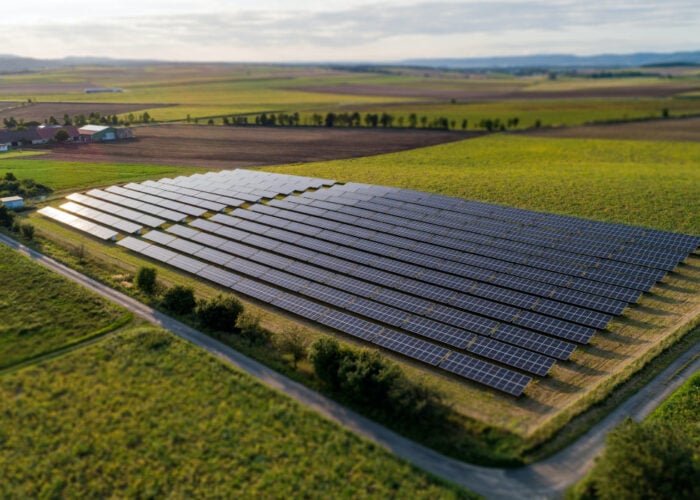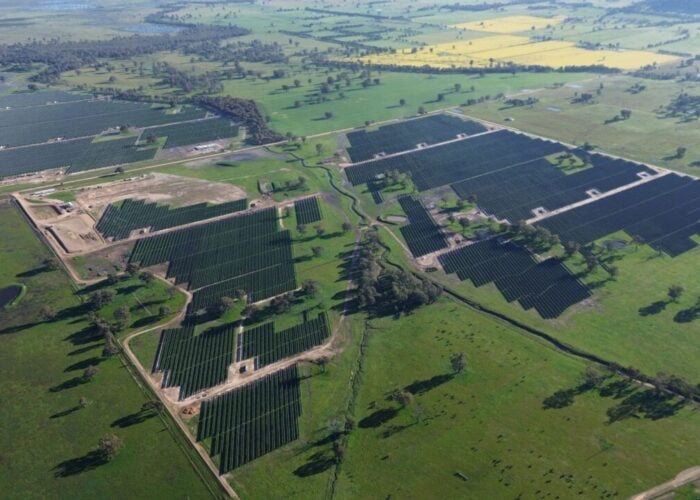
ACE Power and Osaka Gas Energy Australia have joined forces to develop the 141MWdc Forbes Solar Farm, which is proposed for central New South Wales in Australia.
The 141MW solar PV power plant will include up to 4-hours of co-located battery energy storage (480MWh) and is scheduled to begin construction in October 2026, subject to approval via Australia’s Environment Protection and Biodiversity Conservation (EPBC) Act.
Try Premium for just $1
- Full premium access for the first month at only $1
- Converts to an annual rate after 30 days unless cancelled
- Cancel anytime during the trial period
Premium Benefits
- Expert industry analysis and interviews
- Digital access to PV Tech Power journal
- Exclusive event discounts
Or get the full Premium subscription right away
Or continue reading this article for free
Forbes Solar Farm Pty Ltd, a special purpose vehicle established as a joint venture between ACE Power and Osaka Gas Energy Australia, is developing the project.
Located approximately 11.6km from the township of Forbes in the Central West region of New South Wales, the Forbes solar PV power plant will be constructed on a 270-hectare site at 207 Hoopers Road, with a development footprint of approximately 223 hectares.
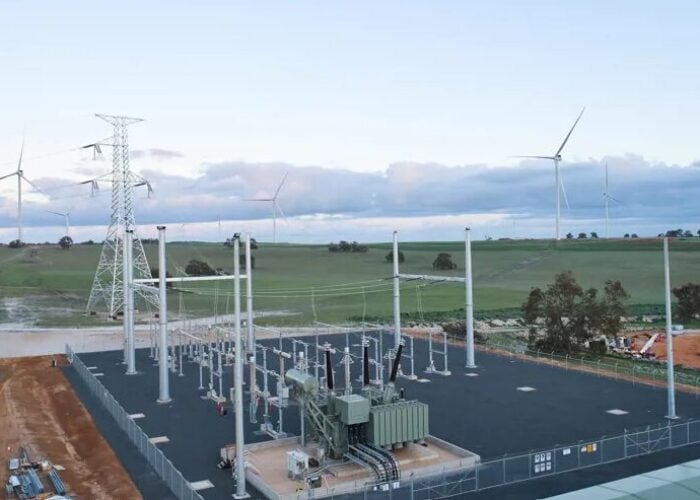
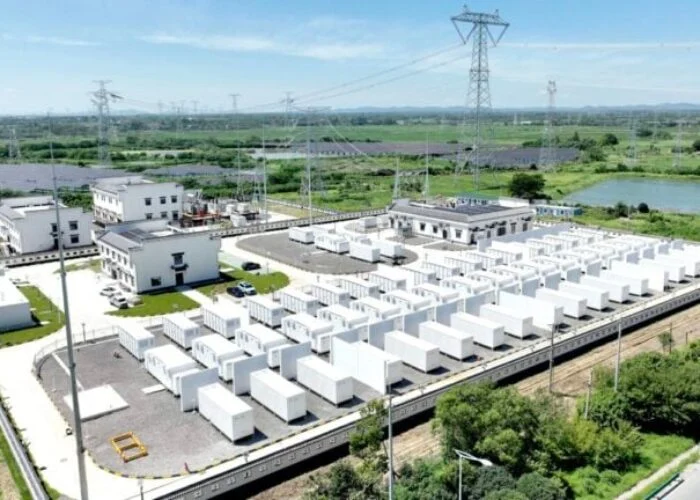
The project will feature solar PV modules with tracking systems, a 480MWh battery energy storage system (BESS) and an on-site substation connecting to the National Electricity Market (NEM) via 132kV infrastructure. It will also include internal access roads and associated operational facilities, as well as both above-ground and below-ground cabling.
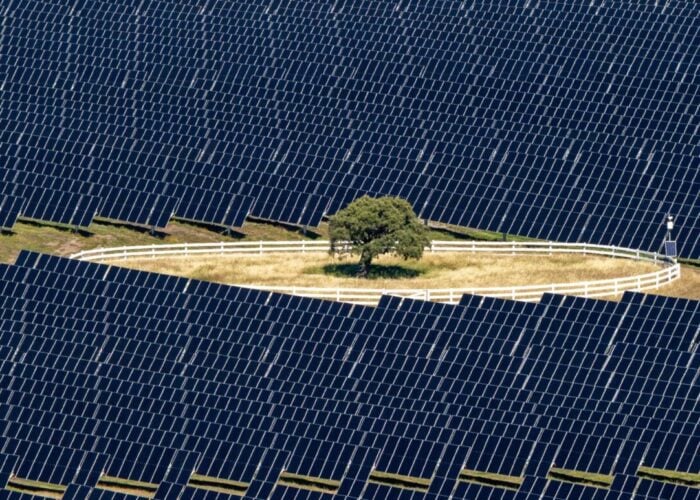
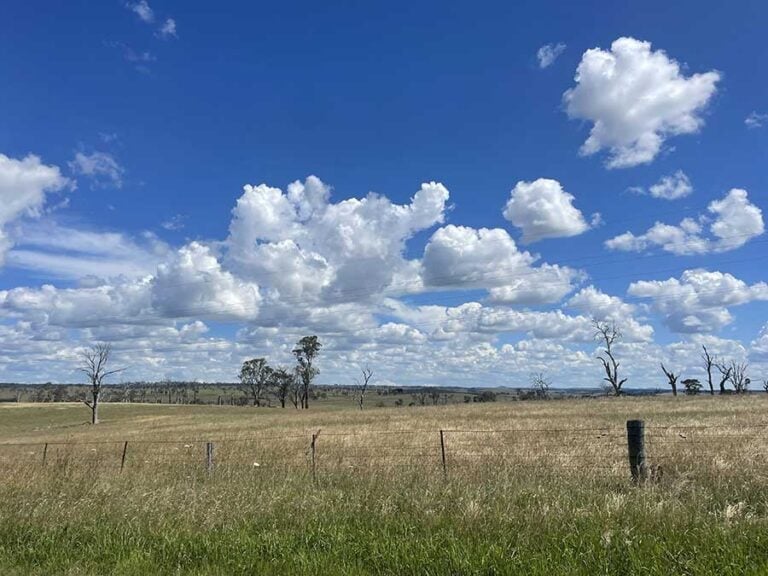
The project site is predominantly flat agricultural land historically used for sheep grazing and cropping, with limited native vegetation. The developers have committed to maintaining agricultural use through agrivoltaics, with sheep grazing planned to continue during the operational phase.
The project’s construction phase is expected to take 12-18 months, with site establishment requiring approximately 1.5 months, solar PV power plant installation taking nine to 11 months and commissioning requiring three to four months. At peak construction, the project will employ approximately 100 workers.
After its 30-year operational life, the project has multiple pathways. This includes a system upgrade and operational extension, complete decommissioning with recycling of components or site rehabilitation for continued agricultural use.
The developers have emphasised their commitment to maximising recycling options and returning the site to a safe, non-polluting state suitable for agricultural or other land uses.
Solar in Australia’s EPBC Act
The EPBC Act, administered by the federal government, aims to protect nationally threatened species and ecological communities. A project must receive approval under the act before development can begin.
If a project is deemed to significantly impact these matters, it becomes a “controlled action” requiring assessment and approval under the EPBC Act. In contrast, if a project does not have a significant impact, it becomes “not a controlled action,” meaning it is clear for development.
Several solar PV power plants have been added to the EPBC Act over the course of the past year. These include the Muskerry solar PV power plant, a 250MW solar-plus-storage project in Victoria. The site also includes plans for a 200MW/800MWh co-located BESS, which Edify Energy is pursuing.
More recently, the Weasel Solar Farm project, a landowner-led 250MW solar-plus-storage project in Tasmania, received the green light in just 20 days.
In December 2024, the EPBC Act was scrutinised by the Australian trade association, the Clean Energy Investor Group, which revealed that decision-making periods have doubled from 2021 to 2023.
According to the group representing Australian and global renewable energy investors, the average decision-making period for controlled actions requiring comprehensive environmental assessments increased from 62 days in 2021 to 136 days in 2023.