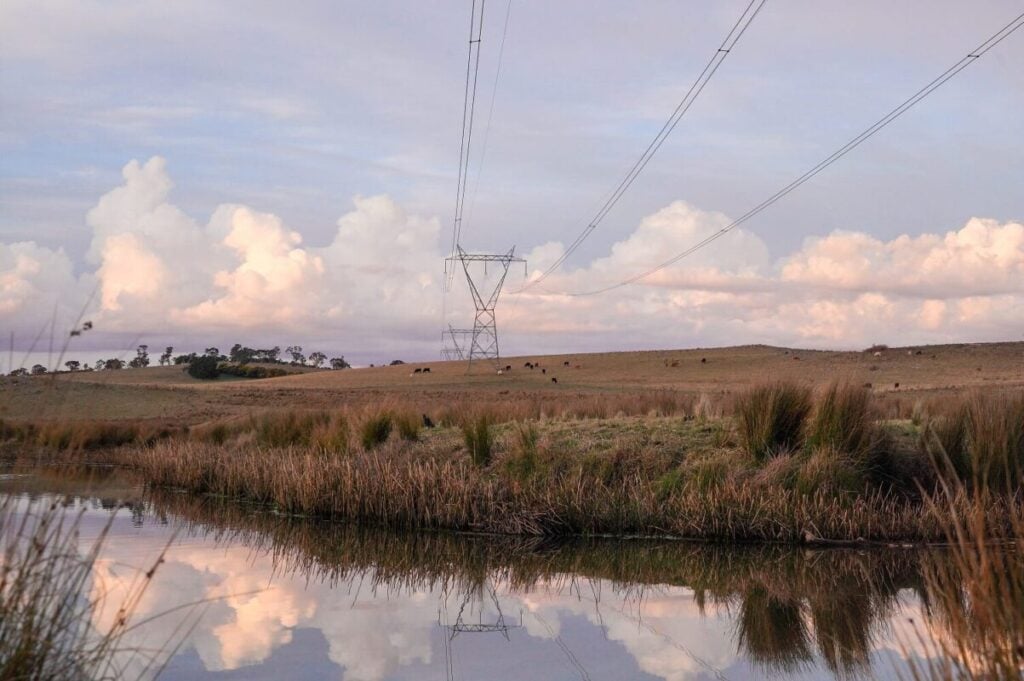
Energy Corporation of NSW (EnergyCo) has submitted an Environment Protection and Biodiversity Conservation Act (EPBC) referral for the New England Renewable Energy Zone (REZ) transmission infrastructure project in Australia.
The New England REZ is set to become New South Wales’ largest planned renewable energy zone. The application seeks federal approval for 290km of 500kV transmission lines, 25km of 330kV transmission lines, and five energy hubs that will unlock 6GW of renewable energy capacity by 2034.
Try Premium for just $1
- Full premium access for the first month at only $1
- Converts to an annual rate after 30 days unless cancelled
- Cancel anytime during the trial period
Premium Benefits
- Expert industry analysis and interviews
- Digital access to PV Tech Power journal
- Exclusive event discounts
Or get the full Premium subscription right away
Or continue reading this article for free
The transmission backbone will connect renewable energy projects within the New England REZ to the National Electricity Market (NEM), which spans Australia’s eastern and southern states and territories, via the existing Bayswater Power Station substation near Muswellbrook.
For readers unaware, a REZ is an area designated by the Australian government for the large-scale deployment of renewable energy infrastructure. The New South Wales government describes a REZ as “the equivalent of modern-day power stations,” combining generators, storage, and high-voltage transmission.
EnergyCo’s New England REZ will span seven local government areas across regional NSW, including Singleton, Muswellbrook Shire, Upper Hunter Shire, Tamworth Regional, Walcha Shire, Uralla Shire and Armidale Regional councils.
EnergyCo plans to deliver the infrastructure in two stages, with the first providing 2.4GW of transfer capacity by 2032 and the second adding 3.6GW by 2034.
Construction is scheduled to commence in the second half of 2027 and take approximately six years to complete. The project is a cornerstone of the state’s renewable energy transition strategy and forms part of the state’s commitment to achieving net zero emissions by 2050.
The EPBC referral covers a 63,000-hectare project area that includes a 3km-wide corridor along proposed transmission line alignments, narrowing to 1km in northern and southern sections.
3km-diameter buffers will surround energy hubs to accommodate construction activities and environmental assessments. The actual infrastructure footprint will be substantially smaller than the assessment area, which was designed conservatively for preliminary scoping.
The transmission infrastructure includes dual 500kV lines connecting the New England REZ to the NEM south of Muswellbrook, plus single and dual 500kV and 330kV lines linking the five energy hubs within the zone.
EnergoCo’s EPBC Act application also states that the project encompasses the extension of the existing Bayswater Power Station substation, the establishment of access tracks, communications infrastructure and construction facilities, including laydown areas, concrete batching plants, and workforce accommodation camps.
Strategic alignment with national energy planning
The New England REZ transmission project has been identified as an ‘actionable NSW project’ in the Australian Energy Market Operator’s (AEMO’s) 2024 Integrated Systems Plan, designated for delivery between 2031 and 2033 as a project that optimises consumer benefits and should be progressed urgently.
AEMO’s Draft 2026 Integrated System Planner (ISP), released in December 2025, confirms the project remains actionable with energisation targeted for 2032.
The infrastructure aligns with multiple strategic policy frameworks supporting Australia’s renewable energy transition. For instance, it supports the Commonwealth’s Net Zero Plan Stage 1 by enabling proven emissions-reduction technologies, while contributing to the New South Wales Electricity Infrastructure Roadmap’s goal of 12GW of new transmission capacity.
The transmission backbone also meets the ‘deliver now’ objectives outlined in the state’s Network Infrastructure Strategy by unlocking 6GW of network capacity by 2034.
EnergyCo is coordinating the project development with Transgrid through a joint planning process to ensure optimal integration with existing transmission networks.
This collaboration will influence the final configuration of energy hubs and power ratings of transmission lines during each construction stage. The state-owned corporation is also managing the procurement of a network operator through a public-private partnership model, with three consortia shortlisted from six initial submissions.
The New England REZ is the largest of New South Wales’ five planned renewable energy zones, which collectively received 34GW of project proposals in recent competitive processes. The state government has committed AU$2.1 billion (US$1.47 billion) for transmission infrastructure to connect these zones and support the broader energy transition.
Environmental assessment and community engagement
The EPBC referral identifies potential direct impacts, including native vegetation removal and habitat loss for threatened species, alongside indirect effects, such as habitat-edge impacts from construction noise, dust, and lighting.
The project may also affect water resources through earthworks and infrastructure construction, while introducing risks of weed spread across the transmission corridor.
EnergyCo has undertaken significant route refinements based on community feedback and technical assessments.
Recent changes to the transmission corridor removed 98 properties from the study area, reflecting what the company describes as a “safer and more efficient” construction approach that reduces truck movements on local roads and minimises noise impacts on surrounding communities.
The project will require the development of a comprehensive environmental impact statement, including field studies to assess potential impacts on matters of national environmental significance.
Construction activities will involve site establishment works, native vegetation clearing, civil works for transmission lines and energy hubs, and installation of communications infrastructure.
Meanwhile, the operation will require ongoing vegetation management within transmission easements and regular maintenance of electrical infrastructure throughout the asset’s operational life.
Rehabilitation activities will restore areas not required for operations to their former condition upon completion of construction.
The application said that EnergyCo does not propose decommissioning of operational components until final asset decommissioning at the end of life, reflecting the long-term nature of transmission infrastructure investments.
The Energy Storage Summit Australia 2026 will be returning to Sydney on 18-19 March. It features keynote speeches and panel discussions on topics such as the Capacity Investment Scheme, long-duration energy storage, and BESS revenue streams. ESN Premium subscribers receive an exclusive discount on ticket prices.
To secure your tickets and learn more about the event, please visit the official website.