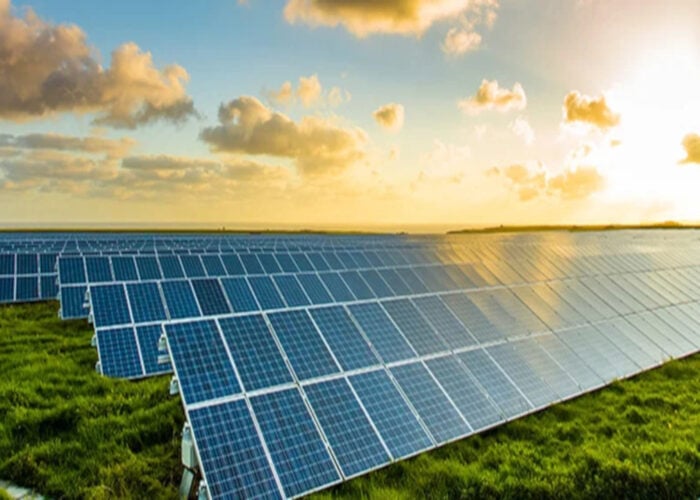
A dispute resolution panel has ruled that tariffs on Canadian solar products imposed in 2018 by the US contravene the terms of the US-Mexico-Canada Agreement (USMCA) on trade, with Canada now keen to reap the benefits for its solar industry.
Mary Ng, Canadian minister for International Trade and Export Promotion, said the ruling in favour of Canada “unequivocally confirmed that US tariffs on Canadian solar products are unjustified and in violation of USMCA”.
Try Premium for just $1
- Full premium access for the first month at only $1
- Converts to an annual rate after 30 days unless cancelled
- Cancel anytime during the trial period
Premium Benefits
- Expert industry analysis and interviews
- Digital access to PV Tech Power journal
- Exclusive event discounts
Or get the full Premium subscription right away
Or continue reading this article for free
“Canada will also ensure that our solar industry, as well as all Canadian industries and workers, can fully benefit from USMCA,” she added.
In 2018, and despite the US International Trade Commission (USITC) finding that Canada was not a major exporter of solar products to the US and did not qualify for the tariffs, the Trump administration imposed the Section 201 tariffs on imports from Canada starting at 30% and declining each year.
This resulted in legal action taken against the Trump administration by solar manufacturers, with Canada noting how its solar exports to the US plummeted by 82%.
Canada requested the dispute settlement panel after failing to resolve the issue through private consultations. It was expected to rule around this time.
Following the ruling, the US has 45 days to reach an agreement with Canada and resolve the dispute.
“We welcome the US’ intention to pursue a resolution with Canada and Mexico, as indicated by the President in his recent announcement,” said Ng, adding that “Canada will work toward the complete removal of these unjustified tariffs.”
A US Trade Representative (USTR) spokesperson said the US benefited from aspects of the panel’s decision.
“The US appreciates that the panel reaffirmed the President’s authority to make exclusion determinations in safeguard proceedings,” USTR spokesman Adam Hodge said in a statement.
“We will continue to review the report and work with Canada to resolve the dispute.”
In reality, the Section 201 tariffs were designed to protect US solar manufacturing from cheaper Chinese competition, which made Canada’s inclusion even more puzzling, especially considering the USITC’s findings.
China challenged the decision, requesting a dispute panel with the World Trade Organisation (WTO), although this was rejected on grounds that Chinese manufacturing did present a threat to the US’ domestic industry. China is appealing that decision.
More recently, the tariffs, which were due to expire on 6 February, were extended by the Biden administration on 4 February. Crucially, they continued an exemption for bifacial solar modules – that make up the vast majority of module imports to the US – and doubled the tariff rate quota for cell imports.
The change was welcomed by the US solar industry, with the Solar Energy Industries Association (SEIA), which strongly opposed the tariffs, noting that bifacial panels are still not available “at scale” from US manufacturers.
China was predictably unhappy with the news and said the tariff extension would “distort international trade”.