China’s new set of rules, unveiled last week, is expected to “do a good job in cutting out low-cost, outdated technology across the value chain”, according to a report from PV Tech Research.
This is one of the key takeaways from the Q2 release of the ‘PV ModuleTech Bankability Ratings Quarterly’ report, which examines the bankability of PV suppliers by assessing their cell and module manufacturing processes, alongside the overall financial health of the parent company.
Try Premium for just $1
- Full premium access for the first month at only $1
- Converts to an annual rate after 30 days unless cancelled
- Cancel anytime during the trial period
Premium Benefits
- Expert industry analysis and interviews
- Digital access to PV Tech Power journal
- Exclusive event discounts
Or get the full Premium subscription right away
Or continue reading this article for free
Set to take effect on the first day of 2027, the new national standards for China’s PV sector are set to phase out sub-630W modules and conventional polysilicon products.
“These new restrictions are very interesting as the Chinese government now sees a need to stop the oversupply, maybe coming from lowered deployment in China in the first half of the year,” explained Joe Hennessy, co-author of the report and analyst at PV Tech Research.
“This will affect the smaller producers the most, as they are less likely to have upgraded lines during the period of losses. Most of the larger module suppliers already have commercial TOPCon products with efficiency trending towards that 24% Grade 1 boundary, with module announcements closer to 25%,” added Hennessy.
As Hennessy highlighted, among the new rules introduced is a strict entry threshold for PV module efficiency, set for both p-type PERC and the three n-type modules – TOPCon, heterjunction and back contact (BC). For TOPCon, the Grade 1 threshold has been set at 24%, HJT has been set at 23.8% and BC at 24.2%.
PV inverters have also been classified into three energy-efficiency grades, while a new polysilicon energy consumption threshold has also been set to phase out outdated high-energy-consuming capacity.
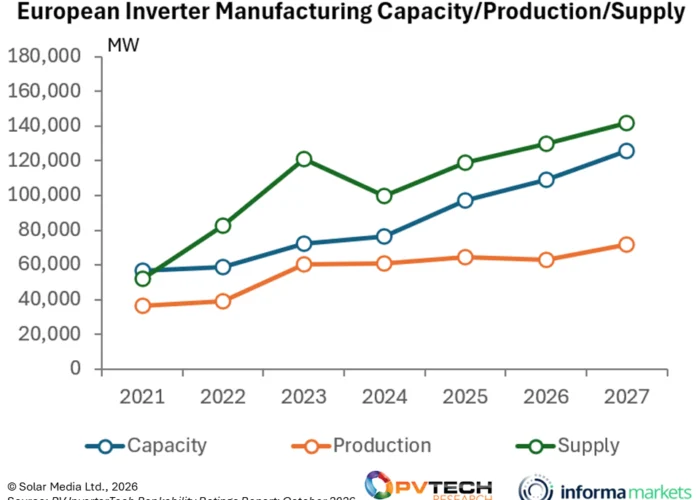
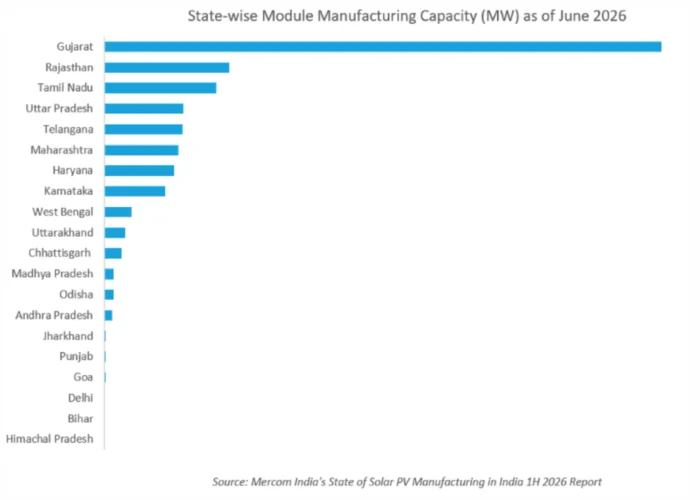
For that reason, PV Tech Research expects that Chinese polysilicon producers will spend the rest of the year upgrading the efficiencies of their lines. Across the rest of the supply chain – wafer, cells and modules – a similar effort to reduce production is expected from Chinese PV manufacturers, which in itself will reduce the country’s production share, though India and the US are set to keep growing their domestic annual nameplate capacity for modules and cells.
Moustafa Ramadan, head of PV Tech Research, wrote an article for PV Tech this week on how to navigate the current US solar cell supply, given the policy and tariff restrictions in place.
The ‘PV ModuleTech Bankability Ratings Quarterly’ report is available here.