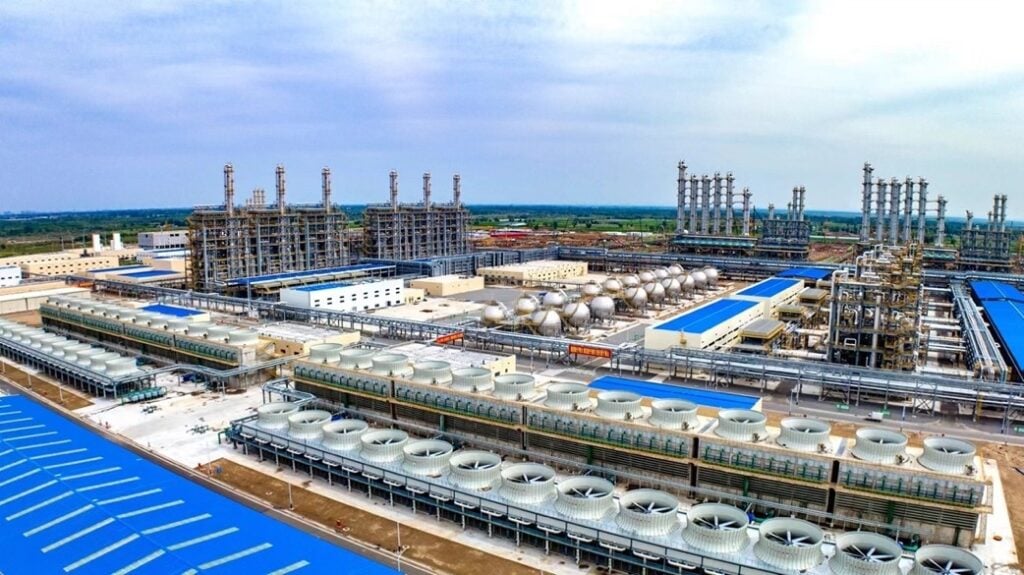
Chinese polysilicon producer Daqo New Energy saw an increase in sales and profits in Q3 2025, as the sector looks to address ongoing oversupply and financial losses.
Daqo New Energy posted gross profits of US$9.7 million in the third quarter of the year, compared with gross losses of US$81.4 million in Q2 and US$60 million in Q3 2024. Gross margin was 3.9%, up significantly from -108.3% in the previous quarter; the increase was “primarily because of an increase in the average selling price, a decrease in production cost and write-off of provision for inventory impairment,” the company said.
Try Premium for just $1
- Full premium access for the first month at only $1
- Converts to an annual rate after 30 days unless cancelled
- Cancel anytime during the trial period
Premium Benefits
- Expert industry analysis and interviews
- Digital access to PV Tech Power journal
- Exclusive event discounts
Or get the full Premium subscription right away
Or continue reading this article for free
However, the company recorded net loss attributable to its shareholders of US$14.9 million, driven by operational losses of US$20.3 million and an operating margin of -8.3%. This compares with shareholder losses in excess of US$75 million in Q2 2025 and around US$60 million in Q3 2024.
Total revenues were US$244.6 million, up from US$75.2 million in the previous three months, and EBITDA was US$45.8million in Q3, up from -US$48.2 in Q2.
As of September 30, 2025, Daqo New Energy had US$551.6 million in cash, cash equivalents and restricted cash, compared with US$598.6 million as of June 30, 2025 and US$853.4 million as of September 30, 2024.
Xiang Xu, CEO of Daqo New Energy, said: “With the recovery of market prices across the solar PV value chain in the third quarter of 2025, we believe the industry is gradually recovering from its cyclical downturn.”
The polysilicon sector has been sustaining financial losses for over a year, and leading players like Daqo, Tongwei and GCL have all lost significant amounts of money as prices have bottomed out and overproduction has persisted. Polysilicon prices have fallen from a high of US$39/kg in 2022 to less than US$4.50/kg at the end of 2024.
To counteract this, efforts have been underway both within the industry and in the Chinese government to restrict production and raise selling prices. Back in December, Daqo and Tongwei announced production cuts, and reports from August 2025 said that the top producers, led by Tongwei, planned to buy up and shut down around one-third of Chinese polysilicon capacity to rebalance supply and demand.
The Chinese government has also met with the industry to discuss greater regulation, curbing price competition and standardising product quality.
“Entering the third quarter, China’s ‘anti-involution’ initiative to restrict low-price competition in the polysilicon sector continued to impact the industry,” Xu said. “Market expectations of consolidation and tighter supply have improved overall industry fundamentals.”
Daqo’s polysilicon production volume slightly increased in Q3 2025, reaching 30,650MT. However, the third quarter of the year also saw the company’s polysilicon sales increase dramatically; it sold 42,406MT from June to September, up from 18,126MT in the second quarter.
“Our sales volume far exceeded production, bringing our inventory down to a healthy level,” Xu said.
However, polysilicon market analyst Johannes Bernreuter has been sceptical about China’s efforts to reduce inventory and overcapacity. “Chinese polysilicon and wafer producers will likely fail to reduce their huge polysilicon inventories in 2025,” Bernreuter wrote on LinkedIn last week. He was responding to reporting from the Silicon Branch of the China Nonferrous Metals Industry Association which said that polysilicon prices had remained static and forecast a “high-case” production of around 1.34 million MT of polysilicon in 2025.
In June, Bernreuter Research warned that efforts to reduce inventory would not be sufficient to significantly raise prices and that, if leading polysilicon producers cut production drastically enough to push prices up, the sector could face a shortage by 2028.