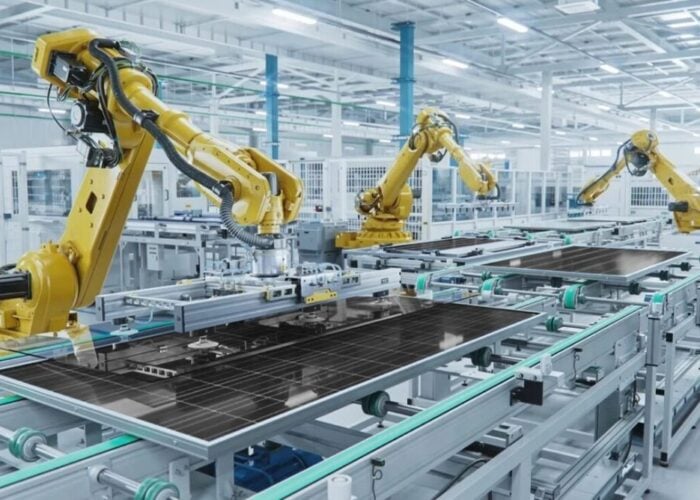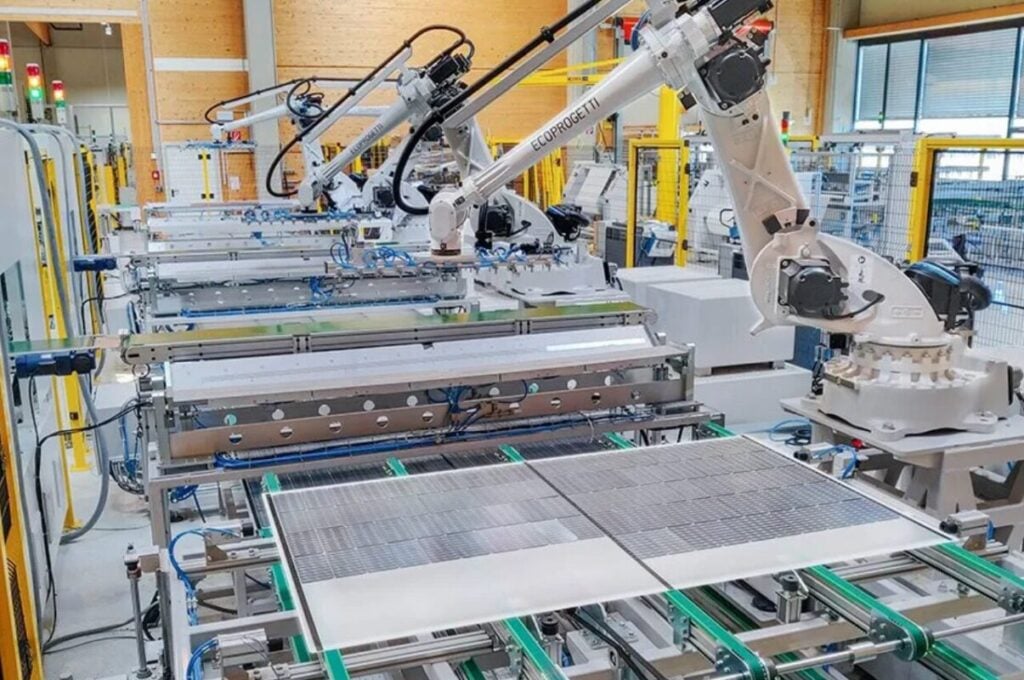
Italian solar PV manufacturing company Ecoprogetti has installed a new 400MW module production facility in Oman, to be operated by local company American Advanced Clean Energy (AACE).
The facility will produce tunnel oxide passivated contact (TOPCon) and heterojunction technology (HJT) modules from a site in the Salalah Free Zone in southern Oman. The facility is the company’s second in the country, following its installation of a 50MW TOPCon facility in northern Oman for local manufacturer Sheida Industries, and has now installed the most module production lines within the countries of the Gulf Cooperation Council (GCC).
Try Premium for just $1
- Full premium access for the first month at only $1
- Converts to an annual rate after 30 days unless cancelled
- Cancel anytime during the trial period
Premium Benefits
- Expert industry analysis and interviews
- Digital access to PV Tech Power journal
- Exclusive event discounts
Or get the full Premium subscription right away
Or continue reading this article for free
“With two plants now operating from north to south, Ecoprogetti is proud to support the growth of the local photovoltaic value chain and the country’s vision for a sustainable energy future,” said Ecoprogetti CEO Laura Sartore.
AACE’s total module manufacturing capacity now stands at 600MW, and has plans to add a further 800MW in the future. While it noted that its modules conform to certification standards set by UL and IEC, the company did not specify how it plans to use the modules that will be produced at its new facility. However, Ecoprogetti noted that the company has a free trade agreement with the US, which would grant it “preferential access” for exporting its modules to the US.
The second term of US President Donald Trump has brought a new wave of protectionist trade rhetoric, which has culminated in a number of new tariffs and restrictions on imported goods, which is particularly significant in the solar industry as China is a leader in both cell and module production.
Earlier this year, the retroactive imposition of potentially billions of dollars’ worth of historic import duties was suspended, but figures from Wood Mackenzie suggest that the current policy landscape will “significantly” increase costs for US solar and battery energy storage system (BESS) developers.
There is also the looming Section 232 ruling, which will determine the fate of US polysilicon imports, and have a significant impact on the position of the US in the global solar supply chain; all of this uncertainty and disruption has made securing a reliable supply of technologies such as modules vital for the US energy transition, although it is not clear how Trump’s import policies will affect products coming from the Middle East, in particular.