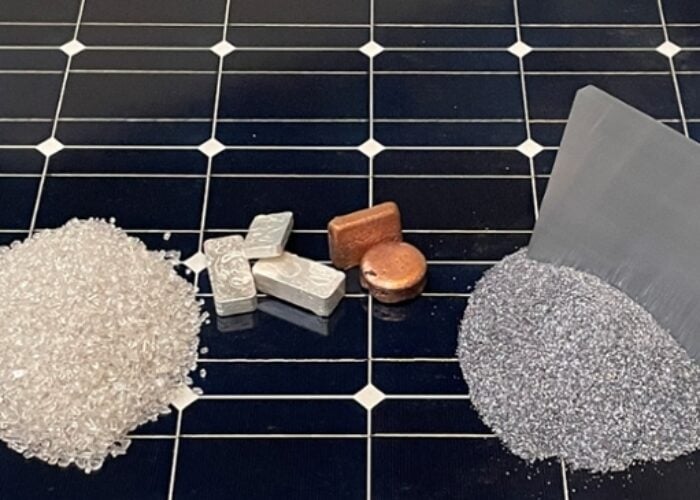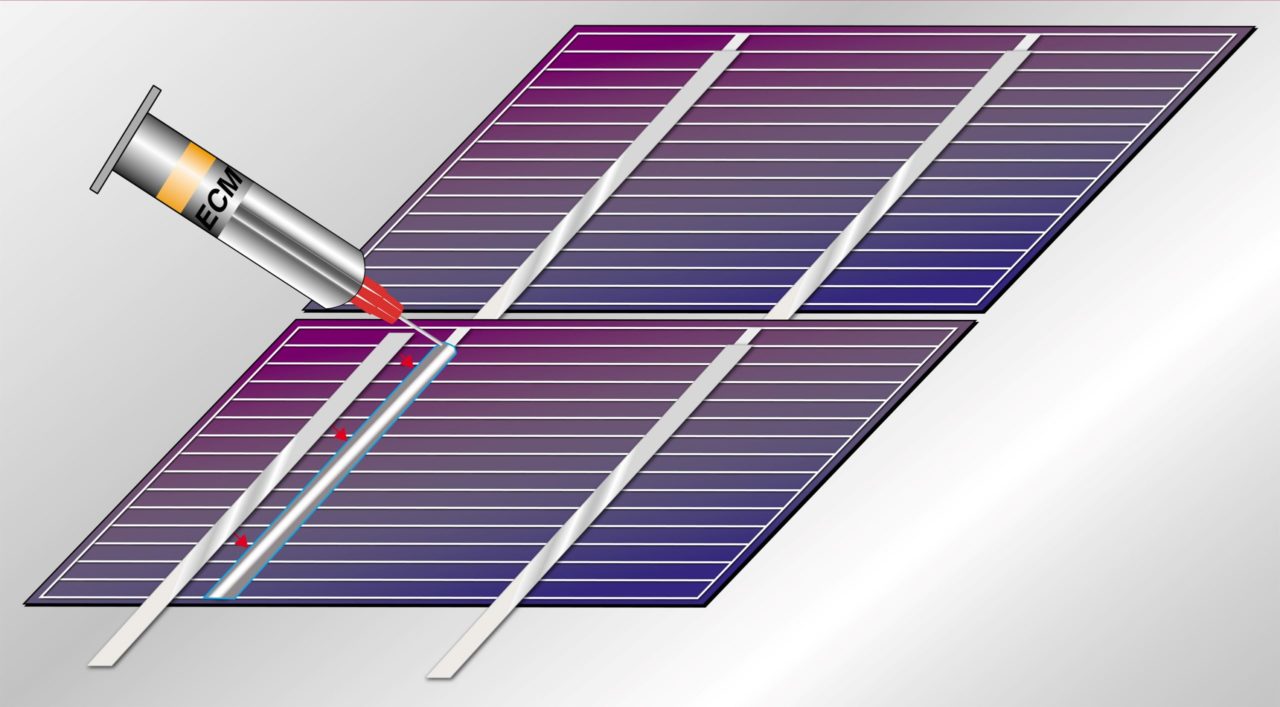
Engineered Material Systems (EMS) has launched a new 561-400 series low-cost ‘snap cure’ conductive adhesive, which is designed for stringing and shingling crystalline silicon and heterojunction solar modules.
Problem
Try Premium for just $1
- Full premium access for the first month at only $1
- Converts to an annual rate after 30 days unless cancelled
- Cancel anytime during the trial period
Premium Benefits
- Expert industry analysis and interviews
- Digital access to PV Tech Power journal
- Exclusive event discounts
Or get the full Premium subscription right away
Or continue reading this article for free
Snap cure conductive adhesive are mostly employed in high volume production processes, due to dispensing ease and rapid adhesion at relatively low temperatures and high strength on a variety of substrates in less than one minute they also need to provide low shrinkage after curing and low stress characteristics.
Solution
The EMS 561-400 series is used in modified ribbon stringers as the adhesive is more stress absorbing than solder to withstand the rigors of thermal cycling and processes at lower temperatures than solder. EMS 561-400 series conductive adhesives are claimed to be 60% less expensive than pure silver-filled conductive adhesives.
Applications
Snap curing conductive adhesive for crystalline silicon and heterojunction solar modules.
Platform
The EMS 561-400 series is designed to be used in modified ribbon stringers. The material will snap cure and fixture ribbons in seconds at 150°C with enough strength to withstand module manufacturing processes until the adhesive cure is completed during the encapsulant lamination process. EMS 561-400 series conductive adhesives can be dispensed by time-pressure, auger or jetting.
Availability
Currently available.