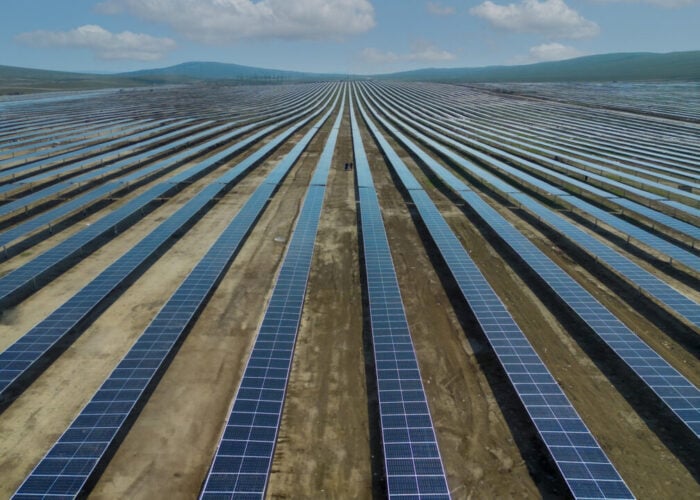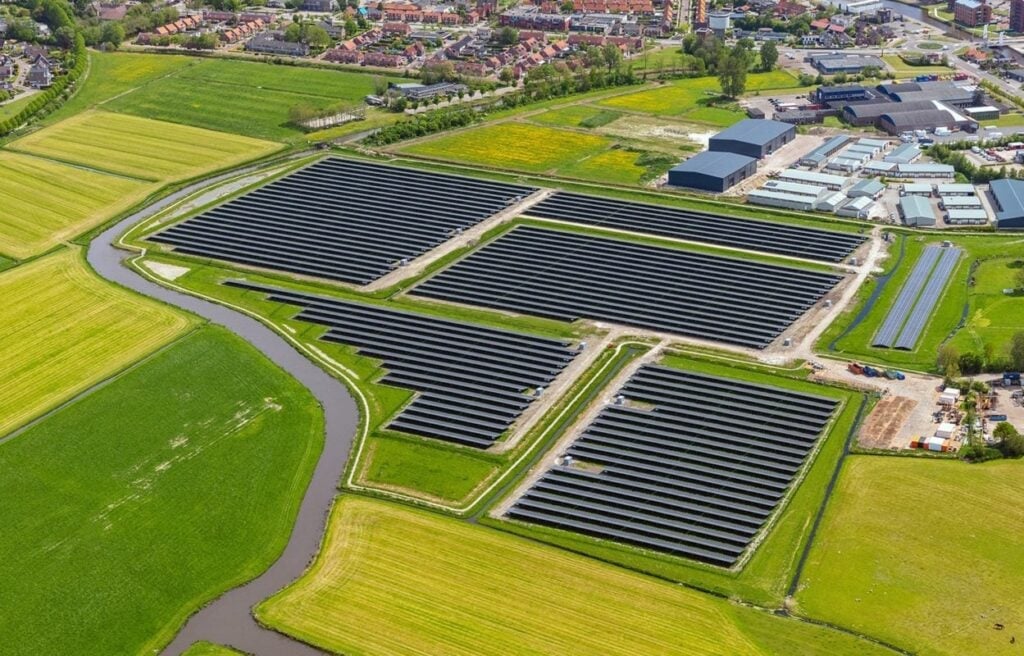
German independent power producer (IPP) Encavis has closed a financing package for a 351MW solar PV portfolio in Italy.
The company bagged €282 million (US$324 million) in non-recourse long-term project financing from a consortium of banks including Bank of America, Bayerische Landesbank, DeutscheBank Luxembourg S.A. and others.
Try Premium for just $1
- Full premium access for the first month at only $1
- Converts to an annual rate after 30 days unless cancelled
- Cancel anytime during the trial period
Premium Benefits
- Expert industry analysis and interviews
- Digital access to PV Tech Power journal
- Exclusive event discounts
Or get the full Premium subscription right away
Or continue reading this article for free
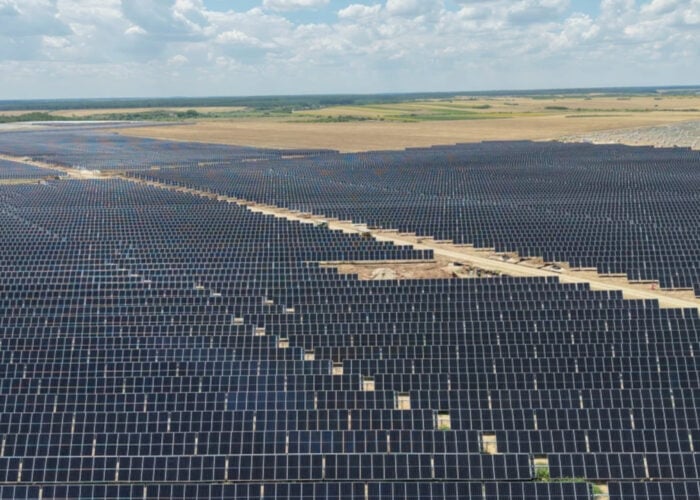
The portfolio is made up of the five-project, 265MW Giotto solar portfolio that Encavis acquired in December 2025, which is spread across the central region of Lazio and Puglia in the south of Italy, and a further four projects with a combined 86MW of generation capacity.
The financing package includes the flexibility to add battery energy storage assets to the solar projects, Encavis said, which supports the IPP’s broader co-location strategy and the Europe-wide move towards co-located solar and energy storage. Encavis’ subsidiary Stern Energy is the engineering, procurement and construction (EPC) contractor for the projects and will take on operations and maintenance (O&M) duties once they become operational.
“Italy is one of our most attractive growth markets. This financing enables us to scale our solar business while retaining flexibility to integrate storage solutions as market conditions evolve,” said Mario Schirru, CEO of Encavis.
Encavis’ chief of staff, Jan-Philip Kock, told PV Tech earlier this year that Italy was “definitely” the most attractive European market for standalone solar PV development, with its balance of subsidies for renewable energy development, high power prices and industrial customer base. “Italy has found quite a mixed balance between true subsidies and enforcement schemes that help both the customer and the solar industry,” he told us.

By contrast, the wider European solar development landscape is challenging. Lack of available grid capacity and low prices in many mature solar markets, both brought on in part by the massive expansion of solar PV capacity in 2022-23, have made solar development a more complex and competitive endeavour. Last week, veteran IPP Enerparc announced insolvency, followed shortly by its PV construction sister firm, Pvwerk.
We heard that the company’s fate could be a warning sign for the new challenges facing European PV developers. Earlier this year, during the Intersolar Europe show in Munich, the head of another major German solar developer, Belectric, elucidated the difficulties facing the sector, and Kock spoke at length to us about these dynamics in an interview with PV Tech Premium.