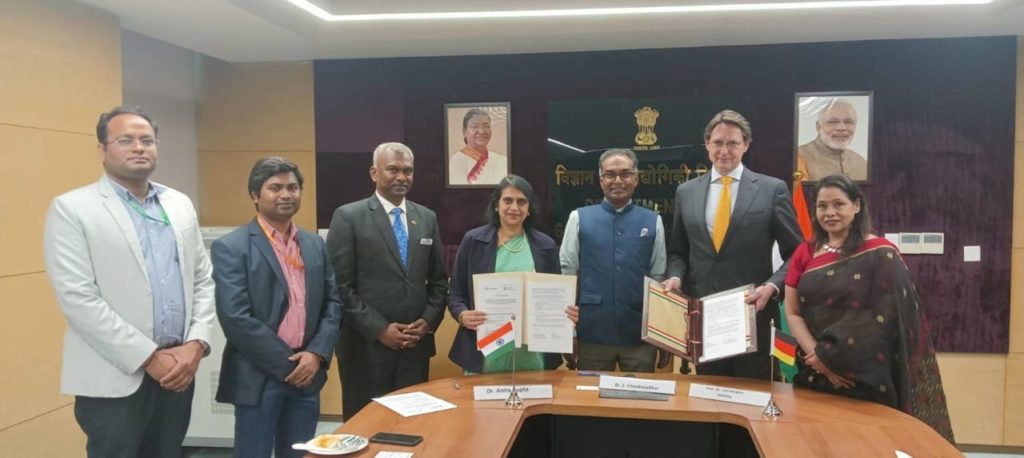
German research body Fraunhofer Institute for Solar Energy Systems (Fraunhofer ISE) has signed a letter of intent (LoI) with the Indian Department of Science and Technology (DST) to pursue developments in green hydrogen technology in the country.
The LoI will target both existing and developing hydrogen assets being set up by the DST, aiming to pair indigenous technologies and hydrogen plants with Fraunhofer’s renewable energy technological expertise to optimise them for Indian conditions.
Try Premium for just $1
- Full premium access for the first month at only $1
- Converts to an annual rate after 30 days unless cancelled
- Cancel anytime during the trial period
Premium Benefits
- Expert industry analysis and interviews
- Digital access to PV Tech Power journal
- Exclusive event discounts
Or get the full Premium subscription right away
Or continue reading this article for free
The German institute will act as technology partner to the DST, with a view to developing high Technological Readiness Level (TRL) projects across ‘hydrogen valley’ areas. India has pursued the development of areas of high green hydrogen production known as ‘hydrogen valleys’, for which the DST issued a call for proposals last December.
The DST will provide the framework for cooperation and provide the resources necessary to develop projects in the hydrogen valley clusters, as well as supporting operations.
Fraunhofer has been developing its presence in India of late: two weeks ago it announced an agreement with Indian PV manufacturer Emmvee to partner on developing a 1.5GW cell factory near Bangalore, southern India.
Whilst India remains one of the world’s dominant solar PV markets despite supply chain issues and teething problems in building out its own domestic supply chain, recent analysis from JMK Research said that the country’s government-tendered solar PV projects need to ramp up to avoid falling short of the stated target of 450GW installed by 2030.