Details of India’s proposed basic customs duty (BCD) on imported solar modules and cells are expected to be announced this week, according to a report in national news outlet BusinessLine.
The newspaper quoted an official who said the country’s Ministry of New and Renewable Energy has requested a 40% duty on modules and a 25% duty on solar cells for five years.
Try Premium for just $1
- Full premium access for the first month at only $1
- Converts to an annual rate after 30 days unless cancelled
- Cancel anytime during the trial period
Premium Benefits
- Expert industry analysis and interviews
- Digital access to PV Tech Power journal
- Exclusive event discounts
Or get the full Premium subscription right away
Or continue reading this article for free
According to the official, the rate and duration of the BCD will be decided by India’s Department of Revenue.
Some industry observers expected details of the BCD on modules and cells to be included in India recent budget for 2021-2022, which instead raised the duty on solar invertors from 5% to 20% with immediate effect.
It is unclear whether the proposed BCD will be introduced alongside the existing safeguard duties on solar equipment from China that India’s government extended last year and are set to remain in place until July 2021.
Hitesh Doshi, chairman of trade body All India Solar Industries Association (AISIA), said last August that the safeguard duty alone “is not enough” and called for a BCD of at least 50% on solar equipment to protect local manufacturers. According to AISIA, the value of the solar equipment that India imported from China in 2019 was US$1.3 billion.
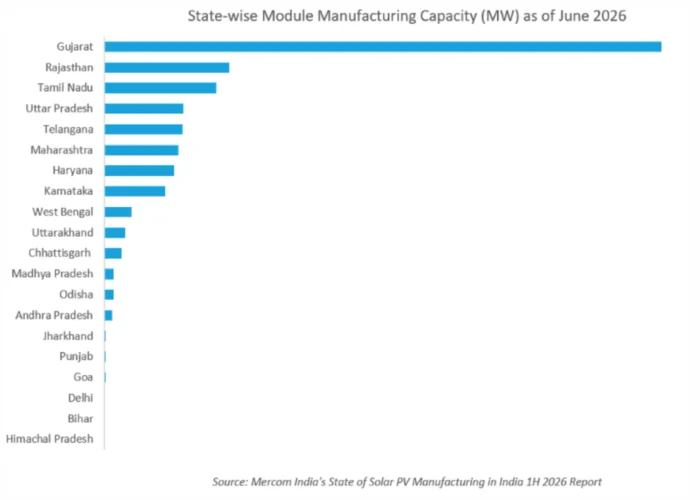
Alongside the import taxation policy, India’s government is aiming to drive domestic solar manufacturing through a production-linked incentives programme for modules that was announced by Prime Minister Narendra Modi in November. The scheme will provide INR45 billion (US$603 million) over five years to support the domestic production of high-efficiency PV modules.
Recent research from the Institute of Energy Economics and Financial Analysis suggests that India’s clean energy industry will need investments totalling US$500 billion if the country is to reach its target of 450GW of renewables capacity by 2030.
PV Tech sister publication PV Tech Power caught up with Bridge to India managing director Vinay Rustagi to discuss India’s solar policy landscape in the forthcoming issue of PV Tech Power, to be published later this week. More details on how to subscribe to PV Tech Power can be found here.