TCAD and EDA software provider Silvaco Japan Co is providing the Segawa Laboratory at the Research Center for Advanced Science and Technology, The University of Tokyo with its device simulator, Atlas for analyzing hysteresis phenomena in perovskite solar cells.
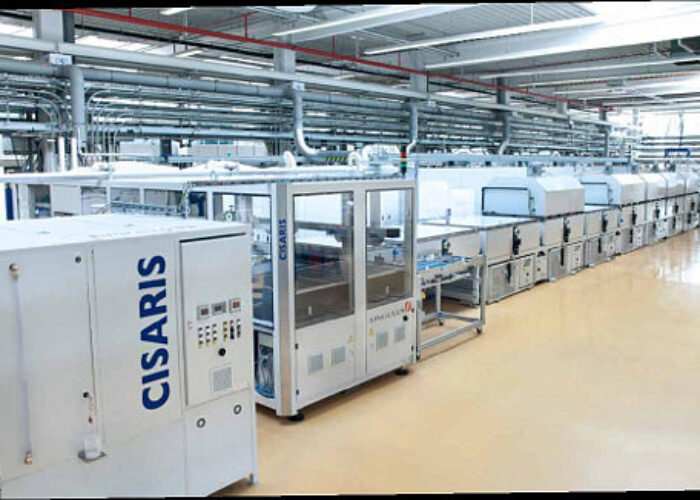
A major €110 million (US$123 million) tool order for Singulus Technologies CIGS thin-film production equipment with China National Building Materials (CNBM), owner of module manufacturer AVANCIS, could finally proceed, as the equipment supplier expects an unspecified ‘pre-payment’ was due in the next few day(s).
Hybrid amorphous Si thin-film module producer Sunpreme said had completed deployment of 12.8MW utility-scale project in the Eastern region of the US, using its bifacial double glass GxB370W panels, with 21.5% cell efficiency.
In PV Tech’s second Solar Power International (SPI) 2016 new product round up several companies have taken a more holistic or scattergun approach to new product announcements, whereby a number of things, like the IoT (Internet of Things) are showcased, rather than a single product.
PV project developer and EPC Inovateus Solar has added MiaSolé's ultra-lightweight flexible CIGS solar panel products to its range of technologies to its sales channel partnership.
The annual US-based Solar Power International (SPI) exhibition and conference historically generates a significant number of new product launches and can set new trends and directions for the downstream solar PV sector, globally.
Indian corporates are taking a significant share of the domestic solar PV market with Indian conglomerate Adani taking top spot in terms of capacity additions in the last year, according to consultancy firm Bridge to India.
‘Silicon Module Super League’ (SMSL) member Hanwha Q CELLS is planning to introduce its first ever monocrystalline modules, which will use its PERC (Passivated Emitter Rear Contact) cell technology. New and prototype products will be showcased at Solar Power International (SPI) in Las Vegas next week.
The hardest and most ‘controversial’ aspect of analyzing capacity expansion announcements is converting them to actual or ‘effective’ new nameplate capacity.
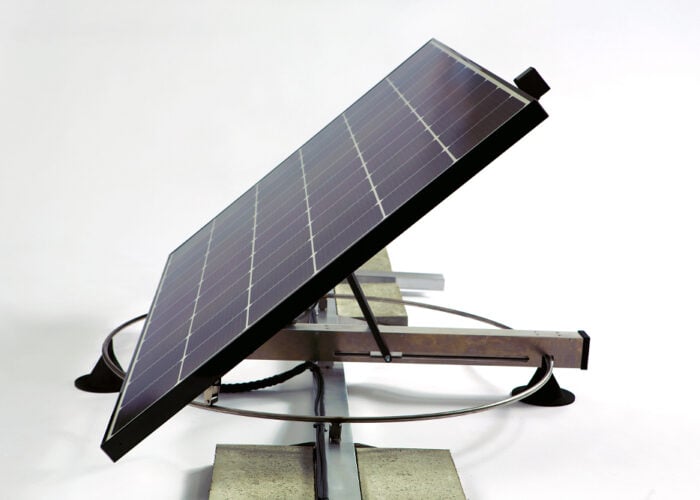
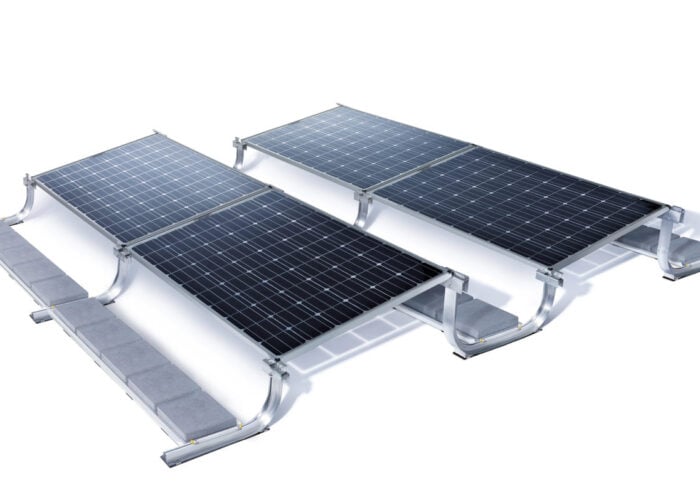
SolarWorld has launched a new era of modules for free-field and flat roof systems. The new ‘Sunmodule Bisun’ is a solar module active on both sides (bifacial) that converts light from all directions into electrical energy. This ensures up to 25 % more yield per installed kWp, depending on the surface on which it is installed. The modules are expected to be provided in 270Wp through 331Wp configurations. SolarWorld has also developed a new racking system for flat roofs that is optimized for the bifacial technology.