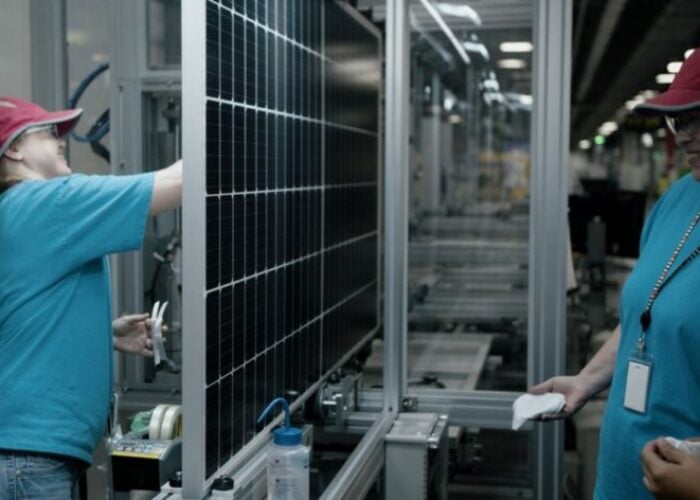
The US Department of Treasury and Internal Revenue Service (IRS) have released guidance pertaining to the domestic content bonus included in the Inflation Reduction Act (IRA); solar PV projects will need to meet requirements for both their PV and their steel components in order to benefit.
The majority of the US solar industry has said that supply chain issues worsened in 2022, whilst a similar proportion also said that they expect to expand their businesses in 2023 directly because of the Inflation Reduction Act (IRA).
Australia’s Federal Budget 2023-2024 included AU$4 billion (US$2.71 billion) new investment in the energy transition, and confirmation of tenders for renewables and energy storage.
The US Senate has passed a vote to repeal Joe Biden’s two-year waiver on solar import tariffs, a decision which the Solar Energy Industries Association (SEIA) has previously said could result in US$1 billion in retroactive tariffs for the industry and 4GW of project cancellations.
Clean energy trade bodies ACP, ACORE and SEIA have denounced an attempt by Republicans to roll back the Act, which has spurred unprecedented investment in the US market.
President Joe Biden would veto the repeal of his two-year waiver of US solar import tariffs if it passed through the House of Representatives, the White House has said.
While solar has been the backbone of Japan’s renewable energy push, deployment has been stalling in recent years. Chris Wilkinson of Rystad Energy details the benefits of the country’s feed-in premium scheme, the potential for corporate PPAs and the importance of battery storage.
The US Department of Energy (DOE) has announced US$52 million in financing for research and development (R&D) into domestic solar manufacturing and recycling, including a focus on new technologies.