Microinverter supplier Enphase Energy reported a 17% decline in revenue from the previous quarter, from US$343 million to US$282.9 million.
According to Badri Kothandaraman, president and CEO at Enphase, the quarterly revenue drop is due to a lower demand from the US residential solar and energy storage market following the Section 25D residential clean energy tax credit expiring at the end of 2025, as well as typical seasonality. This resulted in a 23% decrease in revenue from the US, which accounted for 83% of total revenue in the first quarter of 2026. However, the company’s safe harbour revenue increased from US$20.3 million to US$34.5 million between quarters.
Try Premium for just $1
- Full premium access for the first month at only $1
- Converts to an annual rate after 30 days unless cancelled
- Cancel anytime during the trial period
Premium Benefits
- Expert industry analysis and interviews
- Digital access to PV Tech Power journal
- Exclusive event discounts
Or get the full Premium subscription right away
Or continue reading this article for free
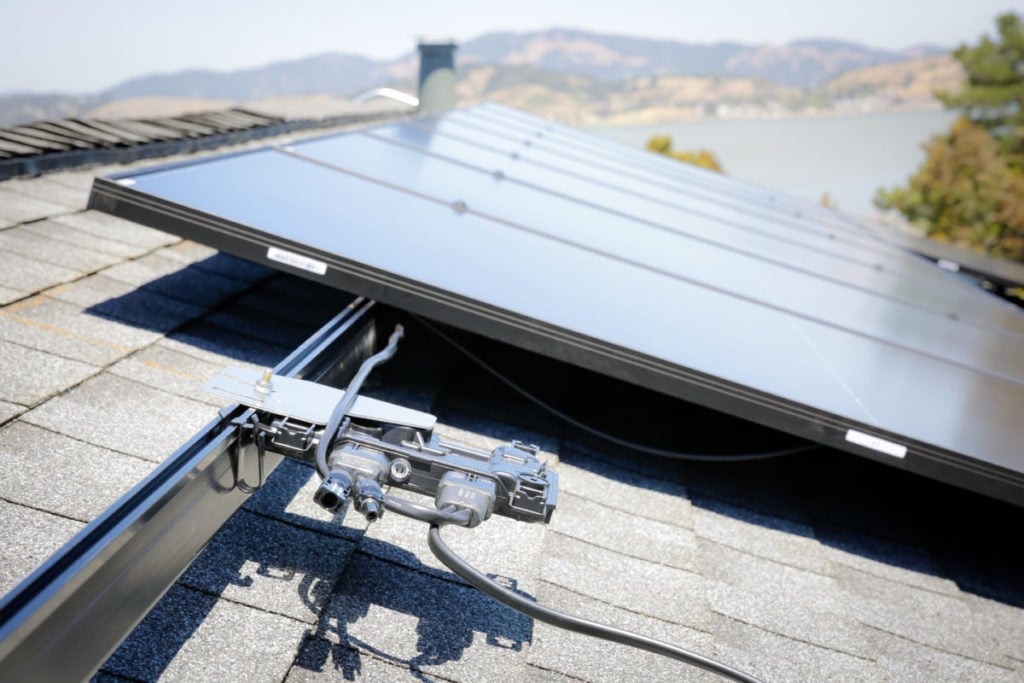
Regarding the US market, Kothandaraman added: “In Q3, we expect to begin shipping our high power 480W IQ9S microinverter for 480 volt three-phase systems, which can support solar panels up to 770W DC.
We also expect to see near-term safe harbour demand from customers placing orders between now and early July. With US manufacturing, domestic content eligibility, and FEOC-compliant products, we believe our commercial business is well-positioned for continued growth.”
On the European market, Kothandaraman said that revenue increased 36% between Q4 2025 and Q1 2026, while the company was seeing “green shoots” in April. The increased interest in solar PV, and mostly energy storage comes as power prices rise and an increased battery adoption. He added that Europe is “becoming a battery-critical market” as self-consumption, dynamic tariffs and virtual power plants become more important in the region.
“The company that wins the battery relationship is well-positioned to win the broader home energy system over time, including solar, software, and VPP,” explained Kothandaraman during the Q1 2026 earnings call.
As an example, he said that battery activations in the Netherlands rose by 75% in April compared with the monthly run rate in Q1. In France, the reduction of feed-in tariffs shifted the market towards self-consumption and an increased interest in batteries, particularly for new solar installations.
Microinverter shipments down YoY to 627.6MW
With the US remaining the main market revenue-wise for Enphase, its microinverter production shows a similar trend, with the majority of the shipments in Q1 2026 coming from its US facilities in Texas and South Carolina. These shipments came attached with the 45X production tax credits, according to Badri Kothandaraman, president and CEO at Enphase.
In total, 1.39 million of 1.41 million microinverters shipped came from the US, with a total volume shipped of 627.6MW. As shown in the chart below, this is both a yearly and quarterly decrease.
Moreover, during Q1 2026, Enphase began US shipments of its first microinverter produced using gallium nitride (GaN) technology, which it said provided enhanced efficiency and reliability over its silicon counterpart.
In its guidance for Q2 2026, Enphase forecasts revenue to be within US$280-310 million, which includes nearly US$85 million of safe harbour shipments.
Earning calls transcript from Investing.com