This paper reviews those associated fabrication technologies for the mass production of Ni/Cu-plated contacts. The technologies currently in use in the PV industry for plated contacts, as well as the developing technologies having high scaling-up potential, will be reviewed. In addition, the future requirements for plating metallization will be discussed.
This paper discusses what is actually behind these announcements and how an evolutionary industry sector such as PVis becoming, it seems, decidedly revolutionary with large jumps in efficiency.
This paper presents an analysis and the results of extensive simulations of the efficiency limits and roadmap to 25.5% of a tunnel oxide passivated contact (TOPCon) solar cell, on the basis of an efficiency level of 25.21% (designed area, identified by ISFH) achieved through three years of continuous technical optimization on a pilot line at Longi.
The development of new ways of increasing the production throughput for passivated emitter and rear cells (PERCs), as the major solar cell technology in the global market, is an area of great interest to the PV community. This paper presents approaches for significantly increasing the throughput of PERC production processes. The main focus is on the tube furnace processes for the emitter formation and oxidation, with the introduction of the High Temperature Stack Oxidation (HiTSOx) approach. Additional approaches that are currently under investigation at Fraunhofer ISE for increasing the throughput for wet-chemical, printing and laser processes will also be briefly outlined.
After a 2021 which saw price volatility dominate the solar industry’s new, the sector started anew last week. How has the downstream started the year with regards manufacturing and pricing?
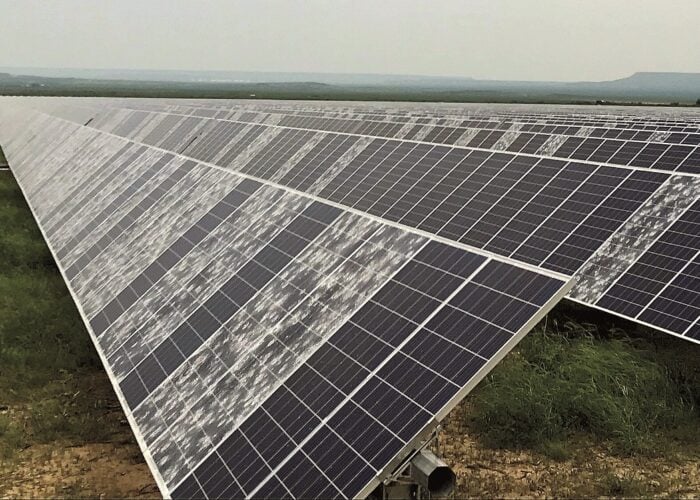
Prior to 2019, there was an ample number of insurers willing to provide renewable energy insurance, leading to plentiful, affordable cover being available for solar power project finance transactions. However, with increased claims and risks, price rises and lower availability of cover is impacting the sector. Duncan Gordon, head of Renewable Energy at specialist energy insurance brokerage and risk management firm Gallagher, provides an overview of how solar power project owners can navigate a challenging insurance market.
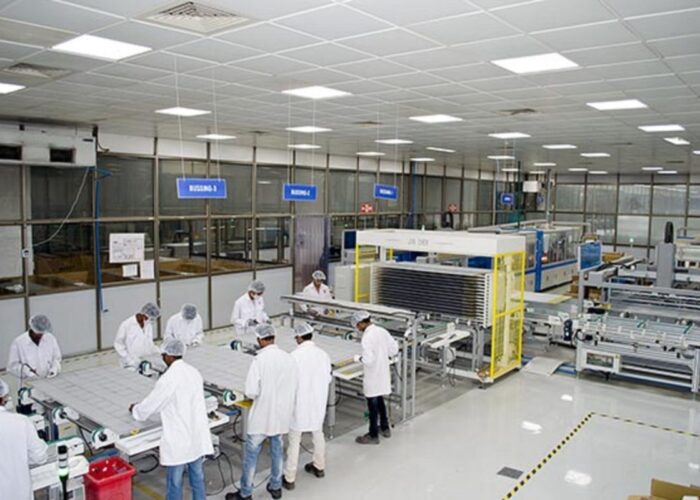
After ramping up cell and module production capacity last year, Indian solar manufacturer and EPC firm Tata Power Solar is eyeing further expansions as it bids to take advantage of efforts from India’s government to bolster domestic PV manufacturing.
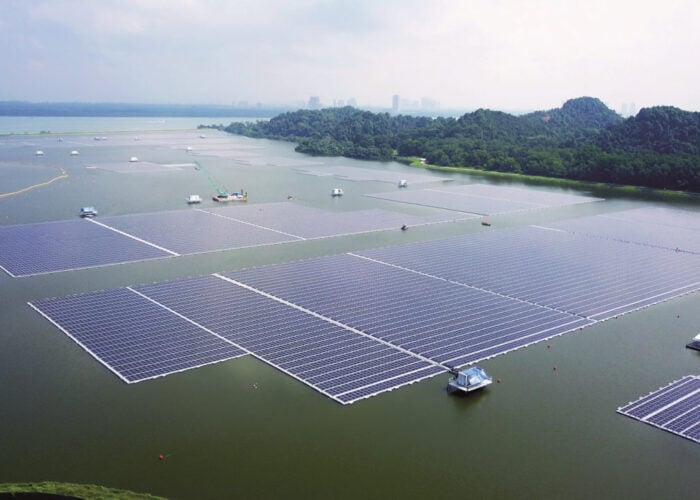
Jules Scully explores how customised installation techniques supported the development of Singapore's largest floating solar project to date, the 60MWp Tengeh Floating Solar Farm.
As operational solar assets mature, news of repowering projects is steadily ramping up. Alice Grundy takes a look at what’s influencing decisions and just when the right time to repower is.
New technologies are emerging to help constrained grids integrate an increasing number of solar projects. Molly Lempriere takes a look at three case studies of where technology is helping to decarbonise the grid faster.