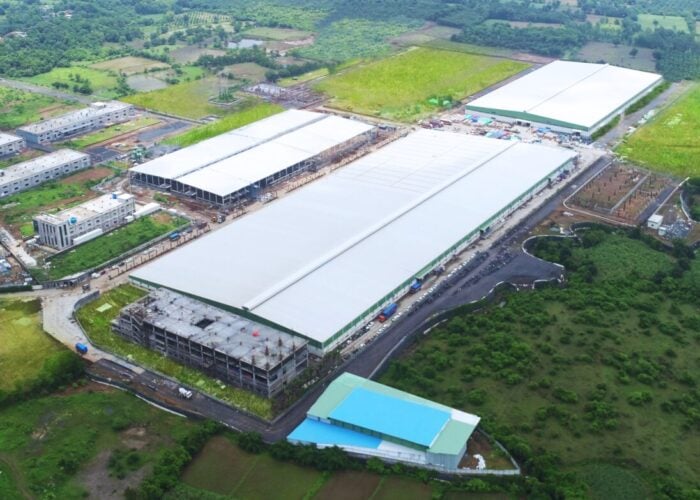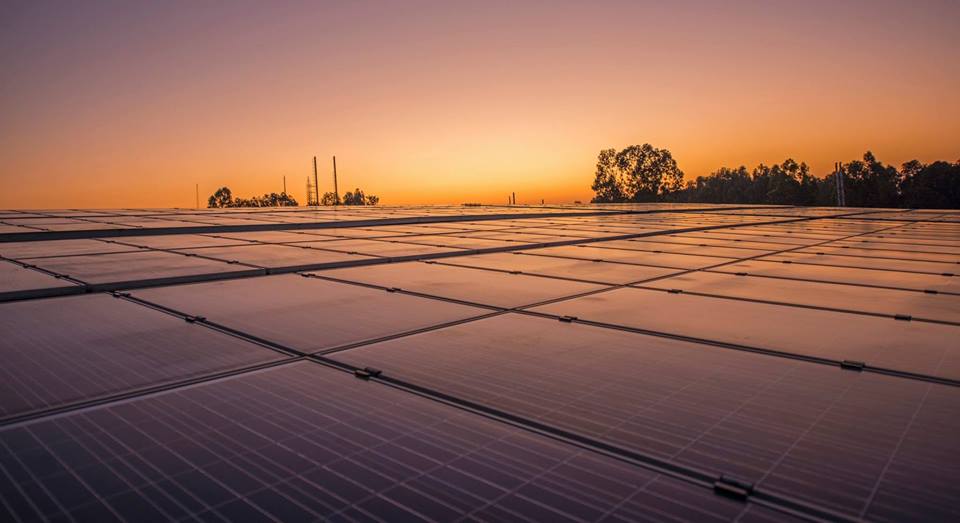
India recently proposed a new strategy of supporting its domestic solar manufacturers by allocating 7.5GW of local content tenders to Central Public Sector Undertakings (CPSUs), but analysts have identified a number of limitations.
India’s original Domestic Content Requirement (DCR) policy is set to fully end on 14 September this year – following a WTO ruling – and Indian manufacturers are eager for other support schemes to take its place.
Try Premium for just $1
- Full premium access for the first month at only $1
- Converts to an annual rate after 30 days unless cancelled
- Cancel anytime during the trial period
Premium Benefits
- Expert industry analysis and interviews
- Digital access to PV Tech Power journal
- Exclusive event discounts
Or get the full Premium subscription right away
Or continue reading this article for free
A report presented to a Lok Sabha committee reviewing India’s 100GW by 2022 PV target stated: “Ministry of New and Renewable Energy (MNRE) has initiated a 2nd phase of CPSU scheme of 7,500MW, which provides for installation of entire capacity of solar projects based on domestically manufactured solar PV cells and modules. The scheme is under process of approval.”
While clearly at preliminary stages, analysts at Bridge to India, Mercom Capital Group, and Gensol Solar, have all told PV Tech that CPSUs have struggled in the past to match solar tariffs offered by private developers and are often unwilling to buy power at a higher price.
Jasmeet Khurana, associate director, consulting at Bridge to India, said that the inclusion of a local content requirement would simply make CPSU-related projects even more uncompetitive, making it harder to find off-takers.
He added: “The government will need to offer incentives to get this scheme working. We are not very optimistic about the actual deployment potential of this scheme.”
This was echoed by Raj Prabhu, CEO and co-founder of Mercom Capital Group, who added that, while the policy could be a potential replacement of the DCR, the challenge would be to make these CPSUs buy power at higher prices considering many are publicly traded companies.
Ashish Verma, consultant at Indian-based firm Gensol Solar, said that only a few major PSUs are seriously investing in solar and most of these are in the energy, infrastructure and power sectors. Meanwhile, he claimed that private players are not willing to bet their assets through domestic modules since they are “very quality conscious”.
He added: “My view is that it will help only a few major manufacturers who are best-in-class and have a good presence in terms of quality and scale.”
Verma did however praise the 7.5GW allocation, noting that India’s module manufacturing is currently running at around a third of its nameplate capacity, with many obsolete manufacturing lines.
An Indian manufacturer wishing to remain anonymous said: “There are no caveats other than business as usual with the Government Tenders for CPSU. You have to appreciate that the Government is the largest procurer in India and tenders are standard operating procedure.”
Timelines
While Prabhu said that it is unclear when such a CPSU scheme might be implemented, Khurana said: “If the objective is to ensure survival of domestic cell manufacturers, the government should aim to deploy at least 1-2GW every year. However, to promote domestic manufacturing, we strongly recommend better implementation and timely incentive disbursal under M-SIPS and other state electronics and industrial policies.”
PV Tech reported in January that dispersal of the M-SIPS incentive for electronics manufacturers, applied for by several solar companies, had been significantly delayed.
Caveats
Khurana also noted that in the past several EPC tenders floated by CPSUs have been cancelled due to the cost of power at coming out higher than what the private sector was offering.
Prabhu also said that MNRE should be looking for other ways to support domestic manufacturers, but noted that the Ministry of Finance had rebuffed some of these ideas in the past due to the associated costs.
The unnamed manufacturer said that the ministry is looking for alternative ways to support domestic manufacturing and is revisiting earlier manufacturing promotion schemes as well as newer options, with several case studies under evaluation.
He also said: “India is now determined to ensure a robust manufacturing base and reduce dependence on imports that have skewed to a critical level in the initial growth years for PV.
“The view is holistic with a 10-20 year horizon considering many issues like technology, R&D, scale, costs, export potential, import balance, employment, taxation direct and indirect, energy demand and security, electric mobility and storage.”
Of course all is not well in Indian manufacturing, as signposted by the recent initiation of an anti-dumping investigation into imports of solar cells and modules coming from China, Taiwan and Malaysia.