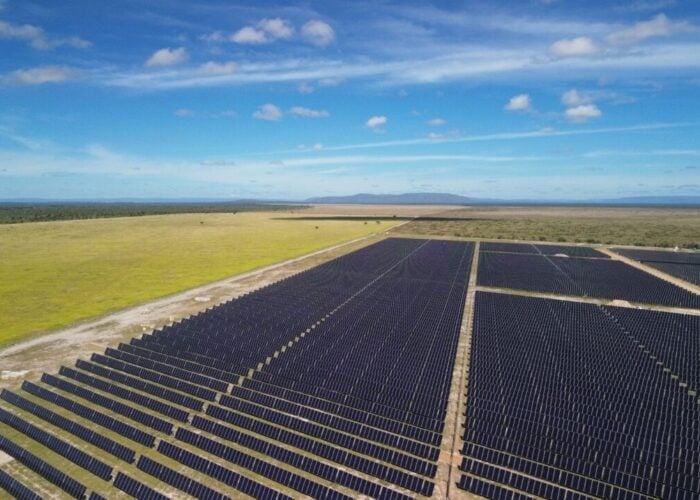
The drive to electrify Sub-Saharan Africa will require US$350 billion of investment and could reveal an alternative vision for the energy transition that focuses on a decentralised, bottom-up solar-and-storage rich grid that takes advantage of cheap solar power, according to research firm Wood Mackenzie.
Its report into the energy transition in Sub-Saharan Africa argued the rapid decline in the cost of renewable energy, coupled with new business models, could help electrify the region and bridge the divide between consumption and investment.
Try Premium for just $1
- Full premium access for the first month at only $1
- Converts to an annual rate after 30 days unless cancelled
- Cancel anytime during the trial period
Premium Benefits
- Expert industry analysis and interviews
- Digital access to PV Tech Power journal
- Exclusive event discounts
Or get the full Premium subscription right away
Or continue reading this article for free
Access to electricity in Sub-Saharan Africa is patchy and has been damaged by massive underinvestment in the region’s electricity infrastructure, said the report. WoodMac said it would cost an estimated US$350 billion to electrify the region by 2030.
Meanwhile, population growth, rapid urbanisation and structural economic transformation will see the region’s electricity demand grow nearly eight-fold by 2050, according to WoodMac’s 1.5 degrees Celsius ‘Accelerated Energy Transition scenario’ (AET-1.5) report.
Most of Africa’s public electric utilities are loss-making, with limited ability to maintain existing assets or invest in new ones, said WoodMac. Cash-strapped utilities are likely to see revenues fall without equivalent reductions in cost, resulting in more difficulties maintaining and expanding their networks.
Instead of pursuing the type of business model seen in richer countries, Sub-Saharan Africa should target decentralised, bottom-up, solar-and-storage grids that could “fundamentally reshape the trajectory of global electricity demand and will be essential to the energy transition,” said Benjamin Attia, principal analyst with WoodMac’s Energy Transition Practice.
“Decentralised, bottom-up, solar-and-storage grids could not only transform sub-Saharan Africa’s energy future but carry important lessons for the next generation of thinking on utility business models globally. The future of energy may be forged there,” said Attia.
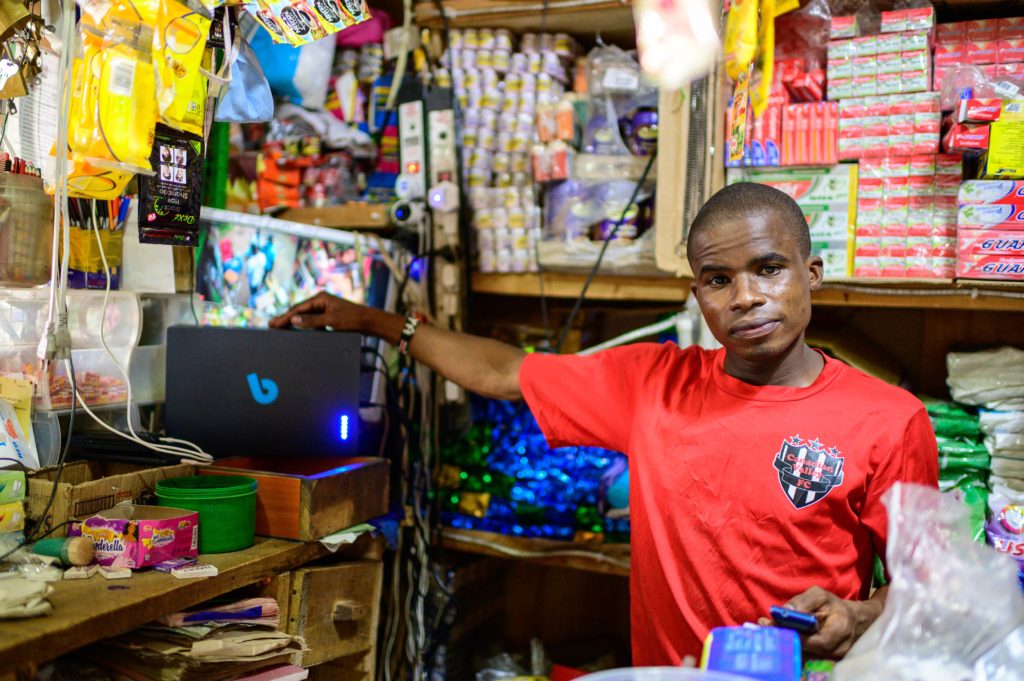
“Distributed energy service companies are using a flexible prepaid service model to take advantage of the increasing affordability of solar and battery technologies in order to align cost, value and energy delivery,” said WoodMac. “They can also manage credit risk directly and digitally outside the bounds of traditional utility cost-recovery mechanisms.”
Attia said service providers in the region were going “straight to the bankable segments of residential, commercial, and industrial electricity demand, typically through distributed, renewable, off-grid solutions where the public utility does not feature.”
These sectors will collectively account for US$62 billion of the total African electricity investment opportunity this decade, according to WoodMac’s analysis, with Attia adding the opportunities represent “the early stages of a dramatic, fundamental evolution in the utility business model towards broader, customer-centric service provision.”
Around half of African businesses rely on back-up diesel generators and WoodMac estimates more than 100GW of distributed diesel capacity is operational across Africa today, with at least 17 African countries having more distributed diesel generator capacity than they do grid-connected power-generation capacity.
Across Sub-Saharan Africa – excluding South Africa – consumers spend just under US$20 billion a year on fuel for back-up generators, according to WoodMac, which is around 80% of what they spend on grid electricity even though generators provide just 7% of total electricity supply.