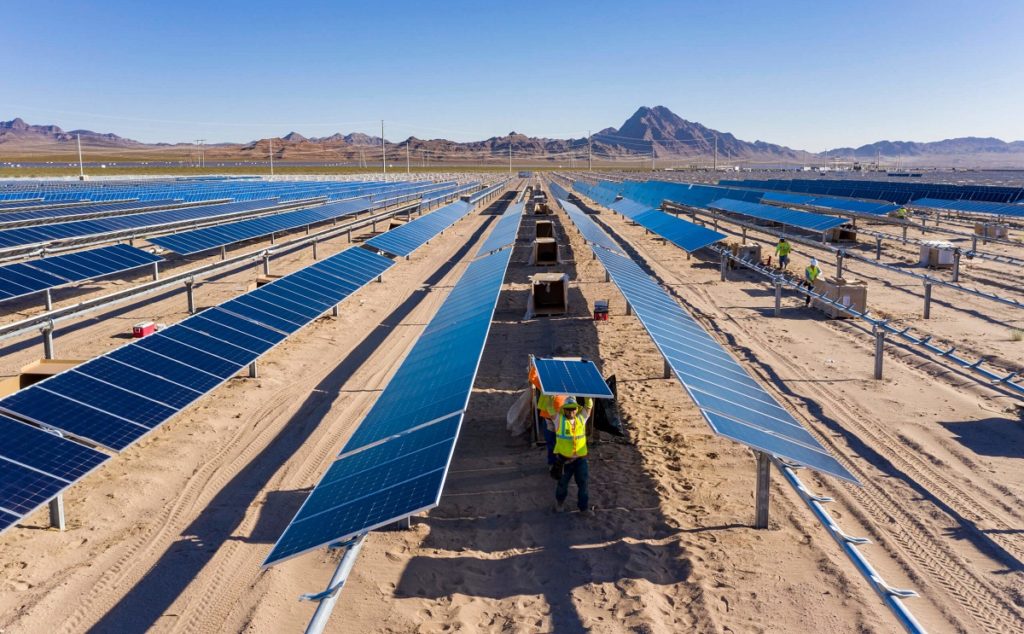
The US should aim for solar to account for 30% of the country’s electricity generation by 2030, according to the Solar Energy Industries Association (SEIA), which has raised its previous target due to the growing urgency to tackle the climate crisis.
Reaching that level would require the solar sector to deploy more than 700GWdc over the next decade to have nearly 850GWdc of installed capacity.
Try Premium for just $1
- Full premium access for the first month at only $1
- Converts to an annual rate after 30 days unless cancelled
- Cancel anytime during the trial period
Premium Benefits
- Expert industry analysis and interviews
- Digital access to PV Tech Power journal
- Exclusive event discounts
Or get the full Premium subscription right away
Or continue reading this article for free
Having previously called for solar energy to reach 20% of generation by 2030, SEIA said the revision aligns with the Biden administration’s clean energy targets, which include an ambition for the country to have a carbon pollution-free power sector by 2035.
The update follows a study published earlier this month from the US Department of Energy that suggests solar’s contribution to national power demand could rise from today’s 3% to 40% by 2035, requiring nearly 1TW of solar to be deployed by then.
While forecasts under a business-as-usual scenario would place solar at roughly 15% of electricity generation in 2030, SEIA said with bold policy action and continued private sector innovation, the 30% target “is absolutely achievable”.
With around 19GW added in 2020 and total US solar capacity passing the 100GW milestone earlier this year, the sector must now double its deployment pace to reach the 2030 target.
Delaying progress toward that goal, either through congressional inaction, trade disruption or other barriers “will have serious climate consequences”, SEIA said.
“The solar industry is leading the way in reducing electricity sector emissions, but we’ll fall far short of the 850GW we need to reach 30% of electricity generation by 2030 without policy action. It’s time for lawmakers to meet the urgency of this climate moment,” said Abigail Ross Hopper, SEIA’s CEO.
While US-based PV manufacturers may be boosted by the Solar Energy Manufacturing for America Act, which secured additional support this week, installers in the country could face disruptions in the form of proposed duties on imports of modules and cells from three Southeast Asian countries. In a letter sent to Commerce Secretary Gina Raimondo last week, nearly 200 companies warned that the new tariffs “would devastate” the US solar sector, while SEIA said they would jeopardise the deployment of 18GW of solar by 2023.