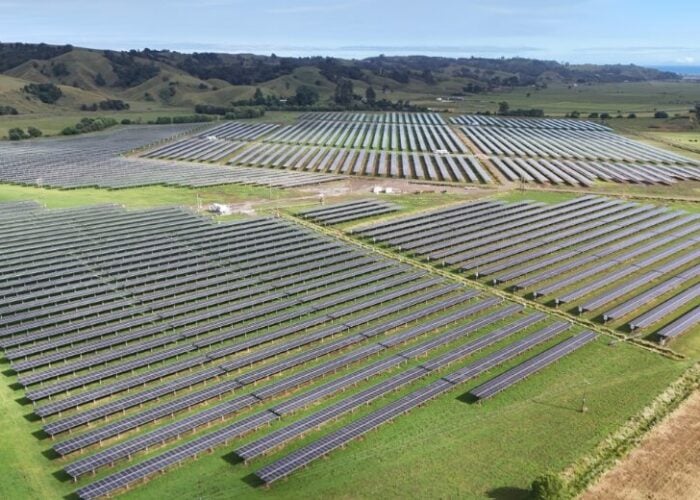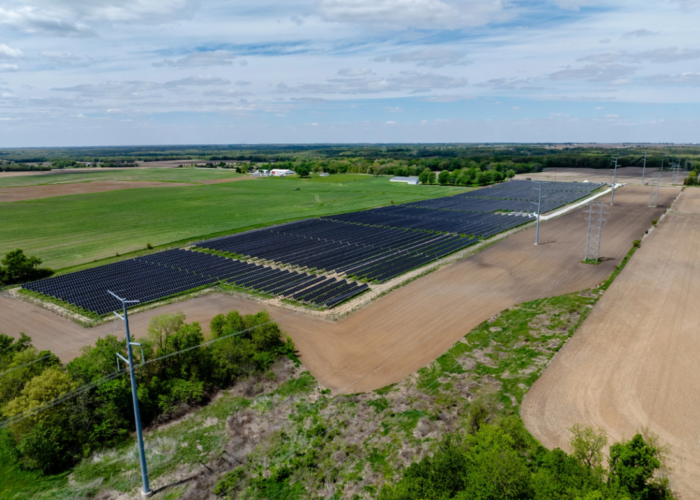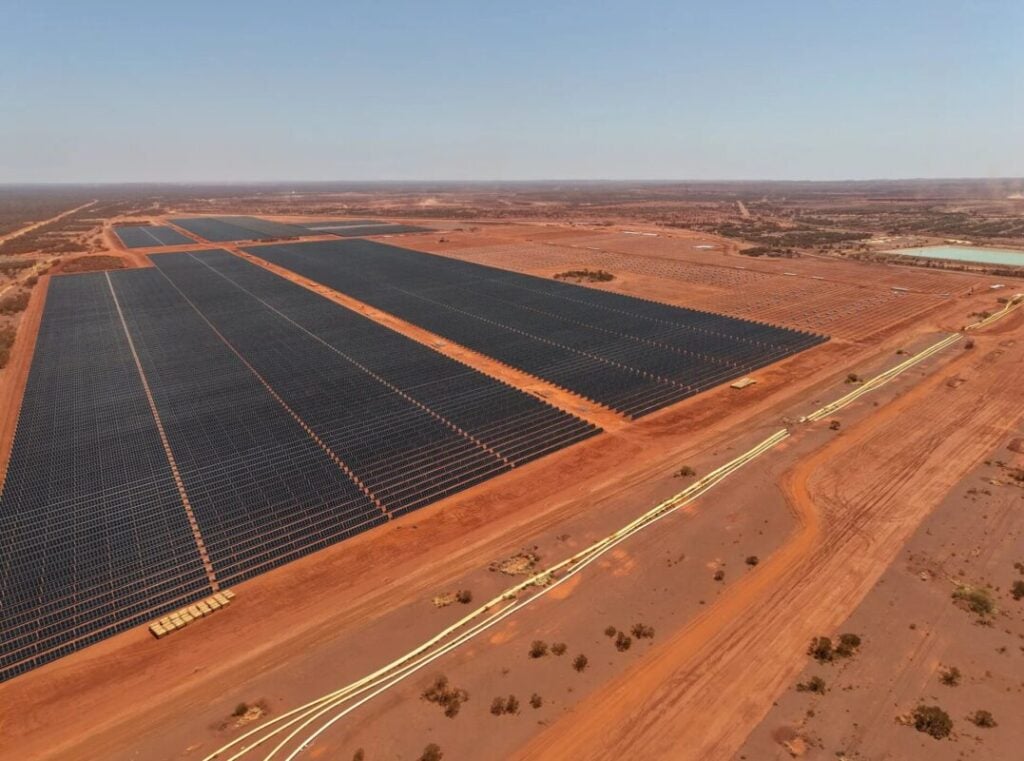
Twelve large-scale generation projects totalling 2.6GW reached financial close in Australia in the first half of 2026, with solar accounting for 92% of the capacity, according to the Clean Energy Council (CEC).
The figure, from the CEC’s latest Bi-annual investment report covering January to June 2026, already exceeds the 2.3GW that reached financial close across all of 2025. It is the second-highest half-yearly total since late 2020, behind the 3.1GW recorded in the second half of 2024.
Try Premium for just $1
- Full premium access for the first month at only $1
- Converts to an annual rate after 30 days unless cancelled
- Cancel anytime during the trial period
Premium Benefits
- Expert industry analysis and interviews
- Digital access to PV Tech Power journal
- Exclusive event discounts
Or get the full Premium subscription right away
Or continue reading this article for free
The result came during a difficult six months for the wider economy. Conflict in the Middle East pushed up global oil and gas prices, headline inflation reached 4.6% in March, and the Reserve Bank of Australia raised the cash rate to 4.35% in May.
CEC chief executive Jackie Trad said the results showed the industry’s resilience. “Australian sun and wind cannot be cut off by conflict overseas,” she said.
Eleven of the 12 projects were solar PV plants or solar hybrids. The only wind project was the 133MW Nullagine Wind Project in Western Australia, which made up 5% of the total.
Western Australia accounted for more than half of the new capacity. The largest project was the 690MW Turner River Solar Hub in the Pilbara, where Fortescue began construction in May to power its iron ore operations, with completion due in 2028. The state’s 440MW Solomon Airport solar project, also in the Pilbara, was the second largest.
Fortescue is also developing green iron, as Australia bets on solar-powered processing while Chinese demand for imported ore weakens. The miner estimates it needs 2-3GW of wind and solar, plus battery storage, to meet all of its 2030 electricity demand from renewables.
In Queensland, the Guthrie’s Gap and Smoky Creek Solar Power Stations each reached financial close with 300MW of solar and 300MW/1,200MWh of co-located battery storage, alongside the state’s 380MW Lower Wonga solar project. In New South Wales, the 135MW Muswellbrook solar project also reached financial close.
Despite the strong half, the rolling 12-month average for capacity reaching financial close was 952MW in the June quarter. That was up from 585MW in the March quarter but below the 1,050MW recorded a year earlier.
Over the same six months, five generation projects totalling 1.4GW and worth more than AU$2.8 billion (US$2 billion) were commissioned, led by the 756MW first stage of the Golden Plains Wind Farm in Victoria. A further eight projects totalling 1.9GW started construction.
The rolling average for newly commissioned capacity reached 912MW, up 56% year on year and its highest level since early 2022.
The CEC compiles the figures from its own project database, which is verified against data from the analyst Green Energy Markets. It found that solar projects take an average of 21 months to move from financial close to full operation, compared with 24 months for battery storage and 30 months for onshore wind.
South Australia has the shortest build times across all technologies, with solar averaging 19 months. Hybrid projects in Western Australia take 16 months, while onshore wind in Queensland takes the longest at 37 months.
Battery storage commissioning passes 2025 total
Nine utility-scale battery storage projects, worth AU$4.3 billion and totalling 2.3GW/7.1GWh, were commissioned in the half. That compares with 2GW/5.1GWh across all of 2025. The largest was Synergy’s 500MW/2,400MWh Collie battery storage system in Western Australia.
The average commissioned battery storage project grew to 792MWh in 2026, up from 427MWh last year, and average duration rose to 3.5 hours. More than three-quarters of the utility-scale storage energy capacity commissioned since 2017 has come online in the past 18 months.
Another 13 storage projects (1.6GW/6.5GWh) reached financial close, slightly below the 6.6GWh recorded in the first half of 2025. The June quarter alone accounted for 6.3GWh, a quarterly record.
The CEC said battery storage is increasingly shifting midday solar output into the evening peak. Citing the Australian Energy Market Operator (AEMO), it said average battery storage output almost tripled in the June quarter, while evening peak supply rose by 228%. Gas-fired generation fell to its lowest June-quarter level since 2003.
The CEC linked this growth to lower power prices in the National Electricity Market (NEM), the grid serving Australia’s eastern and southern states.
“An increase in renewable energy generation and storage is already putting downward pressure on power prices, with wholesale electricity prices averaging AU$74 per megawatt-hour in the June quarter, down nearly 50 per cent on the same period in 2025,” Trad said.
From 1 July, regulated household electricity prices fell by between 3.4% and 7.2% in New South Wales and south-east Queensland, and by around 5% in Victoria. The CEC noted that wholesale costs are only one part of a bill and that network costs are still rising in some regions.
The report covers utility-scale projects only. Separate CEC figures show rooftop solar installations reached their strongest six-month total since 2021, with 1,894MW added across 180,878 systems over the same period. Households also installed 276,011 home battery storage systems, and rooftop solar supplied 12.9% of the country’s electricity.
Wind pipeline lags as policy settings shift
Across the country, 141 projects worth AU$32.5 billion are now at financial close or under construction, covering 11.7GW of generation and 12.6GW/35GWh of storage. The storage pipeline now exceeds the generation pipeline by capacity.
Queensland leads on investment (AU$9.6 billion) and generation capacity (4.5GW), while New South Wales has the largest storage pipeline at 4.3GW/11.2GWh. Solar makes up 53% of the generation capacity in this pipeline and onshore wind 41%.
“Queensland is leading the nation in clean energy investment, showing what can be achieved when world-class renewable energy resources are matched with investor confidence,” Trad said.
Further back in the development cycle, AEMO reported that solar and battery storage have pushed the NEM connection pipeline up 43% to 80.9GW, passing the grid’s existing 77GW of capacity. Around 88% of that capacity remains at the application or implementation stage.
The CEC said the wind pipeline is thin. New South Wales has only one onshore wind project, of 414MW, at financial close or under construction, even though the state is relying on new wind to replace the Eraring coal plant as planned. More wind projects have reached financial close since June, and the CEC said this will be reflected in its next report.
Investor confidence in onshore wind is softening, with approvals and transmission identified as the main obstacles. The CEC also flagged the possible cancellation of the VNI West transmission project, which renewable energy zones in western Victoria and southern New South Wales depend on.
Government underwriting is playing a growing role. The Australian government’s Capacity Investment Scheme (CIS) supported five of the projects that reached financial close, accounting for 37% of new generation capacity and 71% of new storage energy capacity. Of the 113 projects awarded CIS contracts to date, 25 have reached financial close.
From the scheme’s ninth tender, deliverability and financial capability will each carry more weight in assessment, while financial value drops from 50% to 35%. A proposed Electricity Services Entry Mechanism is set to provide long-term contracts once the CIS ends.
Approvals reform is also under way. A new National Environmental Protection Agency began operating on 1 July, and a streamlined assessment pathway under the reformed EPBC Act is due by 1 December 2026.
Federal funding for large-scale solar is also continuing, after the Australian Renewable Energy Agency (ARENA) opened a third Solar Sunshot round worth up to AU$250 million this month. The round targets equipment used to build solar PV plants, such as racking, trackers, robotics and prefabrication.
Trad said maintaining this momentum “will require predictable approvals, timely transmission and long-term revenue certainty to help more projects, including onshore wind, progress into operation.”