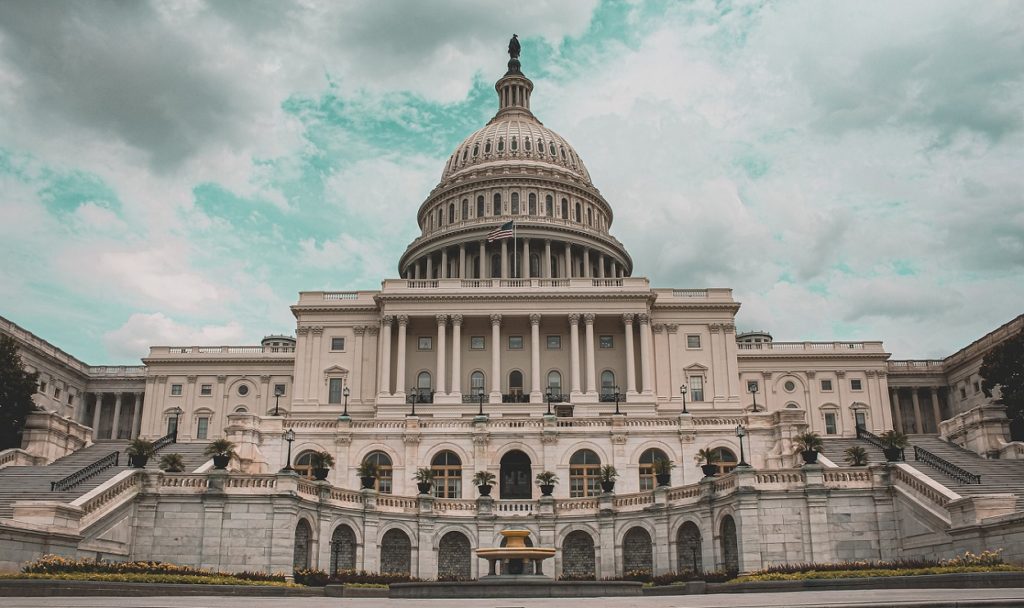
Upon arriving in the oval office for his second term, US president Donald Trump used an executive order to declare an “Energy Emergency” in America. He proclaimed—tautologically—that the country’s energy development, production and industry were “far too inadequate” and called for a “reliable, diversified, and affordable supply of energy”.
But solar PV—the fastest-growing and often cheapest source of energy in the US over the preceding two years—was absent from the order. Instead, another executive order suspended all payments from the Biden administration’s flagship Inflation Reduction Act (IRA) for renewables, pending further review.
Try Premium for just $1
- Full premium access for the first month at only $1
- Converts to an annual rate after 30 days unless cancelled
- Cancel anytime during the trial period
Premium Benefits
- Expert industry analysis and interviews
- Digital access to PV Tech Power journal
- Exclusive event discounts
Or get the full Premium subscription right away
Or continue reading this article for free
Having campaigned with a plan to “drill, baby, drill”, a second Trump administration wasn’t ever going to be pro-solar, but almost a year on from the inauguration day orders, the outlook for the industry has, in some respects, become even less certain than in January.
Having charted the changes as they happened this year, here is a reflection on 2025 in US solar, and what it could mean for 2026.
Big and beautiful?
The spring and early summer was defined by wrangling over the budget reconciliation bill, or “One, Big, Beautiful Bill Act” (OBBBA), as we came to know it. Our Q2 edition of PV Tech Power delved deep into the impacts of the bill for US solar, but the headlines are as follows:
- The Investment and Production Tax Credits (ITC/PTC), the driving force of much of the expansion in solar and energy storage deployments under the Biden administration, were truncated under the bill. Projects now have to begin construction by 4 July 2026 or, failing that, be placed in service by the end of 2027 to achieve “safe harbour” and secure the tax credit.
- The tax incentives for residential solar now expire on 31December 2025, significantly earlier than previously planned.
- The 45X advanced manufacturing tax credit has been left relatively unscathed.
- But all of the above are affected by new Foreign Entity of Concern (FEOC) restrictions, which preclude deployment or manufacturing projects from accessing tax credits if they use components from companies based in, owned by, financed by or receiving “material assistance” from China (or Iran, North Korea or Russia, technically speaking).
The impacts of these policy changes are still being worked out, but we have some predictions, data and industry activity to go on.
The US continues to build solar. Q3 data from SEIA shows that over 11GW of new capacity was added from July through September, the third-highest quarter for installations on record, despite persistent political headwinds. These positive numbers do mask impending troubles once tax credit thresholds begin to fall in the next year, but the solar industry can still make hay while the waning sun shines.
Notably, most of that development was in Republican-voting states that carried Trump to victory in November last year. SEIA said that 54% of all US solar is in red states as of December 2025, and its outgoing CEO, Abigail Ross Hopper, said that almost three quarters of new-build US solar this year has been in red states.
In the longer term, predictions are worse. SEIA said that 73GW of solar projects face “limbo” thanks to political and permitting delays, and Wood Mackenzie said that the new policies would “cloud” deployments and raise costs, hitting the solar and energy storage industries hardest.
Three days after the bill passed, the president announced another executive order, which sought to tighten the screws as much as possible on the “start of construction” rules for ITC/PTC qualification, resulting in a “physical work test” that requires “significant” work to have begun by the deadline date. This made the already strict rules even more draconian.
Most uncertainty stems from the FEOC restrictions. The guidance for these has yet to be released, and there’s very little about the procurement process to meet FEOC requirements that anyone can say for sure.
On a deployment and procurement side, things will likely get more expensive. There could also be some reclaimed tax credits for projects which infringe on FEOC without safe harbouring. Developers and EPCs will need to be conducting deep analyses of their supply contracts and, crucially, the ownership and funding models of their suppliers; data from Crux has shown that the industry is already moving even without any official guidance.
On the manufacturing front, Chinese companies have started divesting US assets or shifting their ownership models. JA Solar sold a facility to Corning and TrinaSolar offloaded a module manufacturing site to T1 Energy, while Canadian Solar has restructured ownership of select US and US-supplying manufacturing facilities to be run from the parent company in Canada, rather than its manufacturing subsidiary CSI Solar. More of these deals might follow in 2026 and beyond.
Certain companies have responded more positively to the changes. First Solar, the largest module producer in the US and the only major producer of cadmium telluride (CdTe) thin-film modules, said the Trump administration’s policies “strengthened” its position in the market.
Tariff uncertainty
There was a new round of antidumping and countervailing duty (AD/CVD) tariffs this year, targeting solar cell producers in India, Laos and Indonesia. These will add to the procurement puzzle for US solar module producers, and serve to increase the price of US solar products.
More concerningly, 2025 saw the Biden administration’s two-year moratorium on collecting previous AD/CVD levies on products from Southeast Asia ruled unlawful. That case is currently on hold pending an appeal, but if it goes ahead some predictions have said the solar industry could be on the hook for “tens of billions” in retroactive duties on products that came into the US from mid-2022 to mid-2024.
There are also the Section 232 investigations into polysilicon imports, on the grounds that they may represent a national security threat. As with all tariffs, this will raise the price of products coming to the US, but could be a golden opportunity for a company like OCI, from Korea, depending on how the policies shape up. When Section 232 was announced, Wood Mackenzie said it was the “biggest supply vulnerability” facing the US solar industry.
As with FEOC, Section 232 remains to be clarified, and there is a lot we don’t yet know.
Permitting problems
After the OBBBA passed, we heard that 2026 would likely still see a lot of solar installations in the US, as backlog is worked through and companies push to get projects underway to secure safe harbour tax credits. That’s likely true, though the safe harbour regulations are stricter than we once thought they might be. As the US is seeking to meet an expected spike in energy demand from expanding data centres and AI—a major part of the country’s future strategy—solar could stand to benefit.
The last point of concern might be the administration’s apparent pause on any solar project permits, particularly on federal lands. Following a memo from the secretary of the interior, Doug Burgum, any PV project permit on or interacting with Department of the Interior (DOI) land or resources must pass through Burgum’s personal office for approval as part of an “elevated review” process.
The industry, led by SEIA, called the DOI’s policy “unequal”, “unduly discriminatory” and “unprecedented government overreach”. Pending any resolution, the permitting drought could impact overall deployment figures, though private lands and corporate deployments should be largely unaffected.
The Trump administration has been a challenge for renewables, and solar above all. It will continue to be so. The question for the solar industry might be how smartly it can play the political game, and square the demonstrable economic and climate benefits of the technology with ideological opposition from the highest parts of government.
SEIA has already gone some way in this direction, adopting Trump’s phraseology around “American Energy Dominance”, and manufacturers like First Solar and T1 Energy—among others—have leaned heavily into the language of independence, security and patriotic industry, with very few mentions of climate change or sustainability.
However it turns out, we’ll be here following developments into 2026 and beyond.