US solar companies could potentially pay “tens of billions” of dollars in retroactive duties on products imported from Southeast Asia between June 2022 and June 2024, following a decision from the US Court of International Trade (CIT).
Earlier this week, the court ruled that the Biden administration’s moratorium on antidumping and countervailing duty (AD/CVD) tariffs on largely Chinese-made solar products imported from Southeast Asia was illegal.
Try Premium for just $1
- Full premium access for the first month at only $1
- Converts to an annual rate after 30 days unless cancelled
- Cancel anytime during the trial period
Premium Benefits
- Expert industry analysis and interviews
- Digital access to PV Tech Power journal
- Exclusive event discounts
Or get the full Premium subscription right away
Or continue reading this article for free
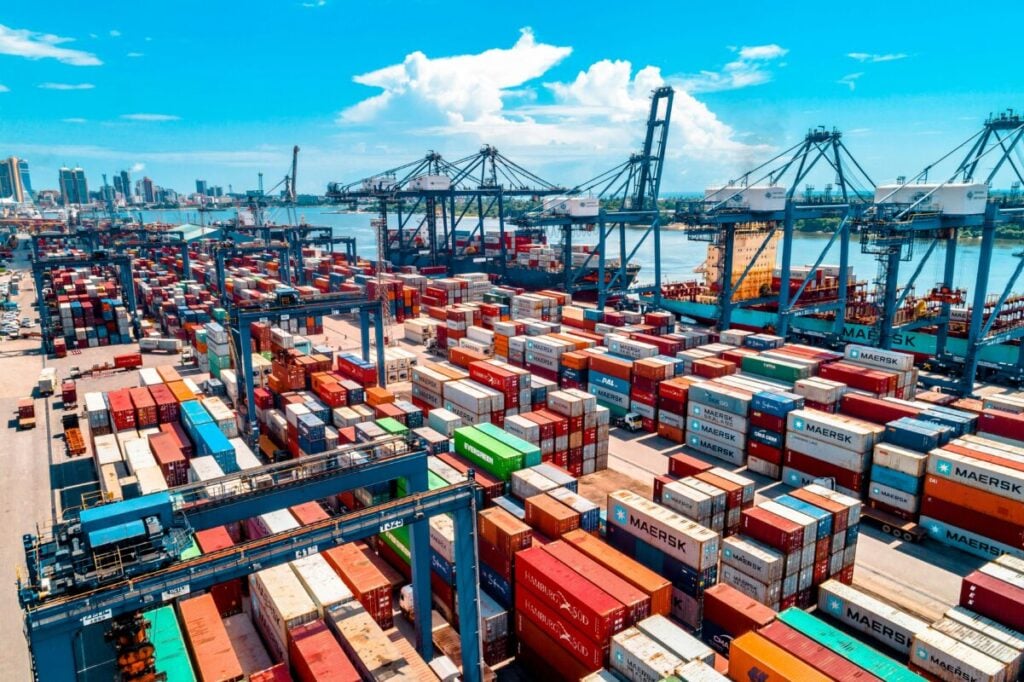
The ruling opens the door for US Customs and Border Protection (CBP) to collect duties on solar products which entered the US from Vietnam, Cambodia, Thailand and Malaysia under Biden’s moratorium.
Thomas G. Allen and Nate Bolin, partners at Pennsylvania-based law firm K&L Gates, told PV Tech Premium there are “potentially big financial implications” for the solar industry.
“It looks like the order will apply retroactively,” they said. “There is operative language in the CIT ruling… that seems to call upon the US government to identify goods that would have been subject to the duties, but for the suspension order, and to now collect those duties.” In the parlance, these goods are yet to be “liquidated”.
“The plaintiffs in the CIT case claim that the circumventing entries were worth tens of billions of dollars during the period of suspension,” Allen and Bolin continued.
The case was brought to the CIT by Auxin Solar, a California-based solar manufacturer that has agitated for AD/CVD rates on Southeast Asian imports for years. Its original complaint – in which Commerce ultimately found five solar manufacturers guilty of circumventing US import tariffs by relocating portions of their Chinese supply chains to the Southeast Asian countries in question – was the move which triggered Biden’s moratorium.
At the time, the White House said the pause on duties was a “bridge” to allow the domestic solar industry to develop and avoid choking US supply. However, Auxin claimed it facilitated a “lawless” marketplace and an influx of unsustainably cheap imports, which threatened US manufacturers.
Who will pay AD/CVD duties?
The actual AD/CVD rates vary by supplier and country of origin. The highest duties in this case are 238.95% for antidumping and 15.28% for countervailing duties. These apply to companies which did not comply with the US investigation; many suppliers received lower duties than this.
The Coalition for a Prosperous America, a nonprofit organisation that focuses on US manufacturing policy, claimed that the retroactive duties could reach US$54 billion for the entire moratorium period, corresponding to around 71GW of solar cell and module imports.
In August 2024, the American Alliance for Solar Manufacturing Trade Committee—a group formed to bring an AD/CVD case against solar cells from the four Southeast Asian nations—claimed that from April to June 2024, the US imported over 11GW of solar products from Vietnam and Thailand alone. The lawyer representing the group said that “China-based companies” operating in the two countries “actively accelerated their US solar exports” ahead of possible duties.
Allen and Bolin told PV Tech Premium that the “importer of record” pays the duties. “However, some parties have agreed to different cost-sharing arrangements,” they added.
They continued: “Some parties absolutely planned for this outcome and made some contractual arrangements to deal with this contingency. We’re aware of and advised on such arrangements. Still, each contract will be different in how they addressed, or failed to address, this contingency.”
There is now the question of an appeal. Defendants in the case, which include the American Clean Power Association (ACP), Solar Energy Industries Association (SEIA), Canadian Solar and NextEra Energy, could appeal for a delay in collecting duties or attempt to remove them altogether.
SEIA and ACP are yet to respond to our request for comment on this case.
“We will probably see an appeal to the Federal Circuit,” Allen and Bolin said. “There is enough money at stake and the issues consequential enough that an appeal seems likely. Whether or not the CIT decision will be stayed pending that appeal is a practical question worth following.”
Manufacturing vs deployments
Some US solar manufacturers have said that AD/CVD duties will benefit the industry. Cadmium telluride (CdTe) thin-film manufacturer First Solar brought the case against Southeast Asian cell and module imports in April 2024 and has since said that the imposition of tariffs and Foreign Entity of Concern (FEOC) restrictions on imports would strengthen its position in the US market.
Crystalline silicon solar manufacturer T1 Energy also said it “expects to benefit” from further AD/CVD cases, which will particularly help its planned solar cell manufacturing facility in Austin, Texas.
But if duties are as high as current predictions say, it could be a big burden for parts of the industry. Developers are already rushing projects to begin construction in the next year, as per the guidance issued in the July budget reconciliation bill, in order to meet the new requirements for federal tax credits. Project costs may well increase, too, with greater restrictions on the solar supply chain and fewer incentives for investment in solar.
“This complicates things because it injects a further potential economic burden on solar projects,” Allen and Bolin said. “These projects are currently in the midst of needing to digest changes to tax credit incentives and adjusting to potentially altered economics and risks due to those changes. With new beginning of construction rules to qualify for certain IRA tax credits now established, you are going to see a race to complete projects within tighter deadlines, which could lead to supply chain stresses.”
PV Tech will follow this story as it develops, with the court expected to release full details of its decision tomorrow, Friday 29 August.
Additional reporting by Ben Willis