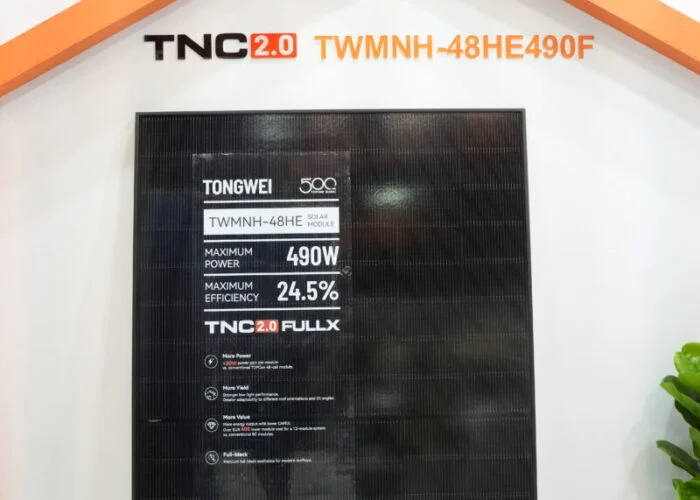
Chinese solar manufacturer Tongwei has ended its plan to acquire a controlling stake in fellow Chinese manufacturer Runergy.
Tongwei aimed to acquire a majority controlling stake of Runergy – of no less than 51% – in August 2024 through a ‘capital increase intention agreement’. At the time, Tongwei aimed to invest up to RMB5 billion (US$687 million) in this transaction, with an initial capital increase of RMB1 billion.
Try Premium for just $1
- Full premium access for the first month at only $1
- Converts to an annual rate after 30 days unless cancelled
- Cancel anytime during the trial period
Premium Benefits
- Expert industry analysis and interviews
- Digital access to PV Tech Power journal
- Exclusive event discounts
Or get the full Premium subscription right away
Or continue reading this article for free
The company argued that despite continuous rounds of communication and consultation aimed to secure the transaction, the transaction fell through due to the two parties failing to agree on commercial terms.
The decision was taken after Tongwei held a held a meeting including members of the boards of directors and supervisors, which decided to terminate the majority share acquisition.
Despite this acquisition falling through, Tongwei said it aimed to discuss a cooperation business between the two companies regarding polysilicon production. However, these details are still in the preliminary stage of discussions, according to Tongwei.
The acquisition of Runergy would have allowed Tongwei to increase its international footprint – it opened its first European branch in November 2024 – with manufacturing plants outside of China.
Last year, Runergy started production of n-type modules at its plant in the US state of Alabama. The plant has an annual nameplate capacity of 2GW.
The company’s main business lies in its cell production, which accounts for nearly 99% of its revenues, but has vertically integrated production capacity from polysilicon to modules.
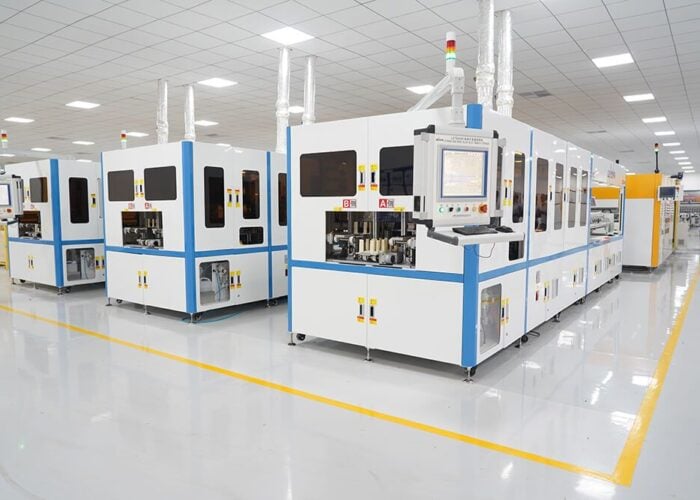
When Tongwei announced its plan to acquire Runergy in August 2024, it was unveiled that the latter had an annual industrial-grade silicon production capacity of 55,000 tons, a polysilicon production capacity of 130,000 tons, ingot pulling capacity of 7GW and slicing capacity of 10GW. Its solar cell capacity was 57GW, and its module annual nameplate capacity of 13GW.
PV Tech reached out to Runergy for comments regarding Tongwei’s decision.