Chinese solar manufacturer Trina Solar has improved the power conversion efficiency of its Vertex N series of modules, with Vertex N 720W+ modules now boasting an efficiency of 23.2%.
The figure improves upon the previous conversion efficiency figure of 22.9%. The company also announced that it had improved the performance of its Vertex N 625W+ modules, increasing their conversion efficiency from 22.8% to 23.1%.
Try Premium for just $1
- Full premium access for the first month at only $1
- Converts to an annual rate after 30 days unless cancelled
- Cancel anytime during the trial period
Premium Benefits
- Expert industry analysis and interviews
- Digital access to PV Tech Power journal
- Exclusive event discounts
Or get the full Premium subscription right away
Or continue reading this article for free
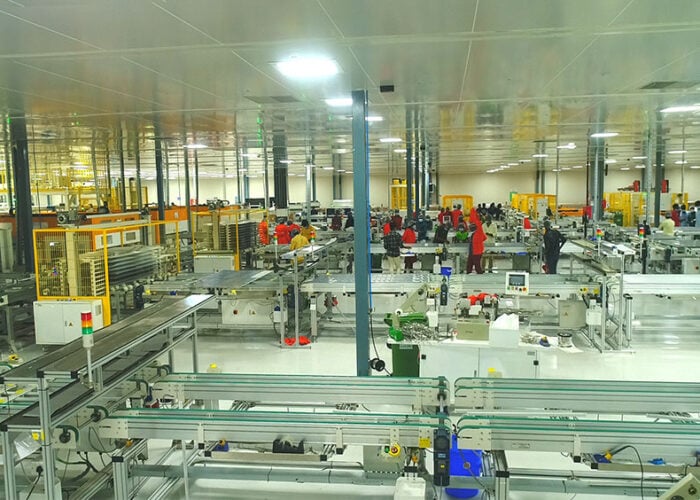
The products are tunnel oxide passivated contact (TOPCon) modules, of which the company started commercial production in August 2023. In the seven months since, Trina Solar has deployed the modules across a number of sectors, including a 2GW utility-scale project in China, and specialised TOPCon modules for use in the commercial and industrial sector.
The Vertex N 700W+ modules had a conversion efficiency of 22.5% when they launched, and the company noted that the latest efficiency improvements are down to a process of “laser induced firing” used in the manufacturing process.
Laser processes have been used in cell manufacturing for years, with research from the Fraunhofer Institute for Solar Energy Systems finding that the use of ‘laser-enhanced contact optimisation’ could improve the power conversion efficiency of TOPCon cells by as much as 0.6% in 2022. This process replaces the conveyor belt furnace process that is typically used to build cells, where the high temperatures required, above 700 degrees Celsius, can lower the voltage of the completed cell, and impede its operating efficiency.
The news is Trina Solar’s latest innovation for its Vertex range, following the modules’ receipt of a carbon footprint certification from US safety verifier UL Solutions earlier this week, as the company seeks to optimise its operations, and minimise its environmental impacts.