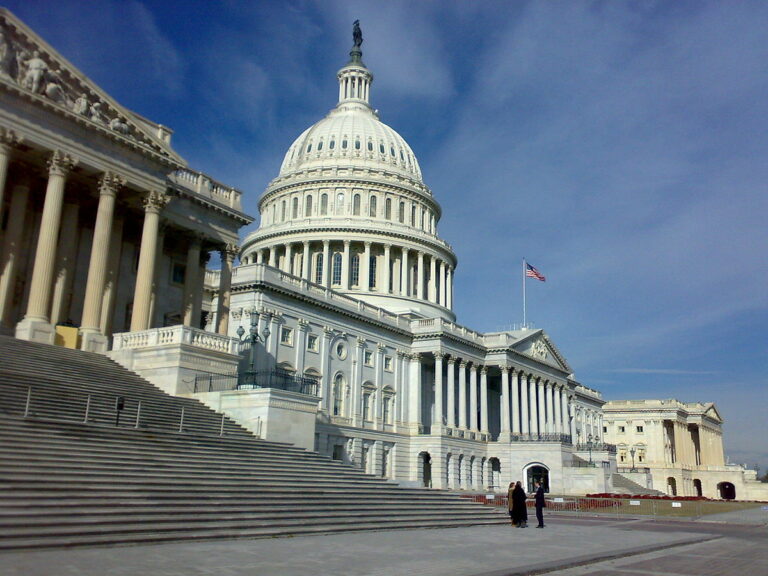
The US House of Representatives is set to vote on the proposal to raise the ceiling debt on Wednesday, a step that prevents the US from reaching its debt limit and avert a default.
Earlier this week, President Joe Biden and the Republicans both announced that they had agreed in principle to raise the US debt ceiling, with Biden describing it as a compromise. The tentative deal reached by the speaker of the US House of Representatives Kevin McCarthy and Biden would raise the debt ceiling until 2025, and includes measures such as rescinding Internal Revenue Service funding.
Try Premium for just $1
- Full premium access for the first month at only $1
- Converts to an annual rate after 30 days unless cancelled
- Cancel anytime during the trial period
Premium Benefits
- Expert industry analysis and interviews
- Digital access to PV Tech Power journal
- Exclusive event discounts
Or get the full Premium subscription right away
Or continue reading this article for free
If the bill passes, it will move on to the Senate but lawmakers will have only several days to approve it before the default deadline on 5 June.
Industry organisations welcomed the news of securing a deal in principle related to the debt ceiling. Jason Grumet, CEO of the American Clean Power Association, said that the agreement includes “an important down payment on much-needed reforms to improve the efficiency of the permitting process for clean energy projects”, such as reasonable timelines for completing environmental reviews, common-sense lead agency authority and expedited consideration for qualifying energy storage projects.
He added: “We look forward to working with lawmakers in both parties to advance more comprehensive bipartisan permitting and transmission reform legislation in the weeks ahead to ensure that the clean energy industry can continue to build on the more than US$150 billion in new project investments announced in the last nine months.”
But Grumet warned that it is critical that Congress build upon these initial steps. Absent significant improvements in the siting and construction of new clean power transmission capabilities will lead to the failure to achieve critical economic, national security and climate goals.
On the other hand, renewable groups in the US, including the American Council on Renewable Energy (ACORE), Advanced Energy United, and the Solar Energy Industries Association (SEIA), recommended reforms to the Federal Power Act. Suggestions included improving interregional planning processes to better reflect the multiple benefits of an interconnected grid, and enhancing the Federal Energy Regulatory Commission’s (FERC) siting authority over critical interstate transmission lines.
The groups said in a letter: “These reforms are essential to realisation of the 21st century transmission grid (that) the US needs to bolster economic competitiveness, ensure grid reliability in the face of increasingly frequent severe weather, and achieve the clean energy transition necessary to address the climate crisis.”