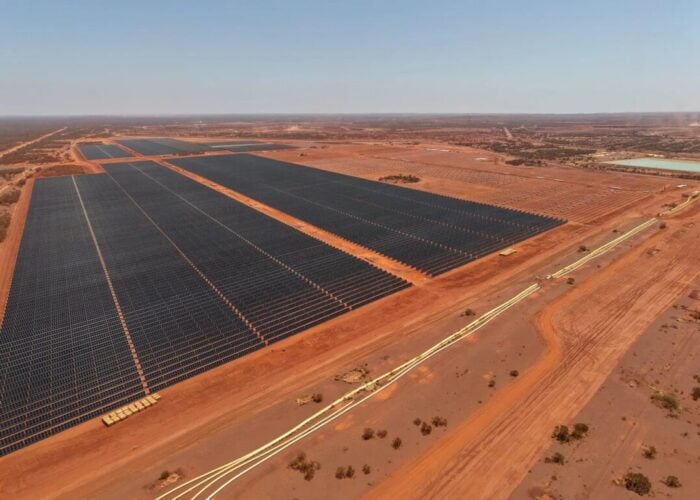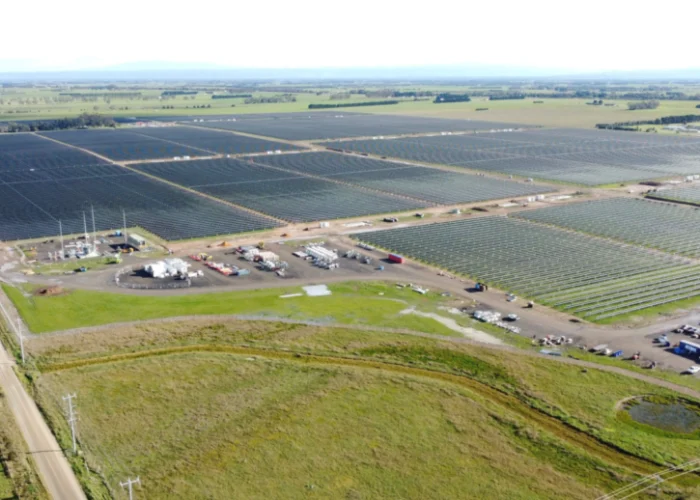
Victoria has launched solar guidelines for installations larger than 1MW in a bid to ensure ease of connection and mitigate impacts on the environment and farming.
The government of the southern Australian state announced this week the formal incorporation of new solar requirements into its planning scheme.
Try Premium for just $1
- Full premium access for the first month at only $1
- Converts to an annual rate after 30 days unless cancelled
- Cancel anytime during the trial period
Premium Benefits
- Expert industry analysis and interviews
- Digital access to PV Tech Power journal
- Exclusive event discounts
Or get the full Premium subscription right away
Or continue reading this article for free
They require that new solar facilities are built in “appropriate locations” that are easily accessible to the electricity transmission network, avoid or minimise impacts on local environments and consider impacts on agricultural and irrigated areas, or areas of environmental importance.
The guidelines include a range of best-practice approaches to help developers engage with communities and ensure the least possible environmental and social impacts of their proposals.
The state’s ministry for planning will now be the responsible authority for permit assessment, reducing the administrative burden on councils and providing consistent decision-making across the state.
The new guidelines come after a string of large-scale solar farms in the state were met with strong local opposition, largely because of claims monopolised agricultural land.
This included a trio of projects with a total capacity of 175MW approved for the Shepparton region of northern Victoria and Infinergy Pacific’s Bookaar solar farm in the state’s south, which was denied planning permission in August.
The new guidelines are the result of a nine-month development process that involved extensive consultation with communities, councils and industry and a review of best-practice standards interstate and internationally, according to a government statement.
Victoria’s expanded rooftop solar rebate under fire again
Victoria's new planning guidelines were codified just as the second round of the state’s newly-revamped and much-criticised rooftop subsidy programme went live on 17 September. Much to the dismay of many, the 3,250 subscriptions were allegedly exhausted in under 20 minutes.
More than 70 people took to Facebook to vent their frustration at the “user-unfriendly,” crash-prone Solar Victoria online application portal and at how quickly the rooftop PV subsidies were fully booked.
Users Ian Jones, Carolyn Bailey, Cameron Hunter and Tianlei Sun all reported that all allocations had been awarded in 18 minutes.
Michael Boss wrote: ‘Was online at 12 on the dot. Sat watching a circle go around for 15 mins. (sic) Then phoned and sat on hold until I was told it is fully subscribed. Surely nobody can be this incompetent?”
The solar incentives cover up to AU$2,225 (US$1,566) per solar panel system.
After the previous allocation of 3,333 rebates a month incurred heavy criticism for being majorly oversubscribed, placing a cap on the market and creating a boom-bust cycle for residential solar installers, the state energy ministry reshaped the program in late August.
The number of rebates available this year was increased from 40,000 to 63,000, while releases were scheduled fortnightly rather than monthly in an attempt to relieve spikes in demand and ensure a steadier supply of work for solar installers.
The subsidy programme was nixed by Victoria’s Labor government in April 2019 and re-instated three months later with the monthly cap.
Two separate public protests were held this summer in in Melbourne, Victoria's capital, against the rebate rationing.