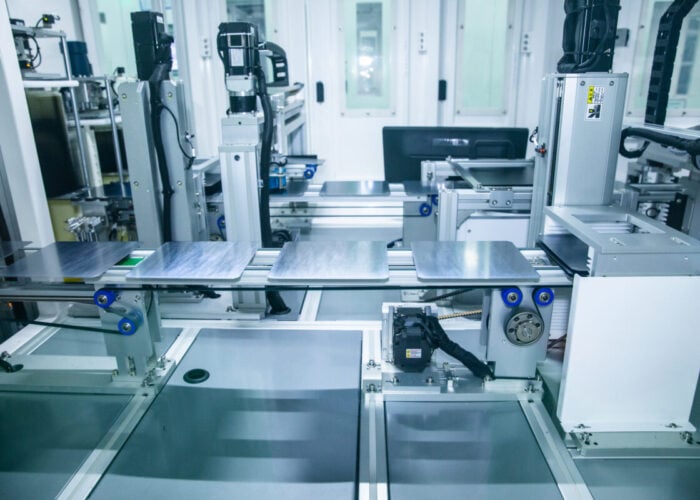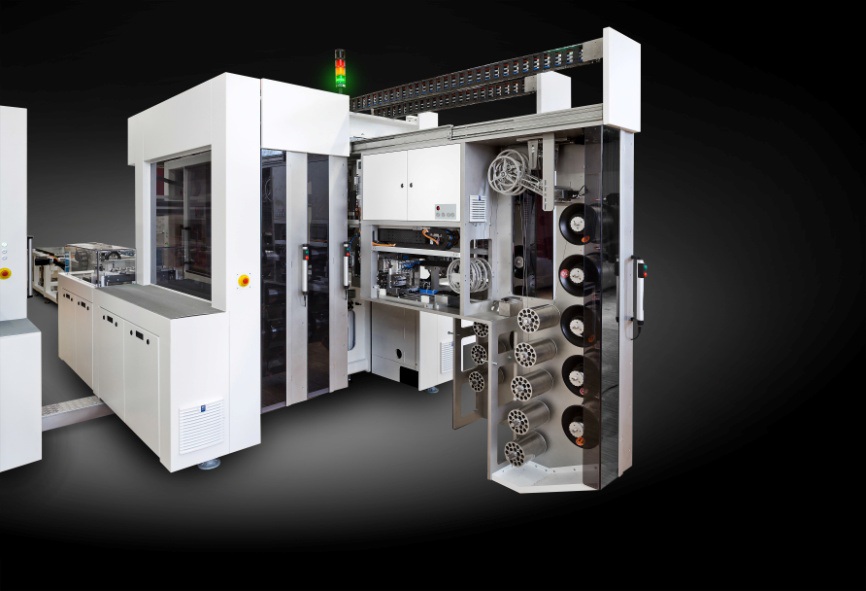
M10 Industries' ‘Kubus’ multi-tray stringer is claimed to offer uninterrupted production and an output of up to PV 5,000 cells per hour.
Problem
Try Premium for just $1
- Full premium access for the first month at only $1
- Converts to an annual rate after 30 days unless cancelled
- Cancel anytime during the trial period
Premium Benefits
- Expert industry analysis and interviews
- Digital access to PV Tech Power journal
- Exclusive event discounts
Or get the full Premium subscription right away
Or continue reading this article for free
A key problem for PV module manufacturers is a lack of space and manpower to operate assembly tools with high throughput in existing facilities. This limits the potential for debottlenecking and expanding existing nameplate capacity at low capital expenditure levels.
Solution
The Kubus multi-tray stringer enables PV modules to be produced at 45 second intervals, or up to 80 modules per hour, at least three times as many as with previous stringers, according to the company. The stringer solders up to six solar cells side by side to form a complete cell matrix for modules. For this purpose the cells are transported on tooling plates – referred to as so-called “trays”. Up to now only single ‘strings’ have been generated which have to be placed by side by side in a module. This step of the process can be entirely omitted and therefore also the risk of cell breakage minimised. Kubus can be operated by a single staff member and by taking up 90 square meters it does not require more space than previous stringers, despite its far higher throughput, according to M10.
Applications
High-volume flexible stringing of two to five-busbar cells and 6″ half-cells.
Platform
The Kubus was also designed to be flexible and can handle soldering cells with up to five busbars and 6″ half-cells. The modular approach enables the system to be maintained at all times, even during maintenance periods, thereby enabling greater efficiency such as ribbon coils that can be exchanged at any time without interrupting the production process.
Availability
Curently available.