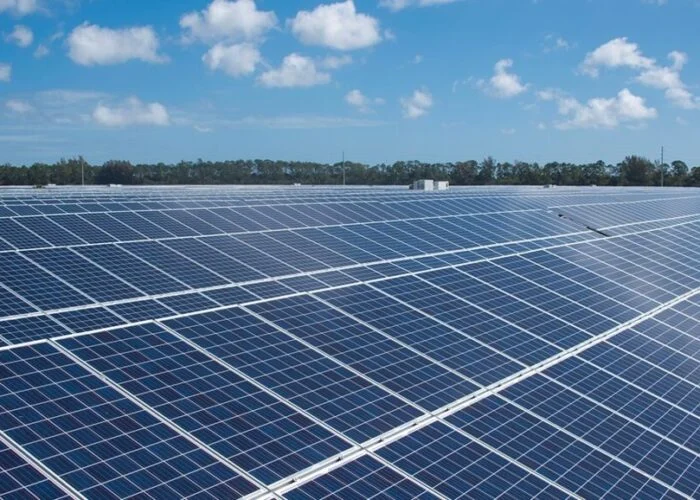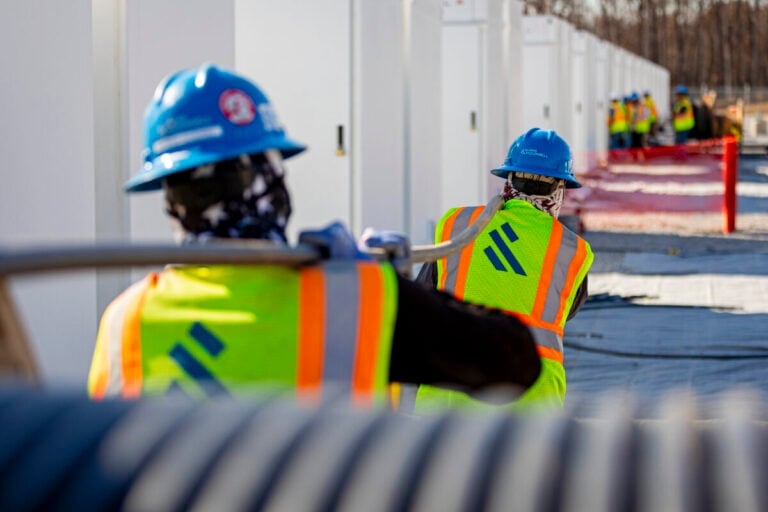
US engineering, procurement and construction (EPC) firm Burns & McDonnell has partnered with Gritt to deploy AI-powered robotics technology for utility-scale solar construction.
The companies have spent the past year evaluating Gritt’s robotic solar installation technology at multiple utility-scale project sites, testing its performance in real-world construction environments. They said it could focus on safety, project predictability and labour challenges.
Try Premium for just $1
- Full premium access for the first month at only $1
- Converts to an annual rate after 30 days unless cancelled
- Cancel anytime during the trial period
Premium Benefits
- Expert industry analysis and interviews
- Digital access to PV Tech Power journal
- Exclusive event discounts
Or get the full Premium subscription right away
Or continue reading this article for free
Gritt’s platform combines AI software with robotics systems that can be attached to conventional construction equipment. The technology is designed to automate labour-intensive tasks including solar array placement and assembly, concrete pouring and rebar installation.
“Solar construction is very repetitive work, lifting 80-pound modules day after day,” says Adam Bernardi, renewables business line director at Burns & McDonnell. “As solar installations continue to grow in scale, we have an opportunity to leverage technology in ways that help our teams work safer, faster and smarter. By helping crews handle some of the most repetitive and physically demanding tasks, Gritt offers a solution that can improve safety while helping us deliver projects more predictably.”
Unlike robotics developed for controlled factory environments, Gritt’s systems are designed for outdoor construction sites, where terrain, weather and site conditions can vary. the company said. The technology is intended to support crews with repetitive and physically demanding tasks while adapting through data gathered during field deployments.
According to the companies, the technology is intended to complement construction workers rather than replace them, reducing exposure to repetitive tasks and allowing crews to focus on higher-value activities.
Gritt’s systems can continue to learn from deployments, using experience from changing weather, terrain, site logistics and construction workflows to improve performance.
Burns & McDonnell and Gritt said the partnership could eventually support wider adoption of AI and robotics across infrastructure construction.
Burns & McDonnell has provided EPC services on several utility-scale solar projects across the US, including Alliant Energy’s two Iowa solar projects totalling 200MW and Geronimo Power’s 250MW Portage Solar project in Wisconsin.
The company also spoke to PV Tech about the growing importance of eBOS in utility-scale solar [subscription required], with Burns & McDonnell’s solar preconstruction manager Grant Reasor saying the focus is increasingly on “consistency in the field and repeatability” as developers seek to reduce construction labour and complexity.