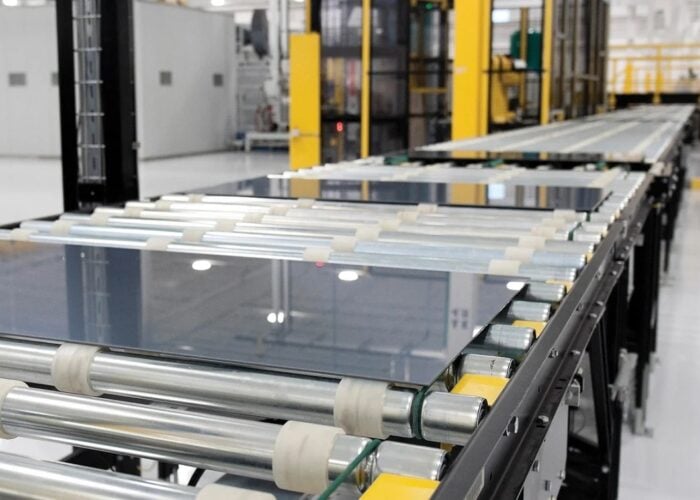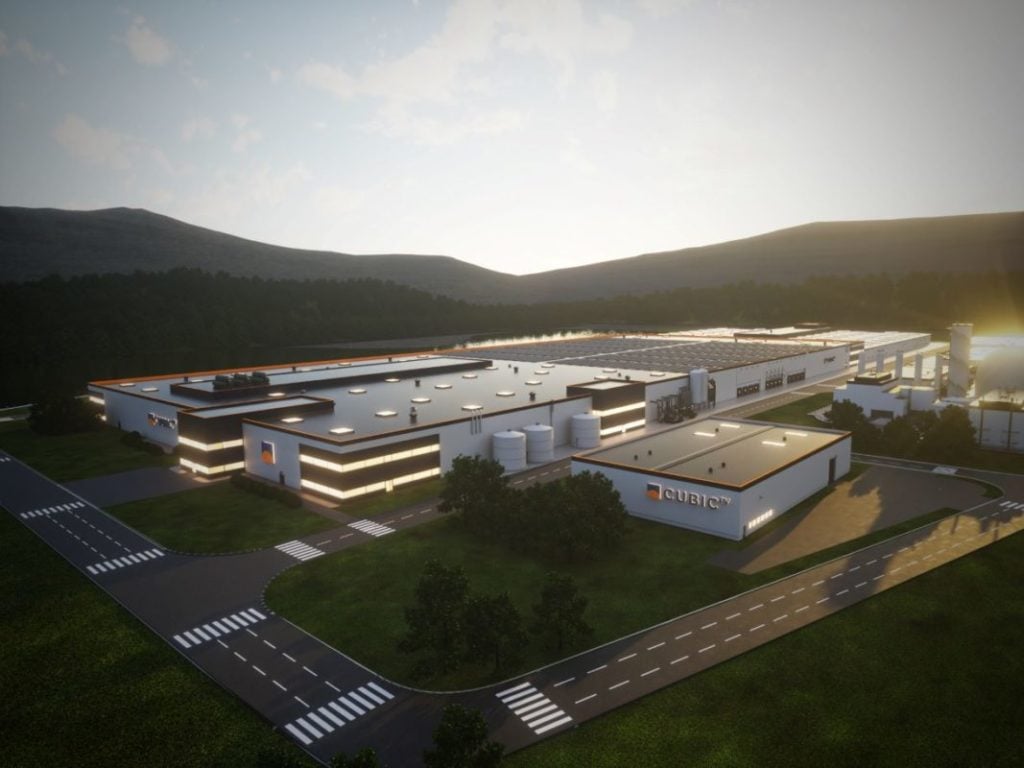
US solar manufacturer CubicPV has abandoned its plans for a 10GW solar wafer manufacturing facility in the US and is “restructuring” its business to focus on tandem technology module development.
The company’s CEO and solar industry veteran, Frank Van Mierlo, has also stepped down.
Try Premium for just $1
- Full premium access for the first month at only $1
- Converts to an annual rate after 30 days unless cancelled
- Cancel anytime during the trial period
Premium Benefits
- Expert industry analysis and interviews
- Digital access to PV Tech Power journal
- Exclusive event discounts
Or get the full Premium subscription right away
Or continue reading this article for free
In a statement, CubicPV blamed “market dynamics including a dramatic collapse in wafer prices and a surge in construction costs” for its failure to realise a domestic manufacturing base. Jobs that were tied to the wafer production facility have been cut.
Van Mierlo said: “Together with our board, we’ve concluded that the one thing that could truly make a difference in humanity’s fight against climate change and the US’s ability to realise a solar manufacturing renaissance is to invent a better panel. Moving forward, the Cubic team is fully dedicated to delivering this solution to the world. I’m proud of what we’ve accomplished and know there is more to come.”
CubicPV first announced plans for the 10GW facility in December 2022, which it said would be developed alongside its work on silicon-perovskite tandem solar technology. Over the course of 2023 the company received a US$103 million equity financing deal to support the factory, announced an engineering partner and, most recently, inked a US$1 billion polysilicon supply deal with South Korean-owned producer OCIM.
Concerns over solar module prices has been the reason for the abandonment of a number of solar manufacturing plans of late, but the majority have been in Europe. As discussed in a long read published today on PV Tech, the European manufacturing sector has been brought to its knees by drastically falling prices on solar imports that have pushed companies out of the marketplace.
CubicPV is one of the first companies operating in the US to abandon manufacturing plans due to price pressure, as the Inflation Reduction Act (IRA) has had a cushioning effect for US companies. Incentives in the IRA, however, seem to have mostly stimulated investment into module assembly plants rather than the further upstream, more complex portions of the solar supply chain, like wafers, which CubicPV was targeting.
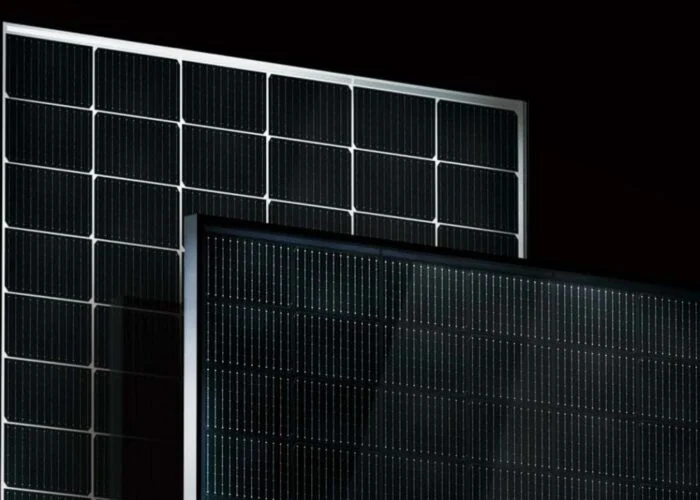
The company will now focus its business on developing and commercialising perovskite solar products.
High-performance perovskite-based solar products have so far eluded commercial production, predominantly due to the unsustainable rates of degradation the material suffers when exposed to the elements. CubicPV has been seen as one of the most viable companies trying to develop the technology in the US; it is backed by Bill Gates’ Breakthrough Energy Ventures and Southeast Asian conglomerate SCG, and has attracted notable names from the solar industry like First Solar’s Bruce Sohn and, until today, Van Mierlo.
Of its work on perovskites, the company said: “Cubic’s module-centric approach simultaneously addresses stability, reproducibility and efficiency and promises to solve the durability challenge that has slowed the commercialisation of perovskite material use in solar panels.”
Earlier this week, solar research institute Oxford PV and testing house Fraunhofer ISE announced a “record-breaking” perovskite-tandem module with a 25% conversion efficiency.