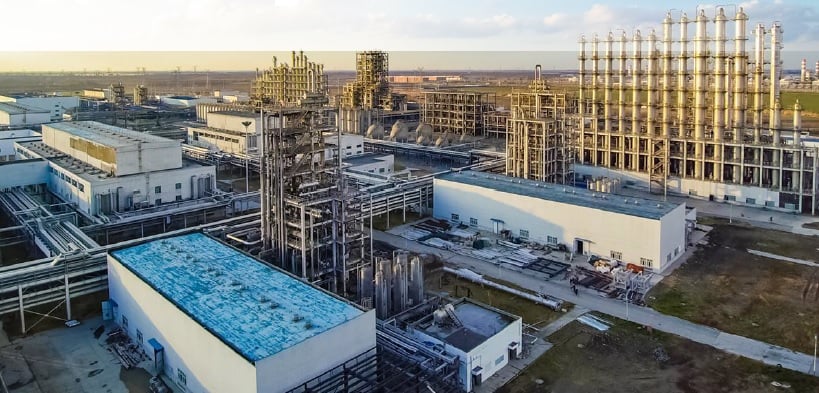
Polysilicon producer Daqo New Energy posted record company profits in Q3 2021 as the company rode a wave of polysilicon price hikes, but warned of a challenging environment for future capacity expansions.
Despite polysilicon production costs rising by around 10% on the back of high silicon powder costs during the reporting period, average selling prices for polysilicon rose by 32% to US$27.55/kg throughout Q3, sending revenues up by 33% to US$585.8 million.
Try Premium for just $1
- Full premium access for the first month at only $1
- Converts to an annual rate after 30 days unless cancelled
- Cancel anytime during the trial period
Premium Benefits
- Expert industry analysis and interviews
- Digital access to PV Tech Power journal
- Exclusive event discounts
Or get the full Premium subscription right away
Or continue reading this article for free
This resulted in a record quarterly gross profit figure of US$435.2 million, equivalent to a gross margin of some 74.3%.
Furthermore, polysilicon ASPs have continued to rise into the fourth quarter, driven by increasing silicon powder and energy prices in China. Daqo noted that it had realised ASPs of US$33 – 35/kg throughout Q4 to date, with prices currently hovering at between US$35 – 36/kg.
Zhang said that as a result of continued high demand for polysilicon it has been able to pass on effectively all increases within its cost base onto its customers, with impacts to its cost structure expected to continue. Despite this, Daqo did stress that silicon powder prices have stabilised in recent weeks.
On a conference call with analysts following its results disclosure, the company’s finance chief Ming Yang said that the company’s cost structure was “difficult to determine” for its fourth quarter. Silicon powder prices are currently in the US$8 – 10/kg range, having been US$2.50 – 3/kg in Q3, however prices are expected to abate into next year. Zhang also said the company had seen a limited impact to production as a result of controls and limitations on energy consumption in China amidst a broader energy crisis in the country.
Daqo confirmed that its Phase 4B capacity expansion, which is to add a further 35,000MT of production capacity, remains on schedule and is set to finish construction later this quarter before ramping up to full production by the end of Q1 2022.
The company has a target of achieving total annual production capacity of 270,000MT by the end of 2024, however Zhang warned that the pace of polysilicon capacity expansion would slow in the future as a result of quotas concerning energy consumption and carbon emissions in China, factors which he said made for a “challenging” environment.
Daqo has started identifying prospective sites for future capacity expansions but said it would do so with renewable energy supply in mind, intending to produce ‘green polysilicon’ in the future.
In guidance for Q4 2021, Daqo said it expected to produce between 83 – 85,000MT of polysilicon in total this year, indicating a Q4 2021 production total of between 22 – 22,000MT.