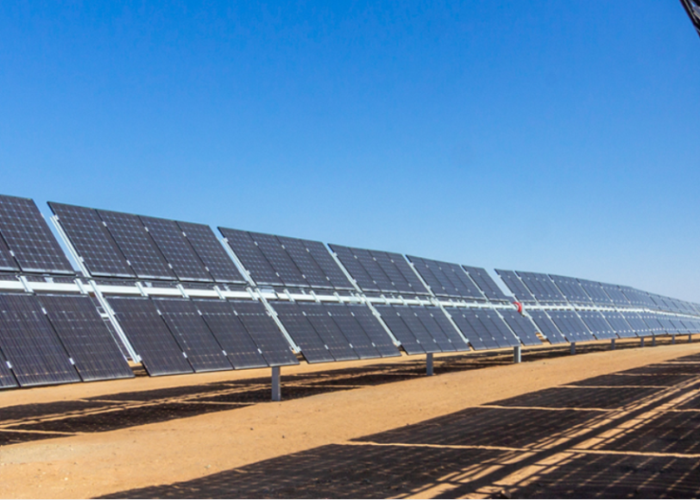
Solar power saved the European Union €20 billion (US$22 billion) in gas imports between 1 March and 15 July, according to an analysis published by European trade body SolarPower Europe.
The EU’s solar fleet avoided the purchase of billions of cubic metres of imported gas during the 137-day period, helping strengthen energy security as gas prices surged following the outbreak of conflict in the Middle East and disruption to global shipping routes.
Try Premium for just $1
- Full premium access for the first month at only $1
- Converts to an annual rate after 30 days unless cancelled
- Cancel anytime during the trial period
Premium Benefits
- Expert industry analysis and interviews
- Digital access to PV Tech Power journal
- Exclusive event discounts
Or get the full Premium subscription right away
Or continue reading this article for free
Walburga Hemetsberger, CEO of SolarPower Europe, said: “Every megawatt-hour generated by solar power reduces our dependence on imported fossil fuels and makes Europe safer.”
Solar generation delivered average savings of €146 million per day, the analysis said. The figure exceeded France’s average daily defence spending under its 2025 budget, which amounted to around €143 million per day.
The analysis followed earlier estimates from SolarPower Europe that solar had saved the EU €10 billion in gas imports by May. In March, avoided gas imports reached €110 million per day, with cumulative savings of €3.76 billion during the month.
SolarPower Europe had previously reported that the EU’s solar fleet generated 19.9TWh of electricity in the first 2.5 weeks following the outbreak of war. Replacing that generation with gas-fired power would have required an additional €1.9 billion in imports, adding 32% to the €6 billion spent on fossil fuel imports during the same period, the trade body said.
“This news follows solar becoming EU’s largest single source of electricity in June, supplying 25% of the bloc’s power. It’s a demonstration of the returns on Europe’s investment in abundant, homegrown renewable energy resources,” added Hemetsberger.

“We can go further and faster. Deeper electrification, more renewable generation and non-fossil flexibility solutions such as battery storage are the answer. Combined, they can shield Europe from the risk of future fossil fuel price shocks, and that’s the route to long-term energy security in the EU.”
The savings came as solar PV reached record levels across Europe. According to analysis from energy think tank Ember, solar PV accounted for 25% of EU electricity generation in June 2026, producing 52TWh and becoming the bloc’s largest electricity source for the month, ahead of nuclear power at 21%.
It marked only the third time solar PV had been the EU’s largest electricity source for a month, following June 2025 and May 2026.
Europe’s growing renewable capacity had already reshaped the region’s power mix. Earlier this year, Ember reported that solar and wind generated 30% of EU electricity in 2025, surpassing fossil fuel generation at 29% for the first time. Coal generation continued its long-term decline, reaching historic lows in the European energy mix.