Hanwha Q CELLS lowers full-year module shipment guidance as growth slows

Facebook
Twitter
LinkedIn
Reddit
Email
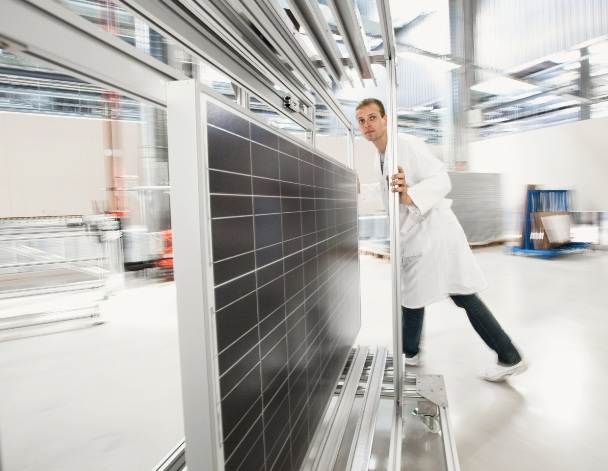
The SMSL said total module shipments in 2018 would be in the range of 5,500MW to 5,700 MW, down slightly from previously lowered guidance of 5,600MW to 5,800MW. Initial guidance for 2018 had been shipments in the range of 6,000MW to 6,200MW. Image: Hanwha Q CELLS

‘Silicon Module Super League’ (SMSL) member Hanwha Q CELLS has lowered its full-year module shipment guidance a second time this year as business growth slows.

The SMSL said total module shipments in 2018 would be in the range of 5,500MW to 5,700 MW, down slightly from previously lowered guidance of 5,600MW to 5,800MW. Initial guidance for 2018 had been shipments in the range of 6,000MW to 6,200MW. 

This article requires Premium SubscriptionBasic (FREE) Subscription

Try Premium for just $1

  • Full premium access for the first month at only $1
  • Converts to an annual rate after 30 days unless cancelled
  • Cancel anytime during the trial period

Premium Benefits

  • Expert industry analysis and interviews
  • Digital access to PV Tech Power journal
  • Exclusive event discounts

Or get the full Premium subscription right away

Or continue reading this article for free

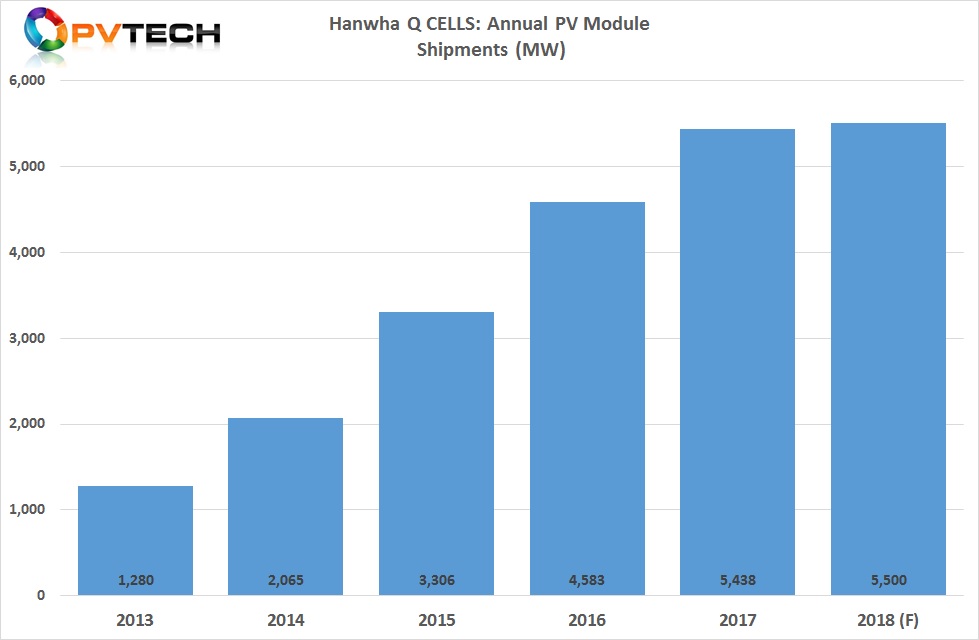
Total module shipments in 2017 were 5,438MW, indicating shipment growth of almost zero to potentially 262MW for 2018.
Total module shipments in 2017 were 5,438MW, indicating shipment growth of almost zero to potentially 262MW for 2018.

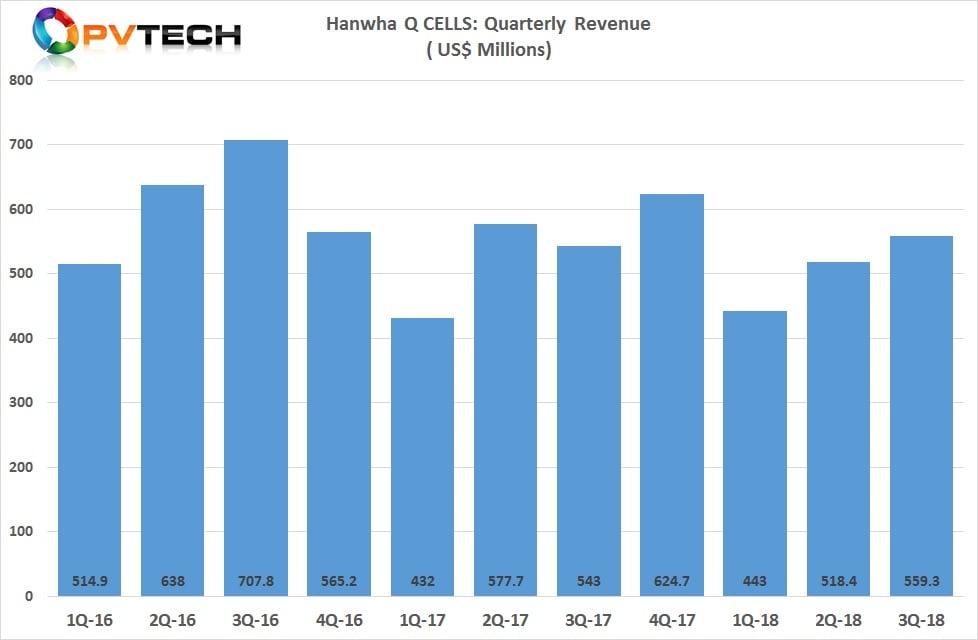
The company reported third quarter revenue of US$559.3 million, up 7.9% from US$518.4 million in the second quarter of 2018. 

The company reported third quarter revenue of US$559.3 million, up 7.9% from US$518.4 million in the second quarter of 2018.
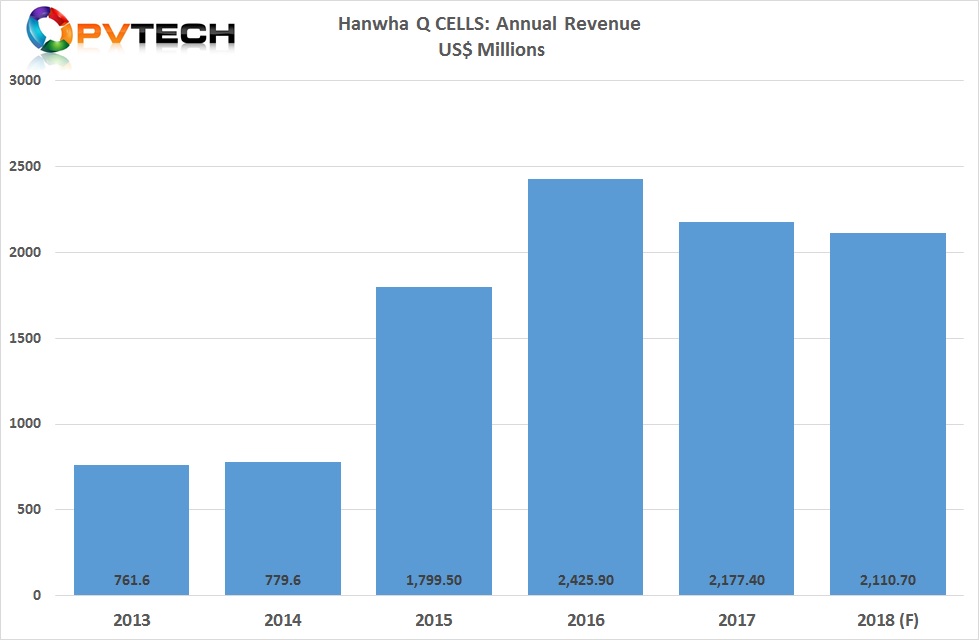
Total revenue for the fourth quarter of 2018 was expected to be in the range of US$590 to US$610 million, indicating full-year revenue to in the range of US$2,110 to US$2,130.7 million, compared to 2017 revenue of US$2,177.4.
Total revenue for the fourth quarter of 2018 was expected to be in the range of US$590 to US$610 million, indicating full-year revenue to in the range of US$2,110 to US$2,130.7 million, compared to 2017 revenue of US$2,177.4.

Hanwha Q CELLS reported a US$108.2 million one-time loss associated with the discontinuation of its China-based ingot manufacturing operations (1.6GW) in September, 2018.

Gross loss in the third quarter of 2018 was US$35.3 million, compared to a gross profit of US$72.6 million in the second quarter of 2018.
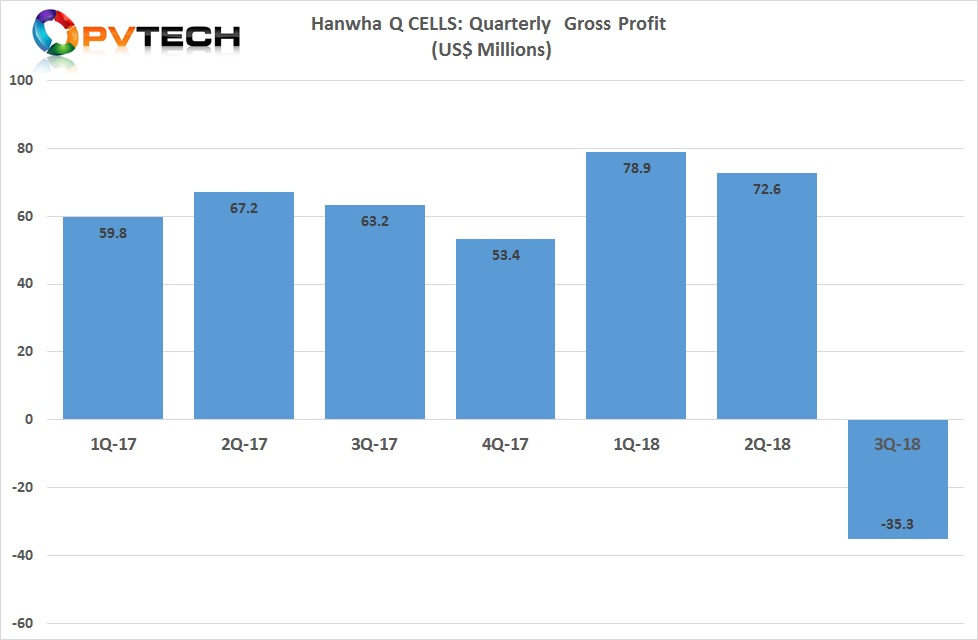
Gross loss in the third quarter of 2018 was US$35.3 million, compared to a gross profit of US$72.6 million in the second quarter of 2018.

Gross margin was -6.3%, compared with 14.0% in the second quarter of 2018. Excluding the one-time effects related to the closure of its ingot manufacturing operations, gross margin for the third quarter of 2018 would have been 13.0%. Increased shipment volume in the quarter was said to have mitigated the effects of declining ASPs.
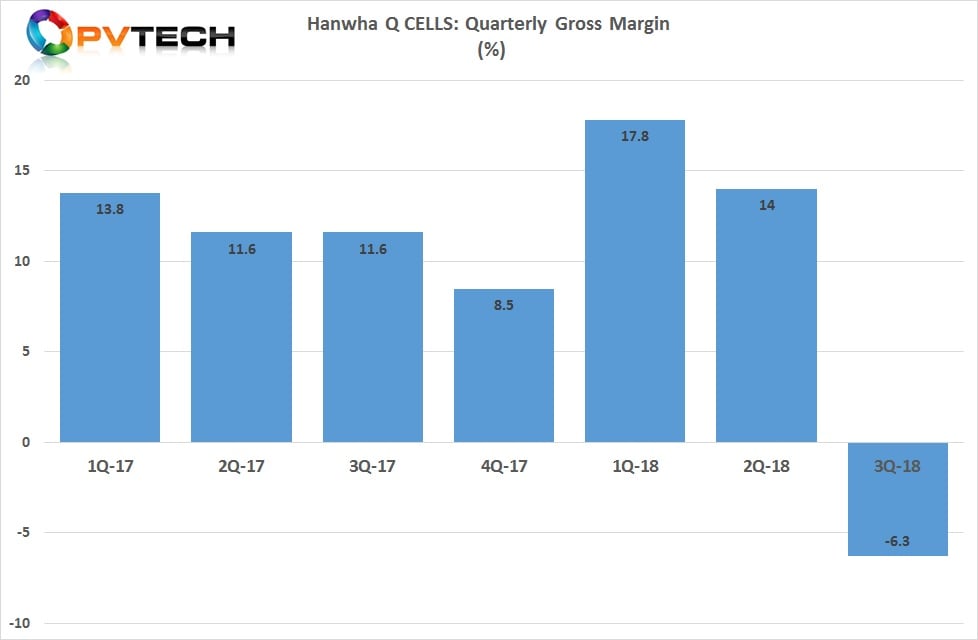
Gross margin was -6.3%, compared with 14.0% in the second quarter of 2018.

The company reported an operating loss of US$107.0 million, compared with an operating income of US$4.8 million in the second quarter of 2018. However, excluding one-time effects, operating income for the third quarter of 2018 would have been US$17.9 million.

At the end of the reporting period, Hanwha Q CELLS had cash and cash equivalents of US$197.4 million, compared with US$156.5 million at the end of the first quarter of 2018. 
Read Next

September 1, 2026
US module production is at a near saturation point, but significant capacity gaps persist further up the supply chain, writes head of PV Tech Research, Moustafa Ramadan.
August 31, 2026
Head of PV Tech Research, Moustafa Ramadan, kicks off a five-part series tracing the evolution and future of the US solar manufacturing supply chain.
August 28, 2026
Importing solar modules to the US will “no longer make any economic sense” under new Section 232 tariffs for polysilicon-based products, according to Intertek CEA.
Premium
August 27, 2026
Domestically produced solar glass is a key gap in the US PV manufacturing ecosystem. Tom Kenning reports on efforts to kick-start local production of this vital material
Premium
August 25, 2026
PV Tech sat down with Scott Graybeal, CEO of Caelux, to discuss the company's tech, its deals in India and the impact of perovskite solar.
August 24, 2026
Stronger downstream demand drove a surge in wafer prices last week, according to the latest figures from the Silicon Industry Branch of the China Nonferrous Metals Industry Association.

Upcoming Events

Solar Media Events
October 13, 2026
San Francisco Bay Area, USA
Solar Media Events
November 3, 2026
Málaga, Spain
Solar Media Events
November 24, 2026
Warsaw, Poland
Solar Media Events
February 2, 2027
London, UK