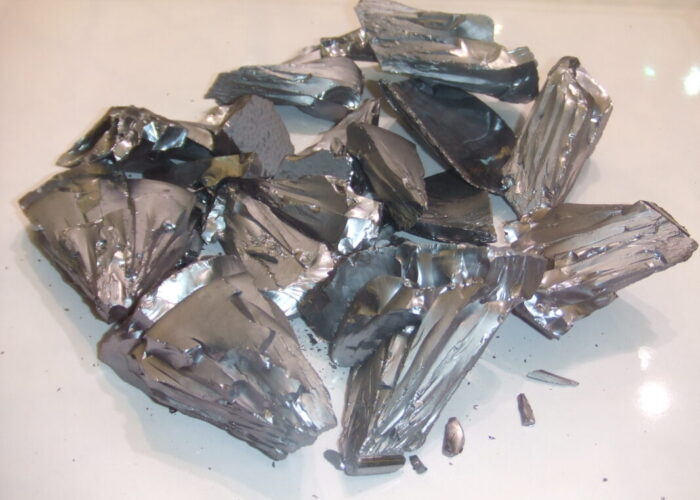
Silicon materials producer REC Silicon has signed a full-form supply agreement with Hanwha Solutions’ subsidiary Hanwha Qcells Georgia, to supply high-purity fluidised bed reactor (FBR) granular polysilicon, produced from REC Silicon’s idle facility in Washington.
Based on the ten-year agreement, REC Silicon will supply Hanwha Qcells Georgia with its high-purity granular production from the facility at Moses Lake, Washington. REC Silicon said the total value of the agreement will fluctuate depending on market prices, but it is estimated to be around US$3 billion.
Try Premium for just $1
- Full premium access for the first month at only $1
- Converts to an annual rate after 30 days unless cancelled
- Cancel anytime during the trial period
Premium Benefits
- Expert industry analysis and interviews
- Digital access to PV Tech Power journal
- Exclusive event discounts
Or get the full Premium subscription right away
Or continue reading this article for free
Moreover, the base price for the FBR granular polysilicon in the agreement will be determined by market indices representative of markets outside and inside of China. The price will also be adjusted for a premium for US-sourced low-carbon material.
The base price is subject to both a price minimum and maximum that protects REC Silicon against potential low market prices in the near term for the first five years. For the second five years of the agreement, there will be no minimum or maximum prices.
The polysilicon will also benefit from the US$3 per kilogram tax credit from the Inflation Reduction Act (IRA).
A spokesperson from Qcells said: “The American-made, low-carbon polysilicon produced at REC Silicon’s Moses Lake facility in Washington will be used for ingot/wafer manufacturing at the new Qcells manufacturing facility in Georgia, which will begin operation late next year.”
The agreement also helped restart REC Silicon’s Moses Lake manufacturing plant. Kurt Levens, CEO of REC Silicon, said “it’s important to have a high-quality offtake partner”.
“The process remains on schedule and budget for a restart by 1 November 2023, with an ambition to reach full capacity utilisation by year end 2024,” said Levens.
Both companies announced the deal in February. At that time, REC Silicon said a full-form agreement including all operational details will be entered by both companies “in the coming months”.