Hawke’s Bay Airport has opened an Expression of Interest (EOI) process seeking delivery and co-investment partners for a proposed 12-17MW solar PV power plant on airport land in New Zealand.
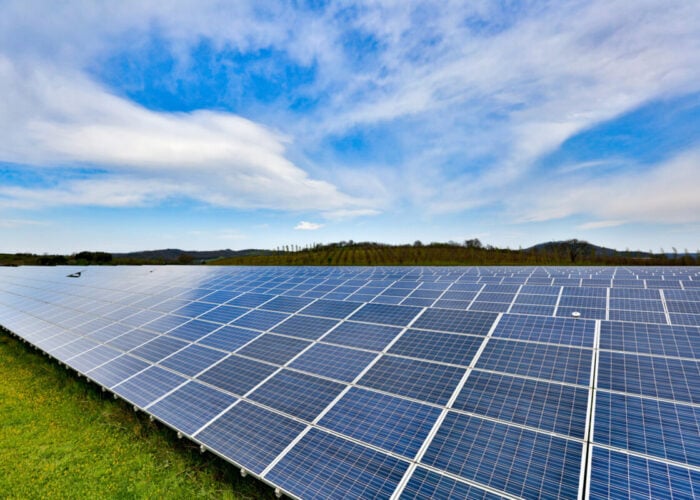
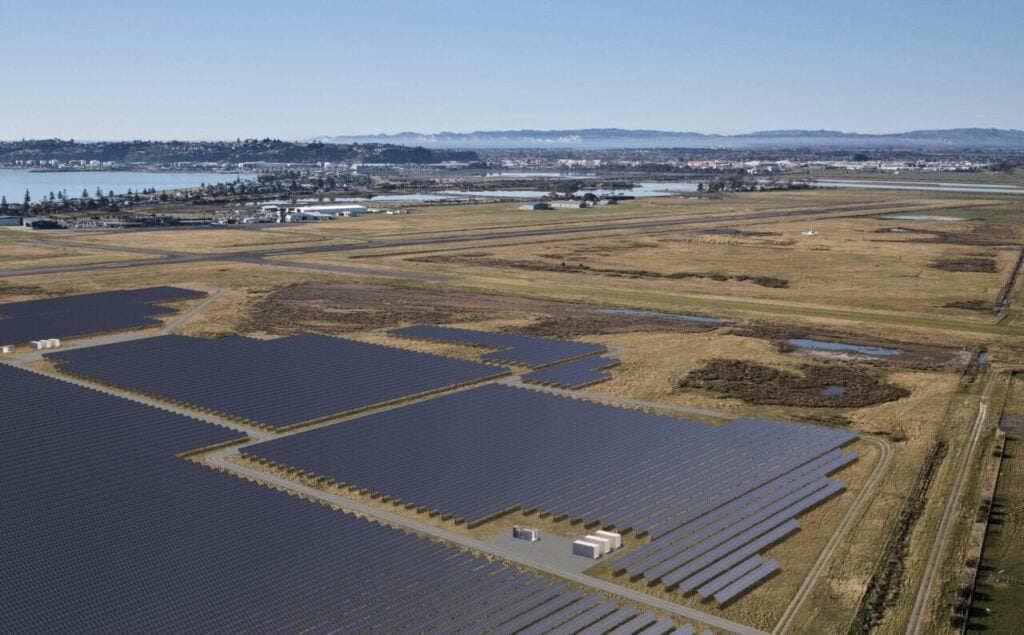
The project would be built on a 24-hectare site northwest of the runways at Hawke’s Bay Airport, serving the Napier and Hastings region on the country’s North Island.
Try Premium for just $1
- Full premium access for the first month at only $1
- Converts to an annual rate after 30 days unless cancelled
- Cancel anytime during the trial period
Premium Benefits
- Expert industry analysis and interviews
- Digital access to PV Tech Power journal
- Exclusive event discounts
Or get the full Premium subscription right away
Or continue reading this article for free
Airport chief executive Nick Flack said the development would establish an infrastructure foundation for an aviation sector expected to rely far more heavily on renewable energy electricity by 2050, potentially up to 20 times current levels.
The EOI stage follows an earlier, larger proposal. Hawke’s Bay Airport had previously explored a 45MW solar development with Manawa Energy, since acquired by Contact Energy, before the two parties mutually agreed to scale the project back to a size better aligned with the airport’s long-term requirements.
No final investment decision has been made on the smaller project, with feasibility work continuing alongside consenting, engineering, and cultural and community engagement over the next 12 months.
Flack said the current phase is intended to gauge market appetite for construction delivery, operations and maintenance, and potential co-investment structures ahead of a decision on ownership.
Part of a wider push for renewable-powered airport infrastructure
Airports pursuing dedicated on-site renewable energy generation and storage have become more common across the Australia-New Zealand region.
In Australia, CleanPeak Energy signed a 15-year agreement to supply Western Sydney International Airport with 100% renewable energy, combining a 9MWp rooftop solar system with 30MW/120MWh of battery storage ahead of the airport’s opening in late 2026.
Unlike Hawke’s Bay’s ground-mounted proposal, that arrangement sees CleanPeak retain ownership of the assets while supplying output to the airport under a long-term energy services agreement, a structure that avoids upfront capital costs for the airport operator.
Hawke’s Bay’s project sits within a broader pattern of solar development activity across New Zealand’s Hawke’s Bay region specifically. Lodestone Energy and Centralines began construction on the 31.5MWp Central Hawke’s Bay solar plant in July 2026, a 50:50 joint venture with the local lines company expected to reach commercial operation by autumn 2027.
Further north in the Bay of Plenty, Aquila Clean Energy energised its 38MW solar PV plant, adding to a national utility-scale solar pipeline that has expanded quickly following the country’s 2024 energy crisis, when low hydro storage and declining gas supply exposed the risks of New Zealand’s historic reliance on hydropower.
That expansion has coincided with government efforts to address regulatory friction slowing smaller-scale solar deployment.
New Zealand’s Ministry for Regulation recently published a review finding the country’s residential and small-to-medium-scale solar installation process more complicated than it needs to be, citing inconsistent council requirements, distributor approval times ranging from minutes to four months, and only 3-4% of New Zealand households currently having solar installed compared with more than 30% in Australia.
While that review targeted small-scale residential systems rather than utility-scale developments like Hawke’s Bay’s proposed solar PV power plant, it points to broader momentum behind solar deployment across the country, spanning both distributed and utility-scale segments, as New Zealand works to diversify a generation mix historically dominated by hydropower.