Major Chinese module manufacturer LONGi has launched its Hi-MO X6 series of solar modules, which include the X6 Guardian product, designed for use in hot and humid climates.
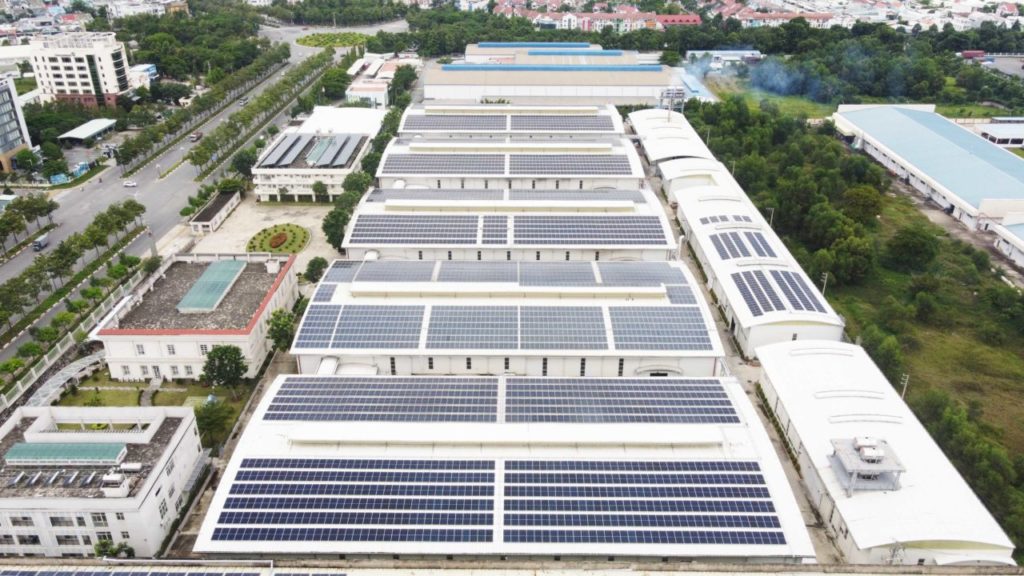
The modules are bifacial dual-glass products and use hybrid passivated back contact (HBPC) cells, and LONGi unveiled the products at the China (Jinan) International Solar Energy Utilization Conference, held over the last five days in China. Modules in the X6 series are also designed for use in what the company calls a “wide range” of distributed applications, including rooftop installations, PV carports and winter gardens.
Try Premium for just $1
- Full premium access for the first month at only $1
- Converts to an annual rate after 30 days unless cancelled
- Cancel anytime during the trial period
Premium Benefits
- Expert industry analysis and interviews
- Digital access to PV Tech Power journal
- Exclusive event discounts
Or get the full Premium subscription right away
Or continue reading this article for free
The products are tailored for use in what the company calls “damp heat” environments, where temperatures and humidities are high and can damage solar modules, such as leakage degradation and hydrolysis reactions. They benefit from a number of innovations, including a water-resistant sealant solution to connect components together and what the company calls a “customised electrode paste” to ensure modules are resistant to degradation in humid environments.
LONGi notes that the Hi-MO X6 Guardian, in particular, experienced only 45% of the degradation of tunnel oxide passivated contact (TOPCon) modules during testing when exposed to damp heat environments. The company first deployed the modules last year in Japan and noted that the modules boasted a conversion efficiency of 25.5-25.8% and drove an improvement in power generation performance of 6-10% compared to older modules.
The company has also developed a crystalline-perovskite tandem solar cell with a conversion efficiency of 33.9%, the highest on record for this type of cell.
LONGi’s launch of the Hi-MO X6 products marks an investment into modules that can be deployed immediately, rather than those at the early stage of development, and follows a number of new module launches in recent years. In the last 18 months, LONGi has launched both the Hi-MO 6 and Hi-MO 7 series of modules, which boast a conversion efficiency of 22.8% and 22.5%, respectively.
The launch of the Hi-MO X6 modules also aligns with the company’s growing interest in deploying solar products in parts of the world with damp heat environments, such as Southeast Asia. Last September, the company announced plans to supply “advanced modules” to Indonesian solar projects, and while LONGi did not specify which modules would be delivered as part of this agreement, it is notable that the company has now launched a product that would function effectively in the Indonesian climate.