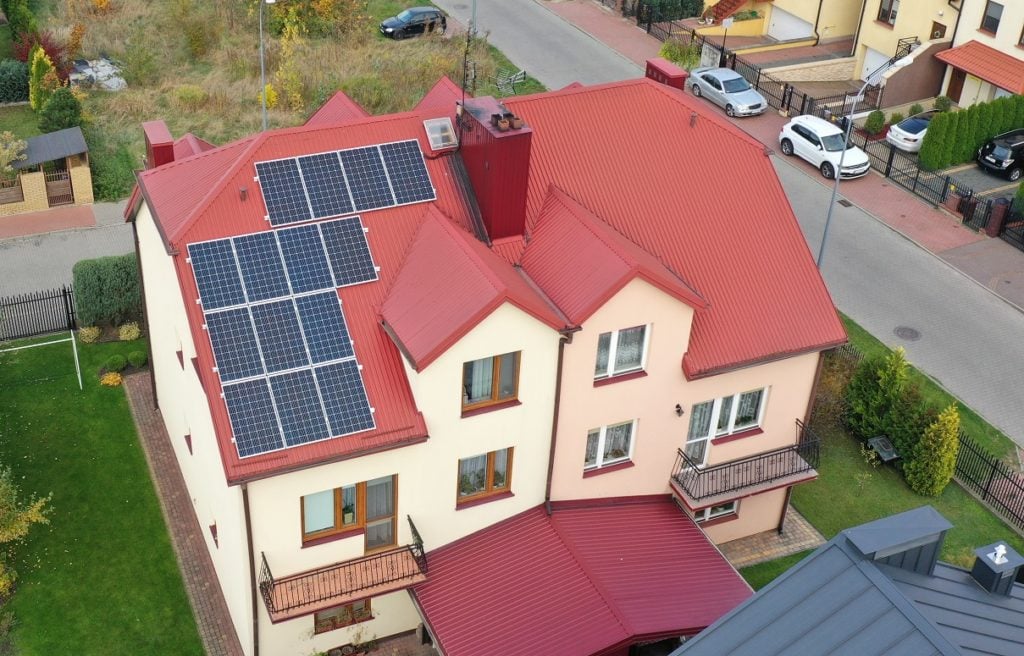
Trade association SolarPower Europe has welcomed a proposal from the European Union’s executive branch that would see all new buildings in the bloc be powered by renewables “as far as possible” and emit no on-site carbon emissions from fossil fuels from 2030.
The European Commission (EC) has proposed that the new rules around the energy performance of buildings will align with the European Green Deal as part of a revised Energy Performance of Buildings Directive (EPBD).
Try Premium for just $1
- Full premium access for the first month at only $1
- Converts to an annual rate after 30 days unless cancelled
- Cancel anytime during the trial period
Premium Benefits
- Expert industry analysis and interviews
- Digital access to PV Tech Power journal
- Exclusive event discounts
Or get the full Premium subscription right away
Or continue reading this article for free
The updated EPBD would require that in all new buildings, where technically feasible, 100% of on-site energy consumption is covered by renewable energy as of 2030, with an earlier adoption as of 2027 for public buildings. The long-term goal is to decarbonise the EU’s building stock by 2050.
“Overall, today’s proposal for EPBDII is set to mainstream the installation of on-site solar and storage in building renovations, making it that much easier for Europe to benefit from the most low-cost and flexible clean energy source,” said Miguel Herrero, senior policy advisor at SPE.
The updated directive places a much stronger emphasis on the decarbonisation of existing and worst-performing buildings, according to SPE.
The revisions form part of the EC’s ‘Fit for 55’ package, which aims to align the EU’s climate and energy legislation with its ambition of slashing emissions 55% by 2030, compared to 1990 levels, as it looks to reach net zero by 2050.
As part of that package, the EC earlier this year updated its Renewable Energy Directive to increase the overall binding target from 32% to a new level of 40% renewables in the bloc’s energy mix by 2030.
Presenting the EPBD proposal, EC executive vice-president Frans Timmermans said it prioritises the most cost-effective renovations while helping to fight energy poverty. “By targeting the obstacles to renovation and providing financial support for the necessary upfront investment, today’s proposal on the energy performance of buildings aims to boost the rate of energy renovation across the EU,” he said.
The proposal introduces a building ‘renovation passport’ that would provide homeowners with a tool to facilitate planning towards zero emissions.
Another recent policy development from Brussels could see solar modules in the EU become subject to lower value added tax (VAT) rates after the European Council agreed last week to bring the tax’s rules in line with the bloc’s priorities, such as working to fight the climate crisis.
Research published this week by SPE revealed that the EU has deployed record amounts of solar capacity this year, adding 25.9GW.