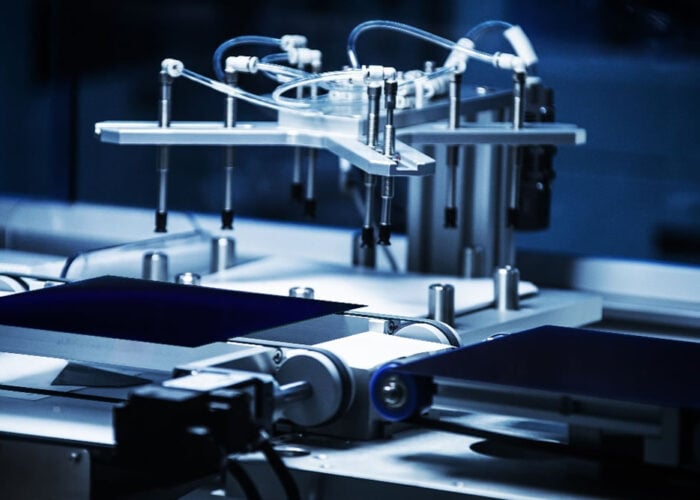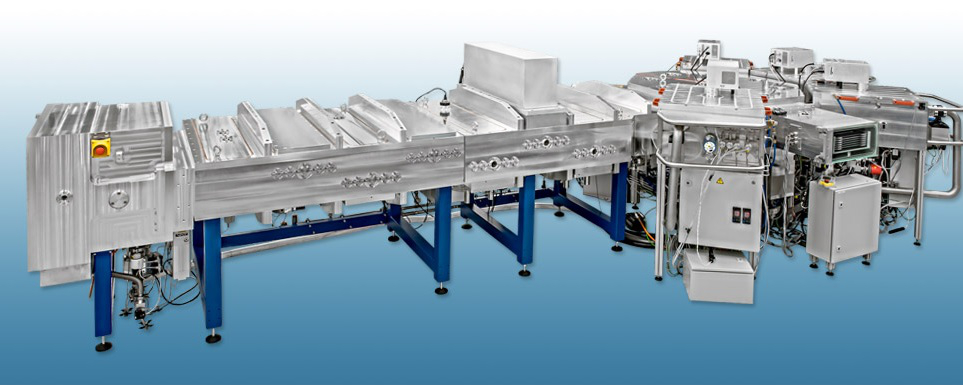
PV manufacturing equipment specialist INDEOtec SA has been awarded a grant from the SWISS Commission for Technology and Innovation (CTI) to further develop its OCTOPUS deposition platform for heterojunction solar cells in partnership with Swiss research partner, CSEM.
INDEOtec said the funding was in the 'single-digit million Swiss Franc' range and would support further validation of its OCTOPUS II / PECVD-PVD cluster system for double-sided deposition, enabled by its ‘Mirror Reactor’ design that offers lower processing costs and higher conversion efficiencies for heterojunction solar cells.
Try Premium for just $1
- Full premium access for the first month at only $1
- Converts to an annual rate after 30 days unless cancelled
- Cancel anytime during the trial period
Premium Benefits
- Expert industry analysis and interviews
- Digital access to PV Tech Power journal
- Exclusive event discounts
Or get the full Premium subscription right away
Or continue reading this article for free
Dr. Omid SHOJAEI, CEO of INDEOtec SA said, “For high-efficiency cells the heart of the system is the proprietary Mirror Reactor concept for the thin-film passivation layer deposition from the bottom and the top. We already demonstrated superior results and the proper functionality of the Mirror Reactor, and we would like to strengthen the confidence in the technology by a number of additional test series and the achievement of high cells efficiency before the application in our mass production tool.”
INDEOtec noted that the R&D project with CSEM would target the ability to manufacture in typical volume processing environments cell precursors that would yield to >23% efficiency levels with low thickness non-uniformity for the deposited thin films of < 5%.
The company had previously sold its tools to other R&D facilities in Europe and the US.